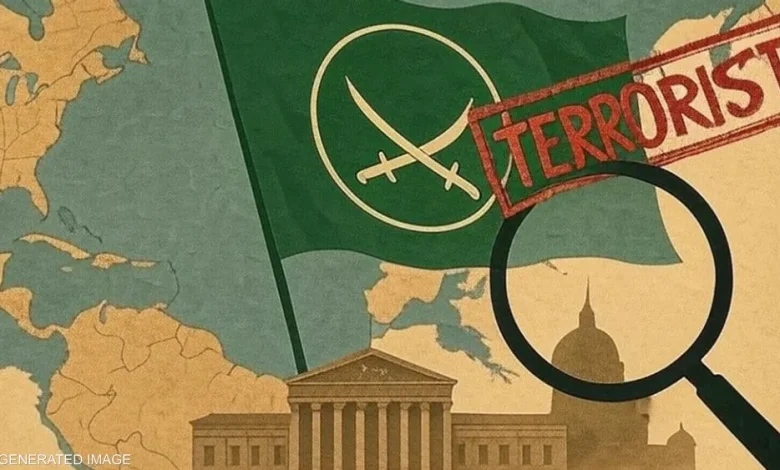
Rاهno: Agencies – The White House released the U.S. Counterterrorism Strategy for 2026, which listed the Muslim Brotherhood among organizations linked to extremist activities and connected it to groups such as al-Qaeda and ISIS.
The White House said in a statement that President Donald Trump “believes that all modern extremist organizations, from al-Qaeda to ISIS to Hamas, trace their roots back to a single source: the Muslim Brotherhood.”
The White House stated in the strategy: “Given the central role the Muslim Brotherhood plays in promoting modern terrorism, we will continue to designate its branches throughout the Middle East and beyond as foreign terrorist organizations to crush them wherever they operate.”
The document also notes that designating the Brotherhood as a foreign terrorist organization will be used to maintain pressure on its global networks and prevent them from recruiting or funding operations against the United States.
The document states that U.S. forces have “neutralized hundreds of extremist operatives” in several countries, focusing on the five most dangerous groups capable of carrying out operations abroad against the United States.
In its new counterterrorism strategy, the United States acknowledged that Europe is a breeding ground for terrorist threats, noting that “a range of malicious actors, such as al-Qaeda and ISIS, have freely exploited Europe’s porous borders to turn Europe into a permissive operating environment for plotting against Europeans and Americans.”
As for Africa, the document notes that organizations such as ISIS and al-Shabaab have rebuilt their capabilities in regions such as the Sahel, Chad, Mozambique, Sudan, and Somalia.
Washington has identified two main objectives on the continent: preventing extremist groups from establishing bases that threaten U.S. interests, and protecting Christians who have been subjected to increasing attacks.
The U.S. administration also emphasizes that it will maintain a “light military presence” in Africa, while placing greater responsibility for counterterrorism operations on regional allies.
What about Iran?
The strategy describes Iran as the “greatest threat” emanating from the Middle East, whether through its nuclear and missile programs or through its support for allied groups such as Hezbollah.
The document stresses that the United States “will not allow” strategic chokepoints such as the Strait of Hormuz or the Red Sea to be threatened and is prepared to take military action against the Houthis if U.S. ships are endangered.