At a moment when a clear break between the Sudanese military establishment and the “Brotherhood” was expected, especially after it was designated a terrorist organization, recent developments have moved in the opposite direction.
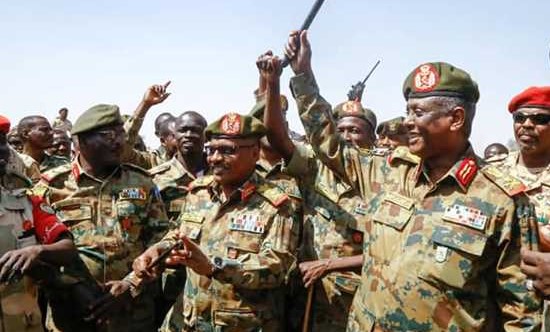
Instead of severing ties with the legacy of political Islam, the army chose to promote one of its most controversial figures, Lieutenant General Yasser Al-Ata, to the position of Chief of Staff, despite his public stances that not only praised Brotherhood members but went so far as to acknowledge ideological and organizational affiliation and commend the participation of battalions affiliated with the group in ongoing battles.
From Denial to Acknowledgment: Al-Burhan’s Aide: We Are Remnants and Brotherhood
Al-Ata, in a video clip circulated by Sudanese media, acknowledged his affiliation with the Brotherhood and the participation of battalions affiliated with the organization in the fighting, saying: “I am a remnant [of the former regime] and a member of the Brotherhood, and the Brotherhood members fighting alongside us, we hold them above our heads.”
A military spokesperson told Reuters on Thursday that Sudan had appointed Lieutenant General Yasser Al-Atta, a member of the Sovereign Council and assistant to the Commander-in-Chief of the Armed Forces, Lieutenant General Abdel Fattah Al-Burhan, as Chief of Staff of the Sudanese Armed Forces.
The appointment “does not appear to be merely an administrative move, but rather reflects delicate internal balances, and perhaps even a conflict of currents within the military establishment itself; between pressures pushing for the restructuring of the army and its separation from political Islamist networks, and another current that sees an alliance with the Brotherhood as a guarantee of continuity and remaining at the heart of the equation,” according to observers.
So, what does this decision mean?
Observers believe that Al-Ata’s appointment reflects a broader plan to keep the Sudanese army under the Brotherhood’s control, stating: “His affiliations, statements, and speeches align perfectly with the organization’s media narrative, which views the continuation of the war as a means to maintain its political and security influence and seeks to thwart any initiative calling for reform, restructuring of the army, or freeing the economy from military control.”
They explained that “Al-Atta, backed by a faction within the army that adopts a rhetoric aligned with the Brotherhood’s agenda, has managed to reestablish his influence within the military institution and transform it into a political tool remotely controlled to serve the organization’s objectives.”
“Since his emergence from the siege of the Corps of Engineers headquarters in Omdurman, he has sided with the Islamic Movement—the Brotherhood’s front—giving the green light to redeploy its armed battalions and open its training centers, foremost among them the Al-Baraa bin Malik Battalion in Omdurman,” says Arwa al-Sadiq, a leader in the Civil Democratic Alliance of Sudanese Revolutionary Forces “Sumud,” in previous statements to “Al-Ain News.”
Al-Atta and Al-Burhan:
Al-Atta had confirmed the Brotherhood’s participation in the fighting alongside the Sudanese army, saying: “They have six or seven battalions preparing to participate in the second phase of military operations.”
Arwa al-Sadiq adds that al-Ata seeks to maintain a fragile balance that guarantees him personal influence and keeps the army a tool in the hands of the old forces that thrive on war and fear peace.