Rhino: Agencies – To sustain a conflict that has dragged on for more than three years, the army chief is relying on a tight-knit network of activists across the country. This has seen the return of senior figures from the previous administration, alongside prominent business players who have put their personal connections at the disposal of the war effort.
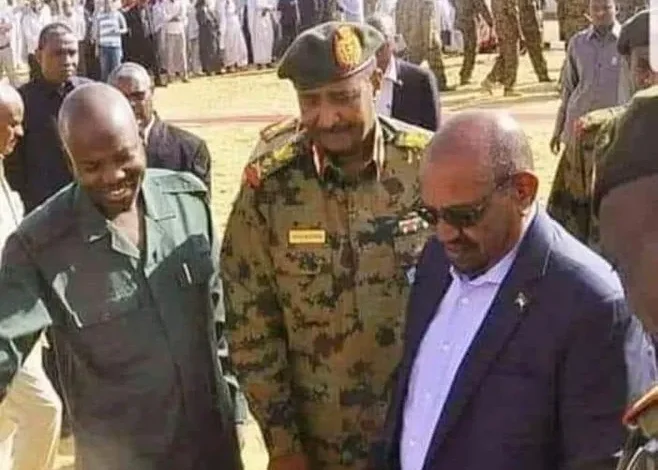
They are the product of an era that many thought was long gone. However, in the wake of the civil war that has been tearing the country apart since April 2023, several leading figures from the administration of Omar al-Bashir (1989–2019) have been reinstated by the regime of Abdel Fattah al-Burhan, the general who heads the Sudanese Armed Forces (SAF). He has relied on a handful of businessmen, ideologues and former military officers to finance his war effort and continue to mobilize the populations under his control, after more than three years of conflict against the Rapid Support Forces (RSF) led by Mohamed Hamdan Dagalo, known as “Hemeti”.
Behind already well-known figures such as the former foreign minister Ali Karti, who heads powerful Islamist militias (AI, 22/09/25), the head of state relies on a handful of more low-profile figures. These men are proving essential for maintaining cohesion among the various civilian forces within his government, which brings together the parties that signed the 2020 Juba Agreement and remain loyal to the ruling regime.
In the eyes of these allies, the civil war is a matter of survival in the defense of the state institutions inherited by the SAF. While attempts at dialogue to secure a ceasefire continue to stall, the ongoing hostilities enable the loyalist camp to maintain this state of mobilization – declared in June 2023, two months after the outbreak of the war – and to militarize society. In doing so, this situation provides them with the means to consolidate and reclaim political influence, while expanding their commercial interests.
The Tirik-Mubarak duo
Having returned to the forefront of the political scene to form the Supreme Council of Popular Resistance (SCPR) in 2024, Sayed Mohamed al-Amin Tirik, better known as Sayed Tirik, and Azhari al-Mubarak are among the most influential figures driving this mobilization effort. As leader of the Hadendoa community – a sub-group of the Beja in the east of the country – and a former MP for the National Congress Party (NCP), the former party of Bashir, Tirik forged a national reputation by leading the blockade of Port Sudan in 2021. This operation had served as a catalyst for the coup d’état carried out that same year by Burhan and Hemeti, who was his ally at the time (AI, 21/11/22).
While Tirik, as vice-president of the pro-SAF civil platform of the Democratic Bloc (DB), maintains close ties with the head of the army, the SCPR, by not becoming part of the SAF he has managed to retain a degree of independence. To lend its support to the regular army without becoming subsumed within it, the group formed an alliance last December with other Beja factions, thereby strengthening its influence within a divided community.
Although his links with Bashir’s former regime are less clear, Mubarak is himself a former associate of Hemeti, particularly in the gold mining sector, but he has managed to distance himself from the paramilitaries to avoid any reprisals from the SAF.
Operating from Al Dabbah, in the north of the country, Mubarak has already donated $5m to the loyalist army, as reported by the local press in early 2025. A few months later, the governor of Darfur, Minni Minnawi, also announced a donation of 100-armed military vehicles from Mubarak to his group, the Sudanese Liberation Army-Minni Minawi (SLA-MM). This support is not without its price: according to the Sudan Transparency and Policy Tracker research center, in early 2025 the gold broker was raking in around $25,000 in tax revenue daily via the Al Dabbah Chamber of Commerce, channeling three-quarters of this income towards the SAF’s war effort.
Return of retired generals
These mobilization committees operate across a regional network, where they are primarily led by civilians and retired generals. Each state has its own commander, appointed by the governor under the strict supervision of Burhan.
In the north of the country, for example, retired Lieutenant-General Abdulhadi Abdullah has been leading the local committee there since 2025. In the Nile region, Major General al-Sadiq Khaled al-Bashir Haj Rahma holds this post. Since July 2019, this senior officer has headed the SAF’s Reservist Department, formerly known as the Popular Defence Forces (PDF), which was created by Bashir before being reintegrated into the regular army.
In White Nile State, the partnership between the SAF and figures from the Bashir era is increasingly visible. To assist him, the committee chairman, Major General Khalid Ibrahim Ahmed Hamza, relies on Professor Mahdi al-Tayeb al-Khalifa, a leading figure in the NCP, whom he represented as chairman of the local assembly. This pattern mirrors that seen in Kassala State, on the border with Eritrea, where the duo heading the mobilization committee – comprising Major Generals Moussa Al-Haj and Yahya al-Nour – is supported by the former intelligence official, Major General Al-Tahir Musa al-Hassan, the group’s third-in-command. Appointed justice minister in 2025, Bashir’s former lawyer, Abdullah Mohamed Darf, was the legal director of that same committee.
Lastly, in Blue Nile State, the local committee is led by Farah Ahar, a former candidate for the governorship in 2010 for the NCP, before joining the Sudan People’s Liberation Movement – North (SPLM-N). He was appointed to his current post in 2025 by Ahmed al-Omda, the state governor, who belongs to the SPLM-N faction led by Malik Agar, which has remained loyal to the army.
In the business world, the SAF also relies on other figures closely associated with the Bashir era and the Sudanese Islamist Movement (SIM) network, who have been able to regain favors as a result of the conflict and reactivate their commercial networks, particularly in the sporting sector. This is the case with Hesham Hassan al-Subat, the current chairman of the hugely popular football club Al-Hilal FC, and Hazim Mustafa, former chairman of another football club, Al-Merrikh FC, both based in Omdurman, Khartoum’s sister city.
Charitable projects
During the 2019–2021 transition and subsequently following the 2021 coup, the two businessmen forged closer ties with the Burhan-Hemeti alliance, partly through donations. In 2022, Subat in particular made a donation of $10m to charities run by the army, while Mustafa donated nearly $1m to the SAF back in January 2021. Both sums were pledged during the Fashaga border conflict with Ethiopia, and earned their donors praise from both Hemeti and Burhan.
Close to Nafi Ali Nafi – another former key figure in the intelligence services and Bashir’s former right-hand man – Subat has also expanded his business empire since the start of the war. As head of the Al-Muqrin Petroleum Company, based in Port Sudan, he has specialized in particular in the import of oil and other essential commodities.
This influence has been reinforced by other positions. As president of the Sudanese Business Federation since 2022, he automatically became a member of the board of directors of the country’s financial markets regulator. He was also part of the Sudanese delegation sent in January 2025 to attend the swearing-in of Donald Trump, an event during which he stated that the war in Sudan had pitted the legitimate state against paramilitary groups.
As for Mustafa, who has historically been close to Bashir’s adopted son Ayman al-Mamoun – who left the country deeply in debt – he has been supporting the SAF from his main base of operations in the United Arab Emirates, a country which is nevertheless close to the RSF. In June 2025, as a sponsor and honorary president of another football club, Al-Ahly Wad Madani, he donated 126m Sudanese pounds ($30,000) to renovate its stadium in the town of the same name and bring it up to the standards of the sport’s world governing body FIFA. This gesture supports the SAF’s narrative regarding a return to normal life in areas that have come back under their control