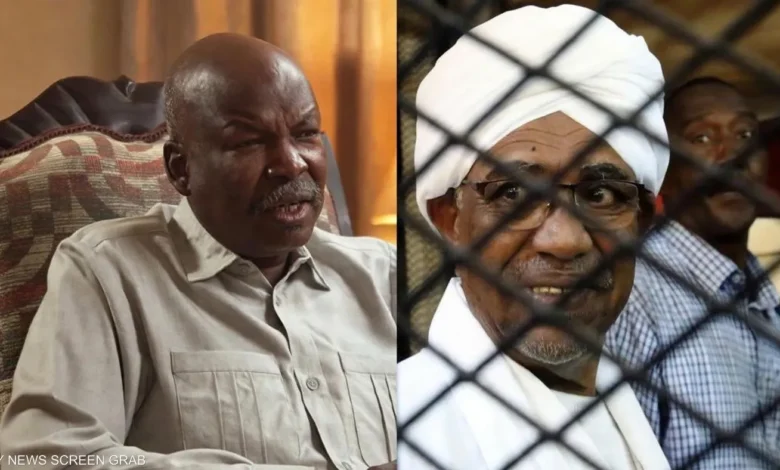
Civil society and human rights organizations, as well as Sudanese figures, have called on the United Nations, the European Union, the United States, and the African Union to take action to ensure the arrest of Ahmed Haroun and Omar al-Bashir and their surrender to the International Criminal Court, warning that continued impunity threatens international justice and prolongs the war in Sudan.
Ahmed Haroun, chairman of the dissolved National Congress Party—which represents the political wing of the Sudanese Islamic Movement—has been wanted by the International Criminal Court since 2007, under an arrest warrant listing 42 charges of war crimes and crimes against humanity in Darfur, including murder, persecution, forced displacement, rape, torture, and looting.
The charges relate to crimes committed between 2003 and 2004, when he served as Minister of State for the Interior under ousted President Omar al-Bashir, who is himself being pursued by the court under two arrest warrants issued in 2009 and 2010 on charges of crimes against humanity, war crimes, and genocide.
The request was made in a memorandum dated Tuesday, addressed to the President of the UN Security Council, the UN Secretary-General, the President of the European Commission, the U.S. Secretary of State, the High Commissioner for Human Rights, the Acting Prosecutor of the International Criminal Court, and the Chairperson of the African Commission on Human and Peoples’ Rights. It was signed by civil society organizations, advocates for victims’ rights, and public figures.
The memorandum affirmed that Security Council Resolution 1593 of 2005, which referred the situation in Darfur to the International Criminal Court, imposes on Sudan the obligation to cooperate fully with the Court and its Prosecutor.
She recalled the two arrest warrants issued against al-Bashir and the charges against Haroun, stressing that disregarding these obligations undermines the authority of the Security Council and the principle of accountability.
The signatories condemned what they described as the military’s consolidation of de facto power to ensure impunity and refuse to hand over wanted individuals, noting that his appearance in a media interview lasting more than four hours—despite being wanted by the court—reflects the magnitude of the challenge facing international justice. The memorandum stated that during his appearance, Haroun defended the continuation of the war and called for indefinite military rule—a stance the signatories considered a provocation to the victims of crimes committed in Sudan.
The memorandum held the army commander and de facto leader, Abdel Fattah al-Burhan, politically and legally responsible for obstructing efforts to extradite Haroun and other wanted individuals. It warned that failure to implement Security Council resolutions could set a precedent allowing perpetrators of violations to evade justice and further undermine the International Criminal Court and the rule of law.
The memorandum called on the addressees to use their powers to ensure that Haroun and al-Bashir are arrested and surrendered to the court without delay, and to issue a clear condemnation of the crimes committed against the victims. It also called for concrete measures to protect women from sexual crimes in war, end impunity for perpetrators, enforce Security Council Resolution 1325, and prevent the recurrence of such violations in conflict zones.
The signatories emphasized that ending impunity is a prerequisite for achieving a just and sustainable peace, arguing that ignoring past and present crimes leaves victims without justice and paves the way for a recurrence of atrocities in other parts of the country.