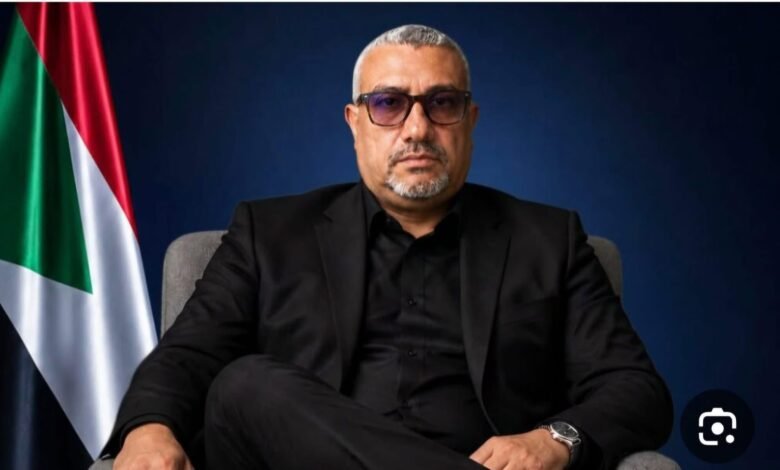
Official Spokesperson for the Democratic Movement for the Liberation of Sudan, Walid Makram Gerges
Rhino: Follow-up – The official spokesperson for the Democratic Movement for the Liberation of Sudan, Walid Makram Gerges, accused the authorities in Khartoum of continuing policies that restrict religious freedoms and target churches and Christian communities, warning that the threat to demolish the Marzouq Church in Omdurman goes beyond the issue of real estate and administrative violations and raises questions about the state of religious freedoms in Sudan.
During his appearance on a talk show on “Sky News Arabia,” Makram said that the church has stood for more than four decades and that its pastor, Rev. Malak Kok, confirmed that the church possesses official documents proving its ownership of the land, including a state-certified title deed.
He argued that casting doubt on the church’s legal status—despite its possession of official documents and its consistent practice of religious activities over the years—raises questions about the motives behind the actions taken against it, and he refused to view the issue as merely a campaign to demolish structures built in violation of regulations.
Makram’s statements came in response to clarifications attributed to the Khartoum authorities, stating that campaigns to remove illegal structures include homes, mosques, and churches, and are targeting approximately 20,000 homes by 2026. However, he emphasized that the existence of official ownership documents distinguishes the status of the Marzouq Church from that of informal structures and real estate encroachments.
Speaking about the background to the restrictions on religious freedoms, Makram accused the Islamic Movement of being behind policies that have targeted freedom of belief and the practice of religious rites since it came to power in 1989, noting that restrictions on the construction of churches have persisted in various forms in the years since.
He added that the transitional government that followed the December 2018 revolution took steps to address some of the administrative and legal obstacles that had hindered the construction of churches, noting that the Minister of Religious Affairs and Endowments during that period had approved the construction of 17 churches since 2019.
He explained that a number of these churches had already begun the process of fencing off the land and preparing the foundations, but the completion of the work was stalled due to the economic conditions and political developments that followed the events of October 2021.
Regarding the situation of places of worship during the war that has been ongoing since April 15, 2023, the program highlighted the extent of the damage inflicted on churches and Christian communities. A report aired by the channel, citing statements by former Minister of Religious Affairs and Endowments Nasr al-Din Mufarrah, stated that more than 174 churches sustained total or partial damage, while the number of Christians forced to leave the capital exceeded 35,000.
It was not possible to independently verify these figures cited in the television report. In response to accusations leveled against the Rapid Support Forces regarding attacks on churches, Makram said he had visited a number of places of worship in the city of Nyala and, according to his account, witnessed measures being taken to guard and inspect them.
However, he emphasized that this statement does not absolve any party of responsibility for potential violations, stressing the need for independent and transparent investigations into all incidents related to attacks on places of worship, whether attributed to the Sudanese Army, the Rapid Support Forces, or other armed groups.
He added that any party proven to be involved in violations against civilians or religious institutions should be held legally accountable, stressing that justice must not be influenced by the political or military affiliations of the accused.
Makram cited the case of the Sudanese woman Mariam Yahya, who faced the death penalty on charges of apostasy during the rule of former President Omar al-Bashir, noting that it exemplifies the restrictions on religious freedoms in the country.
He also referred to Article 18 of the Universal Declaration of Human Rights, which guarantees freedom of thought, conscience, and religion, including the right to practice religious rites and manifest one’s beliefs individually or collectively.
Makram concluded by emphasizing the importance of establishing a state that respects religious and cultural diversity and guarantees equality among citizens in terms of rights and freedoms, renewing the call for an independent and comprehensive international investigation into the violations committed against churches and places of worship during the years of war, and for holding accountable all those proven to be responsible for them.