Rhino: Follow-up – Lawyer and human rights defender Rihab al-Mubarak Sayed Ahmed stated that the Sudanese army used chemical weapons in the Bakuri area of Blue Nile State during its battles against the Rapid Support Forces on November 5.
The lawyer quoted eyewitnesses from the city of Ed Damazin as saying that Lieutenant General Yasser al-Ata, a member of the Sovereign Council and Deputy Chief of Staff, and Commander Malik Agar, head of the Popular Movement, had, several weeks earlier, transported chemical weapons, warheads, and bombs to the military zone of the 4th Infantry Division in Ed Damazin.
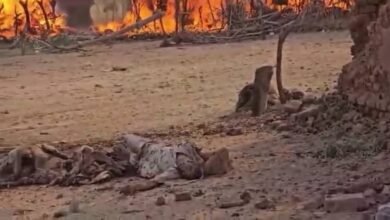
Meanwhile, witness (Y.F.) stated that during the battle between the army and the Rapid Support Forces on the morning of November 5, 2026, the army, shortly before its withdrawal from the Bakouri area, dropped chlorine bombs against Rapid Support Forces troops, and that the direct use of chlorine gas had a direct impact on civilians living in the area, noting that the 13th Brigade’s military zone is located in the middle of residential areas.
The Rapid Support Forces took control of the Bakuri area, located about 70 kilometers from the city of Ed Damazin, on the morning of November 5 of this year. The Bakuri area is home to the headquarters of the 13th Brigade, which is part of the Army’s 4th Infantry Division.
According to the witness, most residents saw face masks lying on the ground—which army soldiers typically use when deploying chlorine gas bombs—after the army withdrew from the battlefield. Most residents of the area suffered from a burning sensation and severe blurred vision during the day, and complete blindness at night, in addition to severe inflammation and swelling of the vocal cords.
The witness confirmed that the small number of residents in the area who have the financial means are currently receiving treatment at the Ethiopian hospital in Asosa; examples include citizen (S.D.), who has injuries to his eyes and vocal cords, as well as citizen (M.D.).
Meanwhile, the vast majority of civilians who lack the financial means—such as 30-year-old K.M., M.Y., and A.K.—are treating their conditions with traditional remedies such as salt, clay, lemon, and tree bark.
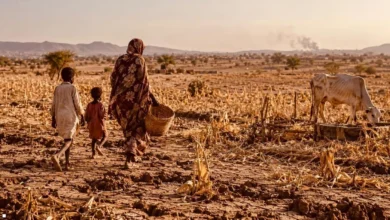
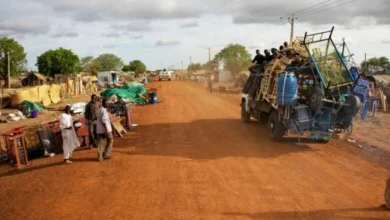
Al-Mubarak quoted witnesses as saying that most of the residents of Bakouri fled to Damazin due to the ongoing war and the chemical toxins filling the area, while some of them reached the cities of Qisan, Dim Saad, Yara, and Ashmbua.
Lawyer and human rights defender Rihab Al-Mubarak stated that the Sudanese army’s continued use of chemical weapons during its war against the Rapid Support Forces constitutes a heinous war crime and a grave crime against the people of the areas it targets during its battles, requiring an urgent investigation by the Organization for the Prohibition of Chemical Weapons.