Evidence and international accusations are mounting regarding the Sudanese Army’s development of a secret chemical weapons program and its use of chlorine-laden munitions during the war, while the army leadership and the Port Sudan authorities continue to deny the allegations and refuse to submit the matter to an independent international technical investigation that would reveal the fate of the program, the munitions, and those responsible for it.
In the latest international assessment, the International Institute for Strategic Studies (IISS), an independent British think tank considered a leading international authority on defense, security, and arms control, concluded in an analysis published on November 3 that there is substantial evidence supporting the credibility of the allegations that the Sudanese military developed and used chemical weapons.
It added that combining leaked information, independent verification, publicly available images and evidence, and journalistic investigations lends greater credibility to the accusations that the army has developed and used chemical weapons than previous allegations.
1,100 Chemical Bombs
The institute’s analysis was based on information published by U.S. and international newspapers and media outlets after they obtained materials from a Middle Eastern intelligence agency, including documents, photographs, video clips, and messages reportedly linked to a military chemical program.
The information indicates that the program relied on chlorine, a civilian substance primarily used for water purification; however, its release in high concentrations with the intent to cause harm makes it a chemical weapon prohibited under the Chemical Weapons Convention.
According to the report, entities linked to the army imported twenty cylinders of chlorine, said to be sufficient to produce about 1,100 bombs. They also seized additional quantities from civilian facilities, including water purification plants that humanitarian organizations had helped supply with chlorine.
According to the Institute’s analysis, the published images show munitions in various stages of assembly inside a warehouse-like facility. The alleged bomb contains an estimated 15 kilograms of chlorine, along with an explosive warhead and metal balls to increase the shrapnel effect.
The report suggests that the addition of explosives and shrapnel was likely intended not only to enhance lethality but also to conceal traces of the chemical agent and make it more difficult to determine the cause of injuries and deaths. 300 Chemical Munitions
According to information reviewed by the Institute, work on the project began in July 2024, and preliminary tests were conducted in a desert area that same month. By October, the army is believed to have stockpiled nearly 300 chemical munitions designed to be dropped from transport aircraft onto Rapid Support Forces positions.
The allegations center on two incidents that occurred in September 2024 near the Al-Jili refinery north of Khartoum, when the army was attempting to retake the area from the Rapid Support Forces.
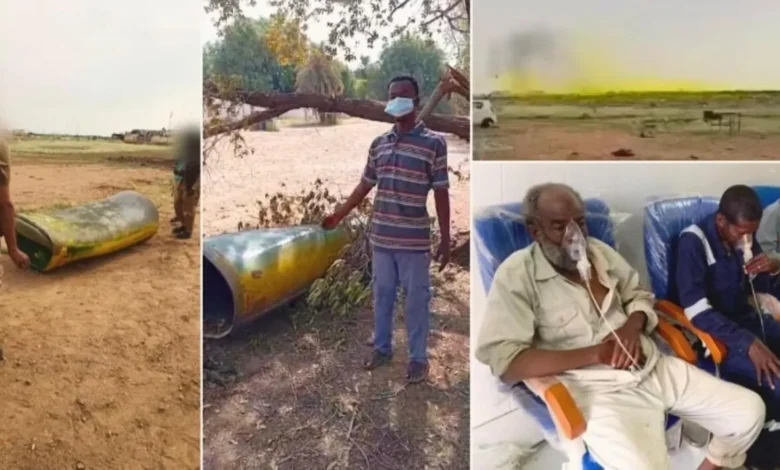
Photos from the sites showed damaged chlorine cylinders, which reportedly bore signs consistent with having been dropped from the air. Media investigations and reports by independent experts also concluded that there is evidence warranting an international investigation into the possible use of chlorine.
However, establishing criminal liability requires independent inspectors to gain access to the sites, collect environmental and medical samples, examine munition remnants, review flight logs and military orders, and identify the chain of command that planned, authorized, and carried out the attacks.
A Denial That Leaves Questions Unanswered
The army and the authorities in Port Sudan reiterated their denial of developing or using chemical weapons, affirmed Sudan’s commitment to the Chemical Weapons Convention, and announced the formation of an internal commission of inquiry, which stated that it found no material or technical evidence to substantiate the allegations at the sites it examined.
However, the United States and several international bodies considered that the internal investigation was no substitute for an independent international verification and called on Sudan to disclose any chemical production facilities and stockpiles and to allow the Organization for the Prohibition of Chemical Weapons to verify them and oversee their destruction. The OPCW is awaiting the final report of the Sudanese investigation, while its Director-General confirmed that the Technical Secretariat is monitoring reports related to Sudan and called on States Parties to provide it with any relevant information.
This denial alone is insufficient; if the army leadership is confident that no prohibited program exists, allowing international experts unrestricted access to sites, storage facilities, and records is the surest way to prove its case. Limiting the investigation to institutions under the authority of the accused party itself neither dispels doubts nor meets the standard of independence.
Sanctions May Have Halted the Program
Washington imposed sanctions on Sudan after officially concluding that chemical weapons had been used in 2024, and then continued to pressure the army leadership to cooperate with the Organization for the Prohibition of Chemical Weapons.
The Institute’s analysis suggests that the sanctions may have succeeded in deterring further use, citing reports that the program was shut down following the first round of U.S. measures. However, the presumed halt in production does not close the case; the fate of the remaining munitions remains unknown, and the officials who established the program, selected the targets, or issued orders for their use have not been identified.
The issue takes on added sensitivity because Sudan holds a seat on the Executive Council of the Organization for the Prohibition of Chemical Weapons (OPCW) through May 2027. This membership grants the organization additional leverage, but it could undermine its credibility if a state facing serious allegations of noncompliance remains on its Executive Council without a conclusive investigation.
A number of countries had previously demanded that Sudan provide clarifications in accordance with Article 9 of the Convention, while the issue remained on the Council’s agenda. Washington also threatened to reconsider Sudan’s seat if the matter was not addressed promptly and satisfactorily.
The Truth Cannot Be Buried by Denial
The Institute’s analysis takes the “Army Chemical” case to a more serious stage; it is no longer a single political accusation, but rather a network of documents, photographs, testimonies, investigations, sanctions, and international demands for verification.
While this evidence alone does not prove definitive criminal liability, it is sufficient to warrant an independent investigation and to open facilities, warehouses, and records to the Organization for the Prohibition of Chemical Weapons.
If it is proven that the army leadership developed chlorine munitions and used them against Sudanese areas, this constitutes an extremely serious violation and the use of the country’s territory and its people as a testing ground for a banned weapon. If it denies this, it must present evidence, not mere statements.
Until that happens, the Port Sudan authorities will remain accountable for answering three questions that cannot be dismissed by denial: Where did the alleged munitions go? Who established the program? And who issued the orders to use them? Crimes involving chemical weapons cannot be swept under the rug by silence; denial does not erase the evidence; and an internal investigation does not exempt the army leadership from an independent international inspection and full accountability.