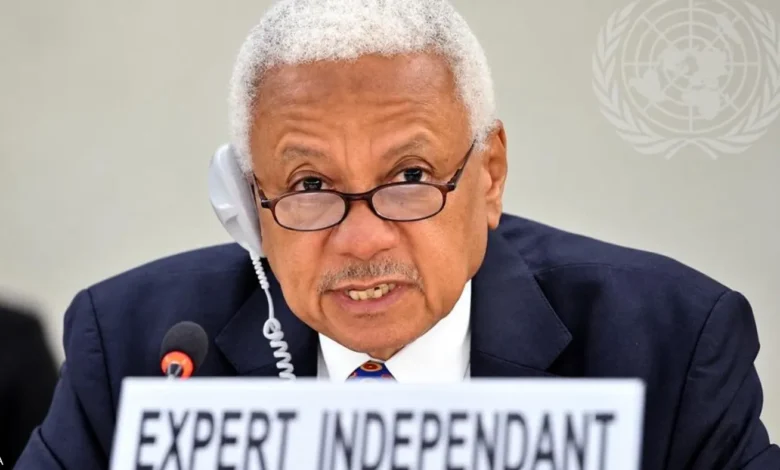
The United Nations Independent International Fact-Finding Mission on Sudan warned that the expansion of drone attacks, coupled with escalating repression and restrictions on civil liberties, is exposing civilians to increasing risks as the war spreads.
In a report released on the evening of Wednesday, October 28, titled “Sudan’s Relentless War: Civilian Destruction and Worsening Insecurity in El Obeid,” the mission stated that a decline in the level of direct military threat or the reopening of some roads has not provided protection for the population. Drones continue to threaten neighborhoods and civilian infrastructure, while arrests, surveillance, and intimidation limit civilians’ ability to seek protection or report violations.
The mission warned that the erosion of civil liberties not only threatens individuals but also weakens the protection of civilians, hinders the documentation of violations and the accountability of perpetrators, and undermines the prospects for a genuine and inclusive Sudanese dialogue to end the conflict. It concluded that “no credible Sudanese dialogue can take place under these circumstances.”
Rapid Support Forces Drones Threaten Civilians
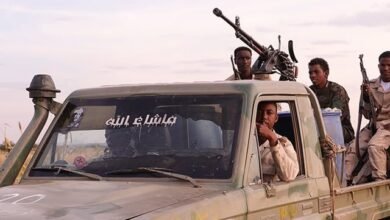
The report documented repeated drone attacks by the Rapid Support Forces on populated areas in and around El Obeid, including residential neighborhoods, educational facilities, and sites where civilians had taken refuge, as well as civilian facilities and essential infrastructure. The mission reported that these strikes caused deaths and injuries, damaged homes and services, and exacerbated fear and displacement.
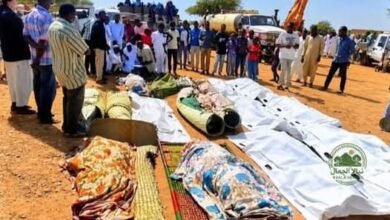
Among the incidents cited in the report was a strike that targeted a site for internally displaced persons at the Al-Bayda land port on September 30; reports indicated that it killed one child and injured 12 others. It also noted a strike on Kordofan University student housing on October 1, which reportedly left five dead and 47 wounded, as well as the destruction of more than 330,000 educational materials in warehouses in Shikan.
The mission concluded that the pattern of drone attacks it documented violates the principles of distinction, proportionality, and the obligation to take necessary precautions to protect civilians, and may amount to war crimes. There were also reports of a Rapid Support Forces attack near a camp for internally displaced persons in Blue Nile State, which reportedly killed at least 30 people, including women and children, and of a strike on a health center that killed a Red Crescent volunteer. In Um Badr, the mission verified a video clip that, according to its assessment, shows the execution of approximately 25 people who were blindfolded and had their hands tied; they are believed to have been in the custody of Rapid Support Forces personnel.
The Army Endangers Civilians and Suppresses Freedoms
Conversely, the mission stated that the deployment of personnel and equipment from the Sudanese Armed Forces and allied forces within residential neighborhoods, and near homes, markets, and populated areas in the city of El Obeid, exposed civilians to a foreseeable risk of attack. It found that the army had not taken all possible precautions to protect the population under its control.
The report emphasized that the presence of military targets or personnel near civilians does not exempt the Rapid Support Forces from their duty to protect the population, nor does it exempt the army from its responsibility to spare civilians from the effects of military operations and to avoid deploying military targets in densely populated areas, whenever possible.
The report also documented a drone attack on a market in the Abyei region—which is disputed with South Sudan—on October 19, attributed to the Sudanese Armed Forces; reports indicated that at least 80 people were killed and 27 were injured. The mission confirmed that it is continuing to investigate the attack. Military Repression and Sexual Violence Against Women
However, the most serious issue documented by the report in areas under military control is the targeting of civil liberties. The mission concluded that the army, security agencies affiliated with it, and allied forces arbitrarily detained civilians—including children—on suspicion of ties to the Rapid Support Forces, for cooperating with efforts to document violations, or because of their humanitarian and civic activism and criticism of the authorities. It noted that individuals were detained for prolonged periods without effective judicial review or access to lawyers and their families, and that they were subjected to beatings, threats, torture, ill-treatment, and the extraction of confessions under duress.
The mission also received credible allegations that detained women were subjected to harassment, violence, and sexual exploitation, including pressure from army personnel to provide sexual favors in exchange for release or permission to receive visits from their families. It concluded that the detention practices it documented may constitute serious violations of international law and war crimes.
The mission stated that the use of the charge of “collaboration with the Rapid Support Forces” against activists, trade unionists, humanitarian workers, and critics has contributed to spreading fear and silencing independent voices.
Responsibility of External Parties
The mission held the Sudanese Armed Forces and the Rapid Support Forces primarily responsible for the destruction and atrocities committed in Sudan, noting that external parties had contributed to fueling the conflict and profiting from it. It called on States and non-State actors to take serious steps to prevent the transfer of weapons, fighters, and any other support that could contribute to international violations and crimes in Sudan.
It also called on both parties to the conflict to respect international humanitarian law and international human rights law, protect civilians and civilian infrastructure, allow for the rapid and unimpeded passage of humanitarian aid, and end arbitrary detention, torture, and reprisals against humanitarian workers, human rights defenders, journalists, and civil society.
The mission’s report concluded that the ongoing war, drone strikes, and repression are blocking the path to a free and comprehensive dialogue. The solution begins with ending the war; there can be no meaningful Sudanese dialogue while attacks continue and those who call for peace or document violations are detained.