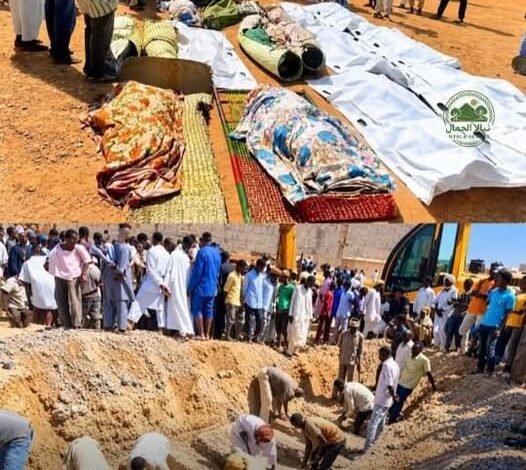
The death toll from the attack carried out by a Sudanese Army drone on the “Tengong” market, in the Dumaya neighborhood west of Nyala, the capital of South Darfur State, has risen to 188 dead and 356 injured, according to the latest figures announced by the Ministry of Health in the “Tasis” government, whose Presidential Council is headed by Rapid Support Forces commander Mohamed Hamdan Dagalo (Hemedti).
The ministry said in an update issued from Nyala on Wednesday that the new toll is based on reports received from health institutions and medical teams working in the field, noting that the number of victims may rise again as the count of the dead and injured continues and reports are received from hospitals and health facilities.
It added that medical and emergency personnel are working under exceptional pressure to treat the large number of wounded, including serious and critical cases requiring urgent surgical intervention, at a time when health facilities in Nyala are suffering from a severe shortage of medications, surgical supplies, and blood bags.
The ministry confirmed that the announced figures represent the toll recorded as of the time of its latest update, calling on international and humanitarian organizations to intervene urgently to support Nyala’s hospitals and provide the medical supplies needed to save the lives of the injured.
The group “Emergency Lawyers” had stated that the drone struck the market on Monday evening, leaving, according to preliminary figures, dozens dead and injured, including women and children.
The group described the attack as a “massacre” that turned a market crowded with civilians—where residents go to meet their daily needs and earn a living—into a scene of mass killings and injuries. It held the Sudanese Armed Forces responsible for the attack, calling for an independent and transparent investigation to identify those responsible and hold them accountable.
An independent report by “Doctors Without Borders” corroborates that the attack took place and attributes it to the Sudanese army; the organization stated that an army drone struck a crowded market west of Nyala around 8:00 p.m. on October 26, before a second strike hit a residential neighborhood. The bodies of 36 people were brought to Nyala Teaching Hospital, which is supported by the organization; 21 of them were wearing civilian clothing, while medical teams treated more than 150 injured people, including women and children suffering from shrapnel wounds and severe burns.
The figures from “Doctors Without Borders” do not represent a comprehensive toll from the attack, as they are limited to victims who arrived at Nyala Teaching Hospital, while the Ministry of Health of the “Tasis” government stated that its broader statistics were compiled from various health facilities and field teams.
The ministry condemned what it described as the targeting of civilians, markets, and civilian infrastructure, emphasizing that protecting the population and ensuring the wounded have access to health services are fundamental obligations under international humanitarian law. It also called for an independent investigation, for those responsible for the attack to be held accountable, and for ensuring that the perpetrators do not escape punishment.
The “Tengong” market, where residents go to obtain food and daily necessities, was transformed into a scene littered with bodies and the wounded, in yet another massacre added to the record of airstrikes carried out by the Sudanese army on markets and residential neighborhoods in Darfur and other parts of the country.
It has not been possible to independently verify the final death toll announced by the “Tasis” government, while the Associated Press reported that difficulties in accessing Nyala are hindering on-the-ground verification of the number of victims. However, it is clear that civilians were killed and that the attack took place at a crowded market, raising questions once again about the military’s pattern of using drones in densely populated areas and the mounting human cost of a war for which civilians are paying the heaviest price.
The high death toll, coupled with the timing of the attack and the nature of the location, raises serious questions about the choice of target and the munitions used, as well as the extent to which the army’s leadership adheres to the principles of distinction and proportionality and takes the precautions required by international humanitarian law.
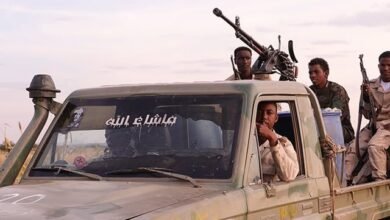
The two strikes also reinforce calls for the army’s drone operations to be subject to an independent international investigation, for digital and medical evidence to be preserved, and for the identification of the party that carried out the attacks on civilians, as well as the unit’s command that selected the targets and issued the orders to strike.
The Tengong Market massacre is yet another deadly attack on a known civilian site, preceded by a similar strike on the livestock market in the same city. When markets where people seek food and livelihoods become repeated targets, the leadership of the Sudanese Armed Forces must answer for its actions in investigations conducted by international commissions of inquiry and fact-finding missions—rather than simply remaining silent or making general claims that military sites were targeted.