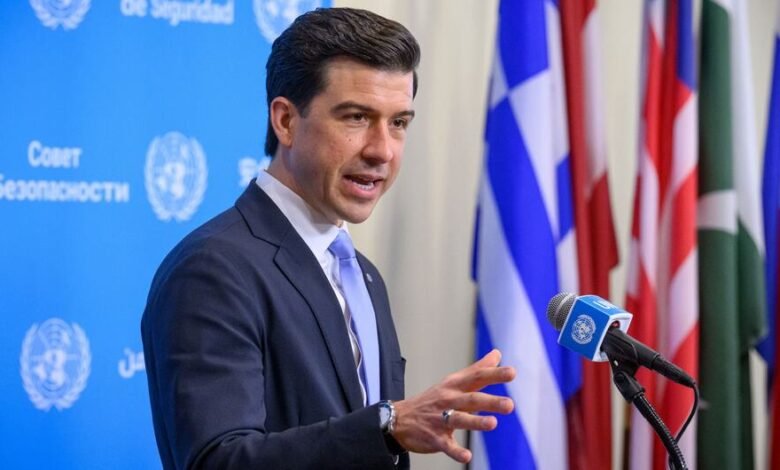
United Nations: Rhino – The new Executive Director of the World Food Program, Luke Lindberg, emphasized that the program is not standing idly by in the face of challenges but is continuing to work and move forward. He noted that 266 million people worldwide are currently facing acute food insecurity, and that two-thirds of them are suffering due to conflicts. He also warned that supply chain bottlenecks around the world are further exacerbating the problem.
Lindbergh was speaking to reporters at United Nations headquarters in New York for the first time since officially assuming his post a few days ago. He noted that one of the slogans he has adopted since beginning his tenure—and which the program uses frequently—is “We Find a Way.” He added: “Program staff overcome obstacles such as dilapidated roads, airdrop aid into areas previously thought to be inaccessible, and reach places others cannot.”
The Importance of Implementation
The Executive Director of the World Food Program emphasized that what is needed now is “implementation,” which is based on three essential elements: (*) Protecting and empowering program staff. (*) Strengthening partnerships with donors. On this point, he said: “All we need is to find a model that works for everyone—one that allows us to partner with them to secure the necessary funding for projects and address existing challenges.” (*) Continuously striving to improve, even if only slightly, day by day, as the program continues to find ways to deliver aid. Lindberg promised that the program would continue to provide assistance efficiently and effectively and achieve tangible results.
He expressed particular enthusiasm for two things: the leading role the World Food Program plays in investing in disaster preparedness, and the platform through which the program has invested heavily in school meals. He emphasized that they will continue to invest in and expand that platform, “because it represents a critically important opportunity on a global scale and is attracting significant interest from donors.”
Upcoming Visit to Sudan
In his responses to journalists’ questions, the UN official noted that the program’s operations are currently focused in particular on three countries—Sudan, South Sudan, and Somalia—which are facing difficult and dire conditions. He added, “Our team will continue to work to find ways to help alleviate the suffering in these three countries.”
He said his first visit in the coming weeks will be to Sudan, which faces “a very serious situation with regard to acute hunger.” He expressed his deep appreciation for the frontline workers of the World Food Program, “who carry out their duties in near-impossible environments, in the most challenging places on earth.” He considered his upcoming field visit to Sudan to be of the utmost importance, “to offer my support to these workers and personally express my gratitude to them for their service and dedication.”