Rhino: Follow-up – The Civil Democratic Coalition of Revolutionary Forces (Sumoud) condemned the statement issued by the Ministry of Foreign Affairs—appointed by the Armed Forces Command—which denied the threat of famine and attacked calls for a humanitarian truce. The coalition described the move as a gross disregard for the lives of millions of Sudanese who face death by starvation and violence.
The coalition added in a statement today: “This stance reflects a determination to prioritize the regime’s interests over people’s lives, to shirk responsibility for the humanitarian disaster, and even to use it as a pretext to reject efforts aimed at ending the war and the bloodshed in the country.”
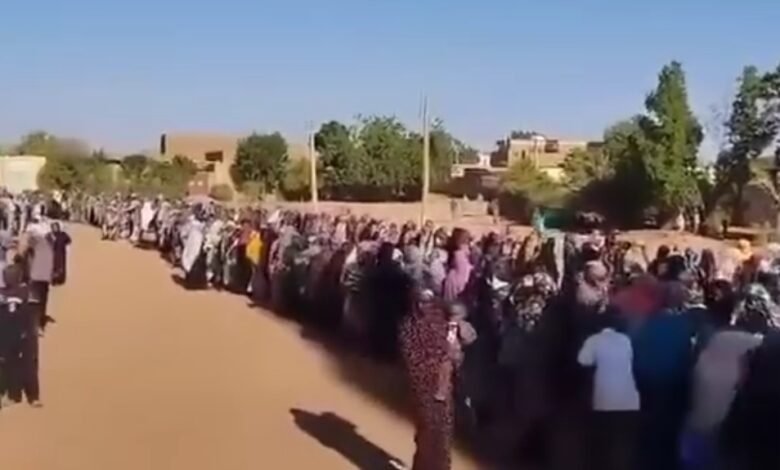
The statement continued: (The documented figures are sufficient to expose the extent of the misinformation inherent in this stance, According to the latest international warnings, some 19.5 million Sudanese men and women—41% of the population—suffer from acute food insecurity, including 5 million facing emergency levels of hunger, while more than 825,000 children are expected to suffer from acute malnutrition this year. More than 33 million people are in need of humanitarian aid, while the war has displaced millions and destroyed their livelihoods. The signs of hunger are no longer limited to specific regions but have even reached Khartoum, where people stand in long lines to receive free “balila” meals, amid bread shortages, rising food prices, the collapse of the Sudanese pound’s value, and the erosion of families’ ability to provide for their most basic needs. How can an authority facing all these disasters in its country describe the food situation as “reassuring” and deny the threat of famine warned against by relevant international institutions)?
It continued: (Not only did the statement continue to deny these facts, but it also claimed that warnings of famine are a pretext for imposing a ceasefire—as if a humanitarian truce that stops the bloodshed were a crime to be countered, rather than an urgent necessity to save lives!” This logic reveals the nature of the mindset that dominates this regime, for which war has become the primary means of achieving its authoritarian ambitions. In doing so, it turns the claim to legitimacy—which it seeks to seize without just cause—into a weapon to deprive citizens of food and relief, and a pretext for continuing the war that has devastated the country).
The statement added: “National sovereignty is, first and foremost, a responsibility to protect people and safeguard their lives and dignity; it is not a privilege granted by military force or a pretext for withholding food and medicine from those in need. The war has proven that the current authorities are not only incapable of protecting civilians and meeting their needs, but also lack the desire and the will to prioritize people’s lives over the interests of war and power. Therefore, when the authorities fail to fulfill their responsibilities and become an obstacle to saving human lives, the international community’s responsibility to ensure the delivery of humanitarian aid in accordance with international law grows, without leaving the fate of millions hostage to the consent of the warring parties or their political and military conditions).
It added: (Sudan itself has significant historical experience in this regard, as the ‘Lifeline’ operation was launched in 1989, which made it possible to deliver aid to areas under the control of warring parties through special humanitarian arrangements, based on the priority of saving lives over the considerations of the conflict. Today, in the face of a disaster whose scale and complexity exceed those of past crises, there is a pressing need for effective international humanitarian arrangements that ensure the opening of border crossings and lines of contact, secure land and air corridors, facilitate the work of humanitarian organizations without restrictions or interference from the warring parties, and guarantee that aid reaches all those in need without discrimination. Sovereignty must not become a pretext for starvation, nor should humanitarian aid be turned into a tool for bargaining over political legitimacy).
It continued: (Sudan itself has significant historical experience in this regard, as the ‘Lifeline’ operation was launched in 1989, which made it possible to deliver aid to areas under the control of warring parties through special humanitarian arrangements, based on the priority of saving lives over the considerations of the conflict. Today, in the face of a disaster whose scale and complexity exceed those of past crises, there is a pressing need for effective international humanitarian arrangements that ensure the opening of border crossings and lines of contact, secure land and air corridors, facilitate the work of humanitarian organizations without restrictions or interfereHe added: “Sudan itself has significant historical experience in this regard, as the ‘Lifeline’ operation was launched in 1989, which made it possible to deliver aid to areas under the control of warring parties through special humanitarian arrangements, based on the priority of saving lives over the considerations of the conflict. Today, in the face of a disaster whose scale and complexity exceed those of past crises, there is a pressing need for effective international humanitarian arrangements that ensure the opening of border crossings and lines of contact, secure land and air corridors, facilitate the work of humanitarian organizations without restrictions or interference from the warring parties, and guarantee that aid reaches all those in need without discrimination. Sovereignty must not become a pretext for starvation, nor should humanitarian aid be turned into a tool for bargaining over political legitimacy).
The Civil Coalition of Revolutionary Forces concluded its statement by: (War is the main cause of death, hunger, displacement, economic collapse, the destruction of public services, and all the disasters besieging our people today; these tragedies will not end as long as the war continues. Therefore, we in the Civil Democratic Coalition of Revolutionary Forces “Sumoud” renew our call for an immediate and unconditional humanitarian truce that paves the way for the protection of civilians and the delivery of aid, and leads to a permanent ceasefire and a peaceful, negotiated path to end the war and restore democratic civilian rule. The time has come to move from appeals and statements to coordinated pressure and deterrent measures, including sanctions targeting anyone who obstructs the truce or prevents the delivery of relief, regardless of their position or affiliation).