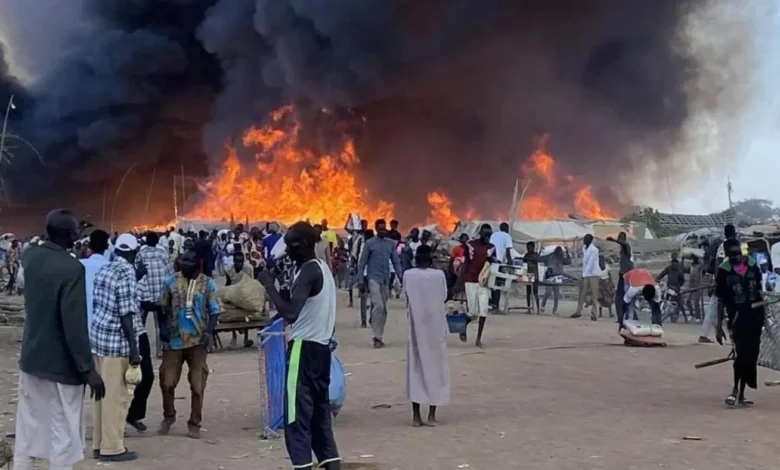
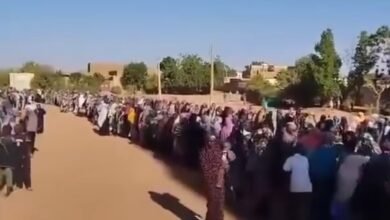
There are seemingly horrifying contradictions in the Sudanese war that has been raging since April 2026. While some Sudanese mourn their civilian dead due to the absurdity and randomness of the war, others celebrate it as a victory—one portrayed by news reports, television channels, and online platforms that turn “turns fish into sherbet,” as the popular saying goes—and downplay the gravity of the casualties in favor of emphasizing the results of the strike as vindication, revenge, and a right of the army, which claims to hold legitimate authority inherited following the coup of October 25, 2026. So how have the army’s violations been transformed into victories?
The Industry of Deception
Observers believe that what is happening is consistent with the environment created by the war—such as the absence of independent media institutions or, at the very least, the absence of on-the-ground journalism due to the war. This creates a growing sense among the public of a need for information and knowledge, which makes it easier for many circles to manipulate and distort the facts—especially those who benefit from the war, such as senior army generals, remnants of the ousted regime, and crisis and arms profiteers.
According to “Raino,” summaries of Human Rights Council reports in November 2025 revealed concerns about violations against journalists and media professionals, particularly given the rising number of fatalities among them, as well as the suspension of more than 90% of newspapers and media organizations.
A media expert, who preferred to remain anonymous because he is in Port Sudan, told “Raino” that the issue is not about turning violations into a victory, but rather about how to establish a narrative from the outset that leaves no room for alternative interpretations and prevents the audience from seeing the violations resulting from the strike or attack through verbal manipulation, He said: “The sheer volume of posts that appear in record time following army strikes clearly reveals these platforms’ prior knowledge of the strike or a high degree of coordination with the army, making them the first to report on what has happened, whether it’s an attack or a strike.” The expert noted that the primary narrative being promoted is that what happened—or is happening—is a legitimate response to the Rapid Support Forces and their practices.
Many analyses identify specific phrases as distorting the news or manipulating the truth by giving it other dimensions or steering the recipient’s perspective in a specific direction, such as “destruction of enemy gatherings” and “cleansing the area” and “delivering a crushing blow,” which the media expert considered a breach of professional standards, as it places the audience—or the Sudanese people—within a preconceived interpretive framework before the details of the incident have become clear. He added that pairing this language with images of burned-out vehicles or destroyed sites—without specifying where or when the footage was taken or providing a tally of civilian casualties—makes the imagery serve as evidence of military success, even if the nature of the target or the identities of those killed remain unconfirmed, not to mention the deliberate portrayal of the number of victims as a secondary matter—or their omission from the text altogether—or the suggestion that they are a normal cost of achieving the alleged liberation goals.
Accounts and Platforms
Social media accounts and news platforms of unknown origin proliferated virally following the outbreak of the war. According to “Raino’s” monitoring, the function of these platforms is to generate justifications and confer legitimacy on all acts of war, especially those carried out by the military.
These platforms repost old videos or photos as if they were recent. According to “Raino” monitoring, an analysis published by the French Institute of International Relations in April 2026 revealed that there is a media rivalry and battle between the army and the Rapid Support Forces, as well as a propaganda rivalry between the Armed Forces and the Rapid Support Forces. This has contributed to the proliferation of these platforms—particularly among the army—through the mobilization of resources via its loyalists to portray defeats as victories or present withdrawal tactics as strategic moves, dating back to the war’s early stages when the Rapid Support Forces held overwhelming control.
According to research and monitoring reports, the platforms promoting a pro-Sudanese Army narrative are distributed across traditional media outlets, television and radio channels, news pages on social media platforms, official accounts, and digital influencers. The role of this network is not limited to relaying military statements; in some cases, it extends to exaggerating reports of victories, framing military operations within the narrative of national mobilization—or what is known as the “War of Dignity”—and downplaying attention to the army’s casualties or abuses attributed to the armed forces.
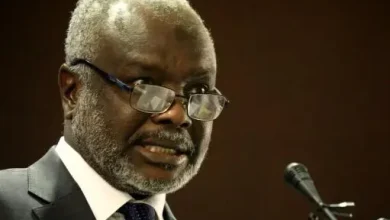
BBC Monitoring has listed several private Sudanese media outlets as pro-military institutions, including newspapers and websites such as Al-Sudani, Al-Intibaha, Al-Muhaqqiq, and others. Similarly, a 2025 report by the Internews Group identified a number of channels working to bolster the military’s position and reinforce its narrative, such as Sudan TV, Blue Nile TV, and Al-Zarqa TV, as well as Sudaniya 24 and Tayba TV. Meanwhile, the “Bim Observatory,” run by revolutionary icon Dr. Muhammad Naji al-Asam, documented a network of accounts that work to disseminate content supporting only the military in a coordinated manner, reinforcing its narrative and attacking its political and military opponents. Most notably is the “Sama Sudan” network, which includes pages under the names Sama Sudan, Arab Media, Defense of Sudan, and Urgent Sudan.
The report noted in December 2024 that these pages share a common practice of publishing pro-military content and use reposting and mutual engagement to expand the reach of their posts.
In another report published by the Observatory in December 2025, it examined another network comprising pages and accounts including “Al-Raya News,” “The News Portal,” “Sudan News Network,” “Stars of Sudan,” and “Sudan Today,” as well as accounts and groups with names such as “Jiyasha – Sudanese Army,” “Supporters of the Sudanese Armed Forces,” “The Army Is a Red Line,” and “Special Operations Forces.” The report stated that the network uses patterns of coordinated posting and interaction to advocate for the army and support a specific political narrative.
According to reports, a study titled “Digital Propaganda During the War in Sudan,” published by the French Institute of International Relations last April, analyzed engagement with accounts linked to the armed forces during the period from January to July 2025. The data showed that the army’s official Facebook page, the Sudan News Agency, and accounts belonging to influencers and journalists achieved high levels of engagement. “Sudania 24,” the Blue Nile Channel, “Sama Sudan,” and the Tayba Channel also appeared among the media accounts with notable engagement.
The study emphasized that the observed engagement does not necessarily correspond to the number of followers; however, it clearly reveals the extensive capacity of pro-government networks to disseminate war propaganda and influence public discourse.
An Ethical Test
For his part, Musa Rahouma, director of the Democratic Media Center, told “Raino” that media coverage of the war in Sudan suffers from an imbalance, as the army wields influence over local media, which affects the nature of the facts or narratives presented to the audience—especially given the lack of balance in news reporting to the international media.
He explained that local media outlets based in Sudan, which have correspondents on the ground, may adopt the army’s narrative in their reporting, but he argued that international media face an ethical dilemma when covering strikes that hit civilian targets. He noted that coverage of the recent strikes in Kordofan, for example, reveals, in his view, a bias among some correspondents inside the country toward the narrative that describes the targeted sites as military vehicles belonging to the Rapid Support Forces, arguing that this raises questions about ethical standards in reporting.
Rahouma criticized the performance of the “Al-Arabiya” and “Al-Arabiya Al-Hadath” channels, stating that they do not provide balanced coverage of events but rather adopt the official narrative of the de facto authority in Port Sudan. He also pointed to what he described as a decline in ethical commitment among some media institutions, given their bias toward one side of the war.
He emphasized that the role of the media should not be to take sides with any of the warring parties, but rather to stand with the victims on all sides and in all war zones. He argued that the adoption by media organizations—including Al Jazeera, Al Arabiya, The Independent Arabic, and Arab TV—of the narratives of the warring parties poses ethical and professional challenges, stressing that criticism of media coverage is not directed at the journalists themselves, but rather at the biases espoused by the organizations for which they work.