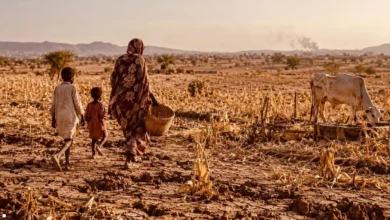
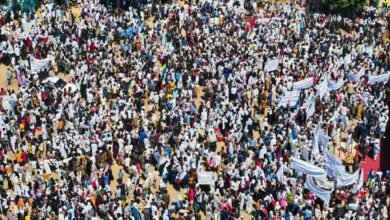
On Friday, 31 countries—including the United States, the United Kingdom, France, and Germany—called for urgent international action to address the threat of famine in Sudan. A statement issued by those countries, reviewed by “Sahih Sudan,” said that Sudan is experiencing an alarming deterioration in food security conditions, leading to the risk of famine in the coming months. The statement cited warnings from the Integrated Food Security Phase Classification (IPC). The statement added: “Urgent action must be taken; there is no more time to waste if we are to save lives and prevent famine.”
It emphasized that the armed conflict is the main driver of the hunger crisis in Sudan, which has caused the displacement of millions, the destruction of vital infrastructure, and the disruption of health care services, food production, supply chains, and markets.
The statement held both parties to the conflict “primarily responsible for alleviating the suffering of the Sudanese people” and urged them to “remove all obstacles to humanitarian aid, allow full, safe, rapid, and unimpeded access to aid, and ensure the protection of humanitarian workers.”
The statement said: “If these obstacles remain unaddressed, they will undermine the humanitarian response’s ability to address the threat of famine.”
It called on the countries to “allow humanitarian operations across all routes crossing front lines and international borders, including providing air access to Darfur, to enable the rapid deployment of relief operations and the timely medical evacuation of humanitarian workers.”
It also called for “ensuring the continued presence and protection of humanitarian workers throughout Sudan, including reducing delays in issuing visas and clearing customs, extending the validity periods of visas and travel permits, and the elimination of additional permits, taxes, and other bureaucratic requirements that hinder the delivery of aid.”
In addition, it called for “refraining from attacks on civilian infrastructure, including agricultural facilities and food systems, which are essential for providing basic services to the civilian population, and strengthening civil-military coordination to ensure the safety of humanitarian workers and sites designated for humanitarian operations.”
The statement called on “all members of the international community to urgently increase funding to address growing needs and to support efforts aimed at ensuring that aid reaches those most in need.”
The states reaffirmed “their solidarity with the people of Sudan and with humanitarian organizations working tirelessly, under extremely difficult conditions, to deliver life-saving assistance.”
According to recent statistics, an estimated 19.5 million people—41% of Sudan’s population—suffer from high levels of acute food insecurity, including 5 million people facing emergency levels of food insecurity.
Unless immediate action is taken to reverse the current trend, the number of children suffering from severe acute malnutrition could exceed the projected estimate of 825,000.
The number of areas facing food insecurity—initially estimated at 14—is also expected to double.
The situation is exacerbated by the systematic obstruction of humanitarian aid deliveries, as well as the effects of the “El Niño” climate phenomenon, which has led to reduced rainfall and increased drought in more than half of Sudan.