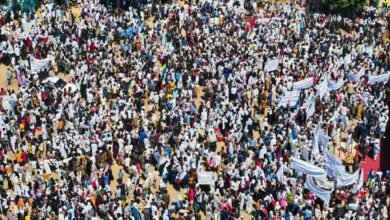
Meetings and events accompanying the 89th session of the African Commission on Human and Peoples’ Rights kicked off in Dakar on Thursday. Senegal is hosting the Commission’s public sessions from October 12 to 21, amid broad participation by African and international human rights organizations and mounting concern over violations committed during the war in Sudan, most notably the allegations that the army used chemical weapons.
The events began Thursday with the opening of the NGO Forum accompanying the session, organized by the African Center for Democracy and Human Rights Studies, with the participation of representatives from civil society organizations, human rights defenders, and African human rights institutions.
The Center announced that more than 400 organizations had registered to participate in the forum, whose opening was attended by the Chairperson of the African Commission on Human and Peoples’ Rights, Idrissa Sou, and the Center’s Executive Director, Hannah Foster, along with representatives of the Senegalese government, where the Minister of Justice delivered the host country’s address.
Foreign Interventions Fuel the War
The proceedings on Friday, October 9, included a special session organized by the African coalition “Sudan Coalition,” titled “Developments in the War in Sudan,” attended by a broad range of African and international human rights activists. Discussions focused on foreign interference in the war, grave violations committed against civilians, and allegations of the use of chemical weapons.
Ambassador Ali bin Abi Talib, Sudan’s former representative to the United Nations in Geneva and former vice-chair of the Human Rights Council, warned of the danger posed by the expansion of foreign interference in the Sudanese war, noting that more than 12 countries and external actors are involved in the conflict in various forms and to varying degrees.
Participants in the event criticized what they described as a double standard in dealing with foreign interference, arguing that the focus on condemning some parties while overlooking others turns the tragedy in Sudan into an arena for settling political scores, rather than addressing the real causes of the war’s continuation.
Bin Abi Talib warned of the danger posed by the roles of neighboring countries and regional interventions, which contribute to complicating the conflict and prolonging it, stressing the need to adopt a comprehensive approach that addresses all forms of external interference without selectivity and prioritizes the protection of civilians and ending the war over political calculations and regional interests.
These remarks highlight an important aspect of the human rights discourse on Sudan: the need for accountability not to be limited to the parties directly committing violations, but to also include an examination of the roles of those who contribute to the continuation of the war or provide the conditions for its prolongation.
“Army Chemicals” at the Center of Discussions
Abdul Baqi Jibril, director of the Sudan Knowledge Center in Geneva, provided a historical overview of the armed conflicts in Sudan and their causes, pointing to the grave violations committed during this war and holding both sides of the conflict responsible for the violations that affected civilians. He also addressed the accusations leveled against the Sudanese army regarding the use of chemical weapons.
Jibril argued that the gravity of these allegations requires that they be treated as an issue involving the use of internationally prohibited weapons, rather than merely as one aspect of the political and military conflict in Sudan.
He stressed the importance of subjecting the allegations to an independent and transparent international investigation that would examine the available evidence, documents, and testimonies; verify the nature of the substances used; determine potential responsibilities; and cooperate with the Organization for the Prohibition of Chemical Weapons (OPCW), rather than relying solely on official denials or internal investigations conducted by the authorities in Port Sudan.
Jibril supported the growing international calls for an independent technical investigation, citing the positions taken by the United States and Western countries during meetings of the OPCW Executive Council in The Hague, which emphasized the need to address the allegations seriously and transparently and to provide the information necessary to verify them.
The issue was raised in Dakar following a series of investigations and news reports that raised questions about the use of chemical agents during the war, including allegations of the manufacture and use of munitions containing chlorine—allegations that warrant a specialized technical investigation to distinguish between available evidence and scientifically proven findings.
The issue of chemical weapons dominated much of the session’s discussions, with active participation from representatives of participating human rights organizations, reflecting growing African concern over the possible use of internationally banned weapons in the Sudanese conflict and the legal and criminal liabilities that could result if such use is proven.
African Commissioner: The Allegations Are Serious and Warrant an Investigation
In a notable statement, Leta Musiami, a member of the African Commission on Human and Peoples’ Rights and a member of the African Fact-Finding Mission on Sudan, expressed the concern of the Commission and the Mission regarding allegations that the Sudanese army used chemical weapons during the war, describing these allegations as serious.
Mousiamy emphasized the importance of treating the issue with the seriousness it deserves, given the concerns it raises regarding the protection of civilians, respect for the rules of international law, and obligations related to the prohibition of chemical weapons. She expressed support for an independent and transparent international investigation, conducted in coordination with the Organization for the Prohibition of Chemical Weapons (OPCW), to draw on specialized technical expertise in examining evidence and verifying the allegations.
Mousami’s statement takes on particular significance given her membership on the African Commission on Human and Peoples’ Rights and the Fact-Finding Mission on Sudan, as it paves the way for raising the issue more broadly within African human rights mechanisms.
The debate in Dakar reflects the growing African human rights concern over the issue of chemical weapons in Sudan, coinciding with mounting international demands to investigate the allegations beyond political denials and diplomatic wrangling.
As calls to end the war and protect civilians continue, the independent international investigation into allegations of chemical weapons use presents a serious test of the willingness of the Sudanese military and the authorities in Port Sudan to cooperate, reveal the truth, and ensure that internationally banned weapons do not become a means of warfare whose potential crimes go uninvestigated and unaccounted for.