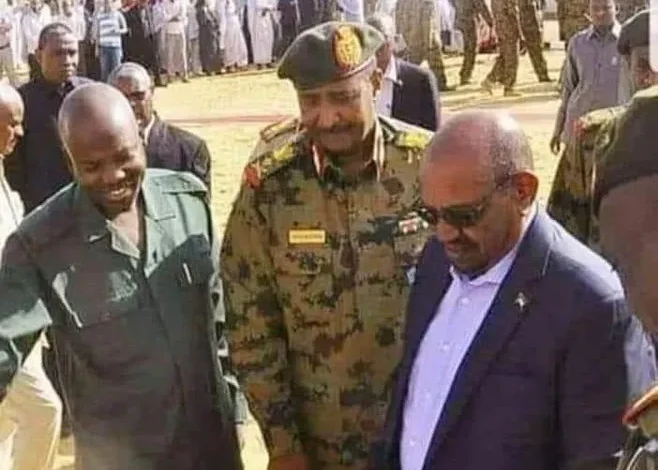
A situation described as repugnant has emerged regarding the weakness of U.S. tactics and pressure on Sudanese Army General Abdel Fattah al-Burhan, as well as his maneuvers to evade ending the war—all amid escalating humanitarian tragedies for citizens and Sudan’s transformation into a “hell on earth,” as observers have described it. In the latest of these maneuvers, the war propaganda machine denied that the U.S. President’s Advisor for Arab and African Affairs, Musaad Pauls, had met with al-Burhan in Egypt, despite the former having disclosed details of what transpired during the meeting. This raises the question: What are Washington’s options regarding al-Burhan’s maneuvers and tactics?
The Latest Development
In a symbolic move with no practical impact, the U.S. State Department released its annual Trafficking in Persons Report for 2026, which marked a notable shift in the characterization of the ruling authority in Sudan. The report abandoned the designation “Government of Sudan”—a term used in the 2025 edition—and replaced it with “the government associated with the Sudanese Armed Forces,” repeating this description throughout the text, including references to ministries such as the Ministry of the Interior, the Ministry of Social Welfare, and the Ministry of Labor.
The change extended to the description of the army commander; in the 2025 report, the U.S. State Department described him as the commander-in-chief of the armed forces and the “de facto head of state,” whereas the 2026 report merely described him as the de facto head of the “government linked to the Sudanese Armed Forces,” without any reference to the presidency.
Nevertheless, observers believe there is confusion within the U.S. administration regarding how to resolve the deepening Sudanese crisis, amid a situation described as dire, in contrast to the moves and maneuvers of General Abdel Fattah al-Burhan, in open defiance of Washington’s desire to end the war through a ceasefire and a comprehensive political settlement, a response to which Washington is countering with pressure that many consider futile.
How is Burhan evading the issue?
A retired military source, who preferred to remain anonymous, told “Raino” that Burhan is employing tactics and maneuvers ranging from escalation on the ground to rejecting what are described as external attempts to prevent him from realizing his father’s dream—which he revealed early on—of ruling Sudan. He added: “Al-Burhan is insisting on regaining control in all areas where the Rapid Support Forces are present, which is why he declares this time and again, and consequently refuses to negotiate unless the Rapid Support Forces withdraw.” He continued: “This point allows room for maneuver and serves as a powerful bargaining chip on the ground, which clashes with Washington’s proposed ceasefire. This has led to diplomatic tensions that have escalated to the point of denying Al-Burhan a visa, underscoring the fragility of communication channels between the two sides.”
Meanwhile, according to some, Washington’s leverage boils down to options of limited effectiveness to counter the general’s maneuvers, starting with a “stick” policy reflected in economic and financial sanctions, attempts to impose an arms embargo, and restrictions on funding networks and logistical support—all of which raise the cost of continuing the war for the warring parties.
The second option involves diplomatic engagement based on the reality on the ground, given that Washington does not recognize al-Burhan’s legitimacy, as it has stated on more than one occasion.
Deals and Withdrawals
According to “Raino’s” analysis, the outcome remains contingent on the extent to which U.S. pressure tools and mechanisms can bridge the gap between the growing international aspiration to end the war and the complex reality on the ground, given the multiplicity of regional and international power centers. Political analyst Dr. Ahmed Babiker, speaking to “Raino,” suggests that there is a deal—previously mentioned by Musad Pauls—involving withdrawals here and there under the pretext of organizing humanitarian efforts.
Babiker predicted that North Kordofan would return to army control, even if this were to occur through staged battles, in his estimation. Conversely, he predicted that the Blue Nile region would come under the control of the Rapid Support Forces, with the army gradually withdrawing from it, step by step.
Babiker noted that the escalation by Lieutenant General Abdel Fattah al-Burhan is linked to how the situation in Kordofan unfolds, considering that developments on the ground in the region will be a key factor in determining the course of the escalation in the coming phase.
Important Questions
Political analyst and Secretary of Foreign Relations for the Sudanese Journalists’ Union, Tahir al-Mu’tasim, told “Raino” that Washington’s options regarding what he described as Lieutenant General Abdel Fattah al-Burhan’s maneuvers and tactics raise questions. He said: “In my view, first, the gamble on resolving the Sudanese situation through the United States or other countries—now that the war has entered its fourth year—reveals that they are complicating the crisis and do not want a solution. That is the first point.”
He added: “Second, following the executive order regarding General al-Burhan’s job description, which was issued yesterday, and the prior visa ban, this indicates that further steps are inevitably on the horizon. Washington has tried numerous measures in the past, but let’s assume that the United States taking new steps and measures—whether through the UN Security Council or the U.S. Treasury Department and its authority to impose sanctions—remains a possibility.”
Taher noted that there are key questions to be answered regarding how Washington will deal with Burhan, and said: “But the fundamental question is: Will these measures solve the Sudanese problem? Do we want to repeat what happened during the rule of the ousted Omar al-Bashir, when he faced charges from the International Criminal Court and the United States imposed measures against him? Did those steps contribute to fulfilling the aspirations of the Sudanese people, or did they become an additional burden on them?”
Al-Mu’tasim believes that the crux of the matter is not merely the imposition of sanctions or the filing of charges, but rather the extent to which they can bring about real change that meets the demands of the Sudanese people and puts an end to their suffering—rather than having citizens once again find themselves caught between an authority seeking protection and a people bearing the cost of the crisis.
One Last Chance
In contrast, political analyst and influencer Hassan Bakri, speaking to “Raino,” argues that the army commander’s public refusal to negotiate is a recurring stance; experience shows that he has repeated this same position numerous times, even as negotiations took place behind closed doors. The Sudanese public sums up this situation with a simple expression: “Al-Burhan signals right but turns left”.
He noted that reports leaked following the controversial meeting between the army commander and Musaad Pauls indicate that the former insists on the Rapid Support Forces’ withdrawal from the cities under their control—a direct rejection of the truce. He said: “I don’t think there’s been a U.S. retreat from its previous positions; it’s more likely that they’re giving Al-Burhan one last chance while retaining their leverage against him (extending the arms and chemical weapons embargoes), and they may be betting on achieving a breakthrough through Burhan’s allies (Egypt and Saudi Arabia), before moving toward greater escalation through unilateral measures should they fail to exert pressure via the Security Council, international institutions, and regional allies.”
Bakri emphasized that there is no evidence pointing to a U.S. retreat; quite the opposite, in fact, with both public and unannounced—but confirmed—moves. He added that the U.S. State Department is shuttling between Nairobi, Addis Ababa, Washington, and Switzerland in what appears to be a serious attempt to regain the initiative regarding the Sudanese issue. Conversely, faced with a narrowing political space, al-Burhan will seek to achieve major victories on the ground, thereby disrupting the landscape with new developments that establish him as a fait accompli that cannot be ignored. He added: “In any case, I believe the U.S. is now pursuing a policy closer to confrontation with the aim of changing the de facto authority—specifically Abdel Fattah al-Burhan—unless something new happens to alter this equation. The U.S. is driven primarily by its interests, not by the slogans it espouses, and its positions may change as its interests change”.