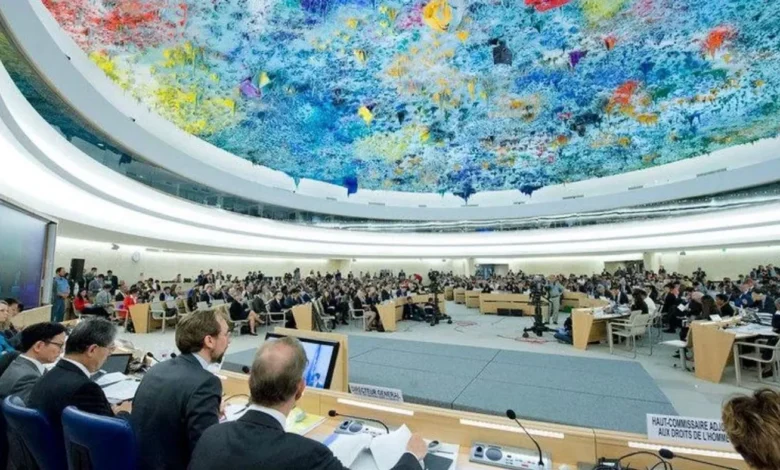
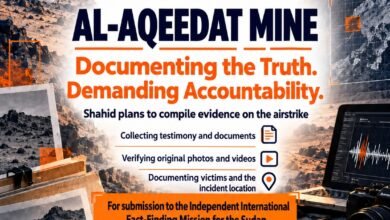
The 63rd session of the Human Rights Council continues in Geneva, amid a push led by Western countries to renew the mandate of the Independent International Fact-Finding Mission on Sudan for three years, ensuring the continuation of investigations into violations, the collection and preservation of evidence, and the promotion of accountability for crimes committed during the war.
Five European countries—the United Kingdom, Germany, Ireland, the Netherlands, and Norway—have begun preparing for negotiations on a new draft resolution addressing the human rights crisis and humanitarian conditions resulting from the ongoing armed conflict in Sudan.
Britain Leads the Draft Resolution
Britain, in its capacity as the penholder on the Sudan file and a member of the Core Group, called for the renewal of the fact-finding mission’s mandate, emphasizing that the independent evidence gathered by the mission paves the way for accountability and preserves the testimonies of victims and survivors from being lost or obliterated.
Kumar Ayr, the British Permanent Representative to the United Nations in Geneva, said that states and entities that continue to supply weapons to both sides of the conflict bear direct responsibility for prolonging the conflict and enabling the commission of atrocities. He added that illicit arms flows undermine the prospects for peace and allow for the recurrence of the violations witnessed in El Fasher.
Aire welcomed the existing cooperation between the international mission and the African Union’s fact-finding mechanism, calling for its deepening to enhance the documentation of violations, the preservation of evidence, and the determination of accountability. Germany, for its part, confirmed that the core group would introduce a draft resolution to renew the mission’s mandate and called on member states of the Human Rights Council to support it.
Comprehensive Arms Embargo and International Accountability. It warned of serious violations committed by the Sudanese army and the Rapid Support Forces, as well as acts bearing the hallmarks of genocide.
The Union also supported expanding the arms embargo currently in place on Darfur to cover all of Sudan, halting all forms of direct and indirect support to both sides of the conflict, and expanding the jurisdiction of the International Criminal Court, which is currently limited to crimes committed in Darfur.
The European Union reiterated its support for a comprehensive Sudanese political transition leading to an end to the war and the establishment of democratic civilian rule. At the same time, the “Group on Preventing Atrocities and Achieving Justice in Sudan”—which includes the United Kingdom, Canada, France, Germany, other countries, and the European Union—called for a halt to illegal arms flows and external support. It warned that the increasing proliferation of drones is prolonging the war and expanding the scope of attacks on civilians, health facilities, markets, displacement sites, and critical infrastructure.
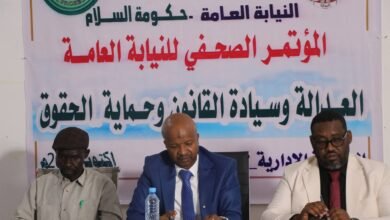
In response, the Port Sudan Authority is reaching out to African countries and other members of the Human Rights Council to rally support against renewing the mission’s mandate, arguing that it was formed without the consent of the Sudanese authorities and that national judicial mechanisms are capable of investigating the violations. This comes as military-affiliated authorities refuse to cooperate with the mission or allow its members to enter Sudan.
Negotiations Begin Monday
Informal consultations on the draft resolution titled “Addressing the Human Rights and Humanitarian Crises Resulting from the Ongoing Armed Conflict in Sudan” are scheduled to begin on Monday, September 14. Informal consultations on the draft resolution titled: “Addressing the human rights and humanitarian crises resulting from the ongoing armed conflict in Sudan.”
The consultations are being held in Room III of the Human Rights Council, led by the missions of the United Kingdom, Germany, Ireland, the Netherlands, and Norway. The renewal of the fact-finding mission’s mandate is expected to be one of the key focuses of the draft, along with the scope of the investigations and accountability mechanisms; however, the official text of the resolution has not yet been published, including the final wording of the proposed extension period.
The consultations mark the actual start of negotiations among states regarding the mission’s future, and their outcome may determine whether it will continue its work with its current powers or be granted a broader mandate in terms of duration and scope of investigation.
Efforts to renew the mission come at a time when the war continues and violations and the flow of foreign arms are on the rise, making the continuation of independent investigations and the preservation of evidence an essential step toward holding those responsible to account and preventing impunity.