Final Statement of the Leadership Council of the Sudan Founding Alliance
Fourth Session
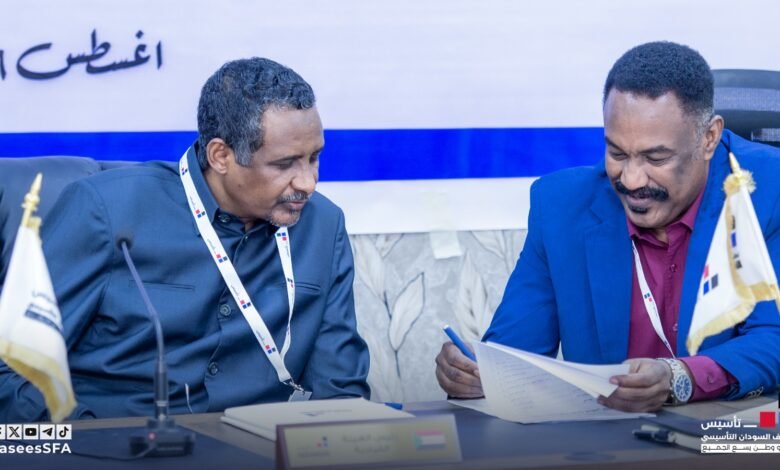
The Leadership Council of the Sudan Founding Alliance held its fourth session in the capital of New Sudan (Nyala) from August 26–30, 2026. Comrade Mohamed Hamdan Daglo Musa, Chair of the Leadership Council, presided over the sessions. The Council approved the session’s agenda, the minutes of the previous session, and reports on the Alliance’s activities and programs between sessions.
At the outset of the session, the Council offered prayers for the souls of the martyrs and wished a speedy recovery to the wounded and injured, as well as the safe return of prisoners and the missing. The Council commended the sacrifices and courage of the Sudanese people in their struggle to achieve a new Sudan where freedom, equality, and justice. It also commended the military and battlefield victories of the Sudan Founding Alliance forces on all fronts of combat and liberation, particularly in the regions of New Fung and Kordofan.
The Chairman of the Leadership Council—Comrade Mohamed Hamdan Daglo Musa—provided a comprehensive briefing on the humanitarian, security, political, and economic situations. His deputy, Commander Abdulaziz Adam al-Hilu, also provided a detailed briefing on the costs and tasks carried out by the mechanisms tasked with various issues.
Following deliberations and fruitful discussions on the agenda items, the Leadership Council reached the following decisions:
1. Approval of the Founding Sudan Alliance’s vision for achieving a just and sustainable peace that addresses the root causes of the Sudanese problem and critical issues.
2. Reaffirmation of the unwavering commitment to the Founding Charter of Sudan and the Transitional Constitution of Sudan for the year 2025.
3. To establish the new National Army and work diligently to ensure security and stability and address security conditions.
4. To activate the Executive Committee and the specialized committees of the Leadership Body.
5. To establish a political reference mechanism for negotiations and the peace process.
6. To advance domestic and foreign policy efforts, engage with political forces, and continue to utilize international and regional platforms.
7. To complete the structures and institutions of the government of peace, address security, economic, and humanitarian issues, combat corruption, and provide services such as education, health care, and drinking water.
8. Advise the supporters of the Founding Alliance of Sudan on the need to exercise caution and vigilance against attempts by the terrorist Islamic Movement to dismantle the social fabric, ignite strife, and spread hate speech among social groups, and to work to counter these efforts with firmness and resolve.
The Commission commended the achievements of the Transitional Government of Peace, particularly its efforts to establish security and stability, conduct the Sudanese Certificate Examinations, and create the conditions for the reopening of universities and colleges for the new academic year, as well as the approval of the Transitional Peace Government’s strategic framework for state-building and managing the pre-constitutional transitional phase; the approval of the guidelines for the provisional operating budget for 2026; the draft plan for forming provisional ministerial structures; and the provision of health and humanitarian services.
The Commission condemned the crimes and atrocities committed by the terrorist Islamic Movement’s army, particularly the aerial bombardment that targeted unarmed citizens, as well as the killings and systematic targeting of civilians—including the killing of six Sudanese high school students by drone strikes—which constitute a flagrant violation of the rules of international humanitarian law and human rights. It also condemned the blatant interference by certain neighboring countries that support the terrorist Islamic Movement’s army and the global Muslim Brotherhood organization—countries that have directly intervened in the fighting by deploying drones and fighter jets, opening their military bases, and providing logistical support as well as political, diplomatic, and media cover to legitimize the terrorist authority in Port Sudan. The Council denounced the aggression against the sisterly neighboring Republic of Chad by the Islamic Movement’s air force and the states supporting it, in flagrant violation of international conventions and covenants, which constitutes a serious threat to regional and international peace and security. The leadership body directed that a record be opened to compile and document all crimes committed by the Islamic Movement’s air force and foreign air forces against innocent civilians.