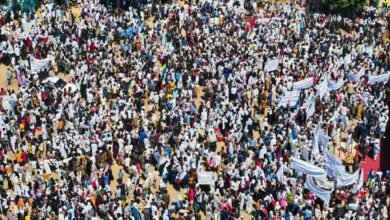
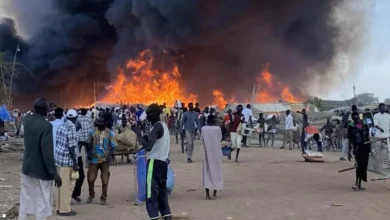
The latest data from the International Organization for Migration reveals that the displacement crisis in Sudan has not abated, despite a decline in the total number of displaced persons and an increase in returns to some areas.
More than 8.6 million people continue to live within the country far from their homes, while millions more are returning to cities and villages devastated by war and lacking security, basic services, and livelihood opportunities.
According to the eighth update of the Displacement and Return Report, released Wednesday by the IOM’s Displacement Tracking Matrix, the number of internally displaced persons stood at 8,622,801, spread across 185 localities in all 18 states of Sudan. Conversely, the organization recorded the return of 4,928,923 people to their areas of origin in 76 localities.
However, the fact that these returns coincided with ongoing new displacements—particularly in Kordofan, Blue Nile, and Darfur—paints a picture of a shifting population that does not reflect actual stability so much as it reveals the crisis’s movement from one place to another.
UNHCR’s data is based on information collected from nearly 13,000 locations across Sudan by field teams and networks of local sources, despite difficulties in accessing some combat zones.
A Decline in Numbers Does Not Mean the End of the Crisis
A comparison with the previous update shows a decrease in the number of internally displaced persons by 62,472, from 8,685,273 at the end of June to 8,622,801 in the latest update—a decrease of less than 1 percent.
During the same period, the number of returnees increased by 279,867, from 4,649,056 to approximately 4,929,000—an increase of nearly 6 percent.
When comparing the figures as of the end of March 2026, it becomes clear that the return movement has expanded even further: the number of returnees rose by approximately 935,000 people over the course of a few months, while the number of displaced persons fell by approximately 313,000.
However, this decline must be interpreted with caution: a displaced person who returns to their area of origin is removed from the displacement registry and counted among the returnees, even if they return to a destroyed home or a neighborhood lacking water, electricity, and health care.
Furthermore, returning does not necessarily mean permanent stability, as families may be forced to flee again if fighting resumes, if they fail to restore their sources of income, or if they cannot find suitable housing and services to help them survive.
For this reason, it is not appropriate to combine the numbers of displaced persons and returnees and present them as a single figure for those currently affected; returnees are people who were part of displaced communities or who have returned from outside Sudan, and the report uses these two categories to monitor changes in the population’s status and patterns of movement.
A Risky Return
The displacement crisis peaked in January 2025, when the International Organization for Migration recorded approximately 11.58 million internally displaced persons, including those displaced by the current war and others who had been displaced since previous conflicts in Darfur, Blue Nile, and South Kordofan.
Compared to that peak, the current number has decreased by about 3 million people—nearly 26 percent—but it remains more than double the level recorded before the war broke out in April 2023, when Sudan had approximately 3.8 million displaced people.
This means that the return movement, despite its scale, has not restored the country to its pre-war state, nor has it addressed the structural impacts of the largest wave of population displacement Sudan has witnessed in its modern history.
In previous statements, the organization noted that the majority of returnees had moved from areas of internal displacement, while a small percentage returned from outside Sudan. Children continued to account for more than half of the displaced persons and nearly half of the returnees, making education, health care, nutrition, and protection among the most pressing challenges for the coming period. Destroyed Homes and Cities Without Services
The problem lies not only in the number of returnees but also in the environment to which they are returning. Previous data from the organization showed that about 60 percent of returning families found their homes damaged, including homes with collapsed roofs or shattered walls and windows.
The return is concentrated in states where the army has regained control of major cities—primarily Khartoum, Al-Jazirah, and Sennar—after fighting forced large numbers of residents to flee during the first two years of the war.
However, these areas face widespread destruction of electricity, water, and sanitation networks; the collapse of hospitals and schools; the presence of war debris and unexploded ordnance; as well as weak public institutions and rising prices for food and building materials.
Some residents are returning due to a relative improvement in security, while others are returning after their savings have run out, because they can no longer afford rent in their areas of displacement, or due to a decline in humanitarian aid; thus, returning may be a forced choice between unbearable conditions of displacement and a devastated city lacking the foundations for stability.
Khartoum, Al-Jazirah, and Sennar face an extremely difficult challenge in accommodating the returnees, as the return of millions of people places enormous pressure on services that have not yet been restored and on an economy devastated by war.
Families need their homes repaired, schools and health centers reopened, landmines and remnants of war cleared, civil documents restored, and access to water, electricity, and transportation—as well as job opportunities and income—at a time when factories, markets, and farms have been destroyed and looted, the currency has depreciated, and the costs of food and fuel have risen.
Without comprehensive reconstruction and livelihood support programs, the return could turn into a new phase of displacement within the cities themselves, with families moving from camps and host communities to destroyed neighborhoods or informal settlements lacking even basic services.
The growing number of returnees also raises concerns about conflicts over property and housing, especially in areas where land registries were destroyed, homes were occupied while their owners were away, or that experienced significant demographic shifts during the war.
The New Wave of Displacement Continues
While residents are returning to Khartoum, Al-Jazirah, and Sennar, other fronts continue to generate new waves of displaced people.
In North Kordofan, recent fighting in Um Arda and surrounding areas has forced more than 4,200 people to flee, according to UN estimates, and military operations have disrupted relief and health care services in Al-Mazroub amid a cholera outbreak.
In the Blue Nile State, renewed fighting in Qaisan, Al-Karmak, and neighboring areas has led to the displacement of thousands of people toward Damazin, Rosaires, Wad al-Mahi, and other areas; families fled their homes amid shelling and heavy rains, and some arrived at overcrowded schools and shelters lacking food, shelter, and medical care.
In Darfur, population movements continue to be driven by shifts in military control, insecurity, the deterioration of services, and rising food prices. Areas such as Tawila are receiving large numbers of displaced people, even though their health and humanitarian capacities are on the verge of collapse.
These movements reveal that Sudan is experiencing two opposing population trends: a return to areas where fighting has subsided, and a new wave of displacement from fronts where the war is intensifying.
Children at the Heart of the Crisis
Children are the most vulnerable group in the pattern of displacement and return, and demographic trends monitored by the organization indicate that about 55 percent of the displaced and nearly half of the returnees are under the age of 18.
This means that millions of children are living far from their schools or have returned to areas where educational institutions have been destroyed and some schools have been converted into shelters.
They also face risks of malnutrition, epidemics, violence, separation from their families, recruitment, and exploitation, as well as the psychological effects of witnessing killings and bombings, losing relatives, and repeated displacement.
The surge in returns and renewed displacement coincides with a severe funding shortfall; the Humanitarian Response Plan for Sudan has received only about 41 percent of the required amount, threatening to curtail food, health, water, and protection services and compounding the pressures on both displaced persons and returnees.
Figures Subject to Change
The International Organization for Migration emphasizes that displacement and return figures are estimates and subject to change due to ongoing fighting, difficulties in accessing certain areas, and the rapid movement of the population.
Furthermore, registering a person as a returnee does not constitute a definitive judgment on the security situation or the livability of the area; rather, it confirms that the person had moved to their area of origin at the time the data was collected.
There remains a need to link population movement figures to indicators of housing conditions, access to water, health and educational services, the prevalence of landmines, the availability of employment opportunities, and families’ ability to survive without ongoing assistance.
The Return of the Population Does Not Mean the Return of Sudan
The organization’s data reveals a relative improvement in return flows to some states, but it does not provide evidence that the displacement crisis has ended or that Sudan is approaching stability.
The presence of more than 8.6 million internally displaced persons after more than three years of war remains an indicator of an unprecedented national disaster, and the return of some 4.9 million people does not erase the effects of displacement—especially when they are returning to destroyed homes, cities lacking services, and an economy incapable of providing the means to make a living.
Most dangerously, the pattern of return is taking shape in tandem with a new wave of displacement in Kordofan, Blue Nile, and Darfur, making population movements hostage to shifting front lines rather than the result of a political settlement or sustainable peace.
Millions of Sudanese have returned to their regions, but the state, public services, and security have not yet returned with them. Without a comprehensive ceasefire, guarantees of voluntary and safe return, and the reconstruction of homes and infrastructure, the return will remain merely a number on a spreadsheet, while Sudanese people remain trapped between unbearable displacement and homes that are no longer fit for living.