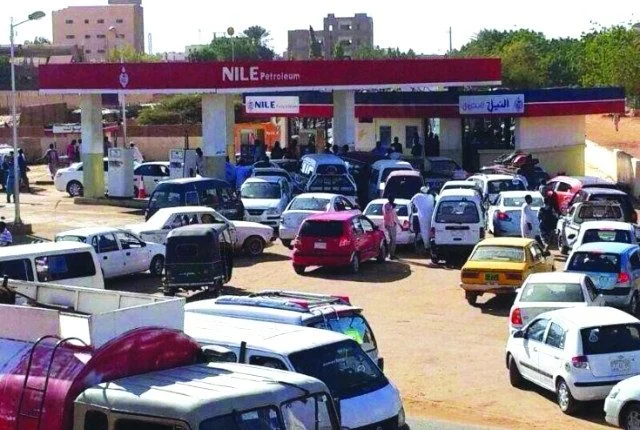
The Sudanese currency continued its historic collapse after the U.S. dollar exceeded 6,000 pounds on the parallel market, in the latest sign of the rapidly deteriorating economy in areas under the authority of Port Sudan, amid rising inflation rates, soaring prices of basic commodities, and the erosion of citizens’ purchasing power.
The latest decline coincided with the authorities’ decision to raise the customs exchange rate for the dollar, a move experts expect will trigger a new wave of price hikes for imported goods, at a time when Sudan relies almost entirely on imports for food, fuel, medicine, and raw materials.
Economists believe that the sharp decline in the value of the pound cannot be separated from the ongoing war, now in its fourth year, which has become the greatest drain on the state’s resources, with the bulk of limited revenues being directed toward military spending and the financing of combat operations, at the expense of basic services, investment, and production.
The ongoing fighting has also led to the collapse of the agricultural and industrial sectors, the shutdown of thousands of factories and facilities, a decline in non-oil exports, and a drop in foreign exchange inflows—all at a time when demand for foreign currency to finance imports has risen, widening the gap between supply and demand and driving the pound to unprecedented levels.
Analysts note that the economic crisis has also been exacerbated by the dominance of military and security institutions—and their affiliated companies—over strategic sectors, including mining, trade, transportation, and certain industrial activities. This has limited competition, weakened the private sector, and deterred domestic and foreign investment amid a lack of transparency and oversight.
Added to this is the continued operation of cross-border smuggling networks for gold and strategic goods, which deprives the public treasury of one of its most important sources of foreign currency and tax revenue, while large quantities of gold are diverted to foreign markets outside official channels—at a time when the state is facing a growing deficit in financing imports and meeting basic obligations. International reports indicate that the war has intensified illicit trade and expanded the shadow economy at the expense of the formal economy.
Observers believe that the continued influence of corruption networks linked to elements of the former regime, along with military institutions and their affiliated companies, has hindered the implementation of economic and structural reforms that could have mitigated the deterioration, amid the collapse of the state, the absence of a stable national budget, declining tax revenues, and a collapse of confidence in the banking system.
The war has also contributed to a decline in foreign trade, higher transportation and insurance costs, and a drop in investment, in addition to the displacement of millions of citizens from agricultural and industrial production areas—a situation that has directly affected the supply of goods and driven up inflation rates.
The Port Sudan authorities are attempting to address the crisis through sporadic monetary and customs measures, including raising the customs dollar rate, imposing restrictions on certain imports, and exempting solar energy systems from customs duties to alleviate the electricity crisis, However, experts believe that these measures address the consequences rather than the structural causes of the crisis.
Economists stress that exchange rate stability cannot be achieved through administrative measures alone as long as the war continues to drain public resources, while the informal economy expands, exports decline, gold smuggling persists, and confidence in financial institutions erodes.
A number of economists and political analysts believe that ending the war is the fundamental prerequisite for halting the economic collapse, but they point out that the Port Sudan Authority continues to reject most initiatives aimed at a ceasefire or a comprehensive political settlement, amid the growing influence of Islamist groups allied with the military, which these analysts view as a major obstacle to any political process that might lead to ending the war and restoring civilian rule.
They warn that the continuation of this trajectory could push the Sudanese economy into an even more dangerous phase, with rising rates of poverty and hunger and a widening gap between incomes and prices, at a time when the United Nations classifies Sudan as having the world’s worst hunger and displacement crisis, amid a failure of humanitarian funding to keep pace with growing needs.
Observers conclude that the economic crisis is no longer merely a currency or inflation crisis, but has become a direct result of the ongoing war, the dominance of the military establishment’s economy and its associated networks of interests, and the depletion of public resources for military spending—all while state institutions, production, and investment are in decline.
They emphasize that any genuine economic recovery will remain impossible unless the war ends, state resources are redirected toward production and services, and the economic activities of the military establishment and its affiliated companies are subject to transparent civilian oversight, as part of a political process that ends the conflict and restores state institutions.