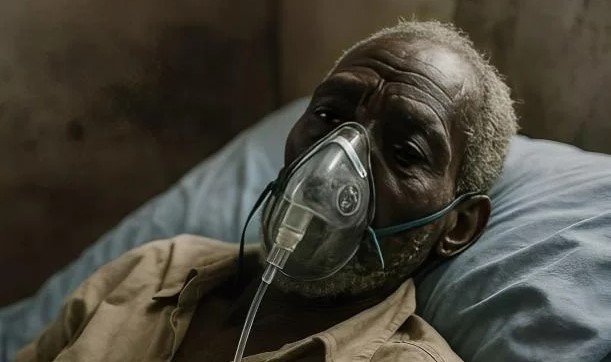
As Port Sudan has become a major hub for receiving millions fleeing the hell of war, the health sector there is teetering on the brink of collapse. According to eyewitnesses affiliated with the health sector, the healthcare system in the city and in areas under military control is facing unprecedented human pressure, coupled with a catastrophic shortage of pharmaceutical and medical supplies that threatens to bring what remains of vital facilities to a complete standstill.
Detailed Information
According to official statements by the Minister of Health in Port Sudan, the total losses to the healthcare sector due to the war amount to $11 billion. According to “Raino”’s monitoring, the current health situation is an extension of a widespread collapse that has struck the country’s infrastructure; field data confirms that approximately 85% of health facilities are now completely out of service, and more than 400 public and private health facilities have ceased operations. In the pharmaceutical sector, the latest statistics from the Preparatory Committee of the Sudanese Doctors’ Union—which need to be updated and were obtained by “Raino”—that 60% of pharmacies and drug stores are out of service, with more than 2,800 pharmacies closed in Khartoum alone, while 41 pharmaceutical companies and more than 90% of drug factories have completely halted production.
What did UNICEF say?
According to UNICEF estimates, Sudan’s health system is in a state of ongoing fragility. This crisis is reflected in persistently low health indicators, with vast disparities between urban and rural areas and between the rich and the poor. As a result, more than 8 million children under the age of five are at risk because they lack access to basic, life-saving services. In this context, 78,000 children under the age of five die each year from preventable causes such as malaria, and estimates indicate that this number will triple if investments in the health sector continue to decline.
According to the same report, accessing health services poses a major challenge for many Sudanese families; in fact, only 70% of the population receives adequate care upon arrival at a health facility. As a result, health service coverage for mothers and children is among the lowest in the region; For example, only a quarter of sick children suffering from diarrhea were brought to a health center for treatment, and of these children, only 27 percent were provided with treatment (oral rehydration solution), leaving a very large number of children vulnerable to death from preventable or treatable conditions.
Targeting and Reaping
Caught in a double siege—between outbreaks of diseases such as cholera, malaria, and dengue fever, and the complete paralysis of the healthcare system and water supplies—medical staff and local emergency rooms stand as the last line of defense, according to statistics, the medical sector has suffered a series of grave violations totaling 521 attacks, resulting in the deaths of nearly 200 health workers. By November 2024, the death toll had exceeded 28,700, including more than 20,000 direct deaths, while the number of deaths in El Geneina alone was estimated at around 15,000. Between January 31 and February 5, 2025, 275 civilian deaths were recorded, along with the deaths of 57 volunteers.
As for health and humanitarian needs, statistics indicated that approximately 20 million people were in need of health care, including more than 11 million in need of life-saving care. The number of people in need of humanitarian assistance exceeded 26 million, including about 13.6 million children, while the number of people suffering from food insecurity reached about 24.6 million.
According to medical sources speaking to “Raino,” given the scarcity of financial resources, the disruption of communication networks, persecution, and the exodus of qualified personnel, the situation portends a full-scale humanitarian disaster unless the relevant authorities intervene to provide safe corridors and urgent emergency supplies to save as many lives as possible.
Dr. Heba Omar, chair of the Preparatory Committee of the Sudanese Doctors’ Union, told “Raino” that regarding the proposed headline about the “collapse of the health sector,” the painful reality confirms that there is no longer a health sector to begin with that could collapse or be on the verge of collapse. She said: “ The system has collapsed, come to an end, and all but vanished. There is no real medical or health sector in Sudan in the institutional sense, and what is happening on the ground are merely painstaking attempts to provide sporadic emergency services here and there. To put it very simply: ‘There is no health care’ to begin with.”
Omar emphasized that, regarding figures and statistics, they are doing their utmost to provide the media with the latest available data, adding: “But we must recognize the reality that, in the absence of a stable state and the absence of a health sector itself, it is impossible to have accurate or reliable statistics at any level. Indeed, who would compile these statistics in the face of a complete absence of hospitals, the breakdown of functioning facilities, the paralysis of government ministries, and a fundamental lack of medical personnel?