Rhino: Follow-up – The International Coalition for Human Rights condemned what it described as procedural bias and the selective approach to human rights violations in Sudan, warning that the draft resolution recently issued by the Human Rights Council—which focused solely on the situation in El Obeid—is based on a selective methodology that ignores grave violations in the states of Darfur, Kordofan, and Blue Nile.
The coalition called for the adoption of a comprehensive resolution and for an independent international investigation into allegations of the use of chemical weapons.
In a statement, the coalition expressed its strong reservations regarding the selective and simplistic approach on which the draft resolution is based, emphasizing that the root cause and main driver of the current crisis in Sudan is not limited to a mere conventional military confrontation between two parties, but rather a direct result of the political and ideological agendas driven by the Islamic Movement through its affiliated armed groups, including the Al-Baraa bin Malik militia, which effectively controls military and political decision-making within the Sudanese Armed Forces’ leadership, according to the statement.
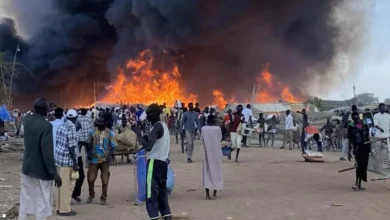
The statement emphasized that limiting the condemnation and documentation of violations to a single geographical area—the city of El Obeid—constitutes a fundamental failure to uphold the principles of impartial justice. It added, “The draft resolution completely ignores the grave and ongoing atrocities being committed in various regions and states of Sudan, including Darfur, Kordofan, and Blue Nile.” Among the most recent of these incidents was the one that occurred in Kolbus, West Darfur, on June 29, 2026, which resulted in numerous civilian casualties, including children).
The coalition drew attention to serious legal and procedural concerns arising from the decision to grant the de facto military authorities in Port Sudan exclusive access to United Nations platforms to promote a one-sided narrative, while disregarding the position of the African Union, which has kept Sudan’s membership suspended since October 27, 2021, following the military coup against the civilian government. It continued: “Granting this authority international diplomatic legitimacy carries the risk of reinforcing its intransigence and further undermining ongoing peace efforts and negotiations”.
The coalition also expressed grave concern over the removal of several issues it described as extremely serious from the Human Rights Council’s agenda. It called for an urgent and independent international investigation into documented allegations regarding the Sudanese Armed Forces’ use of internationally banned chemical weapons, as well as the indiscriminate aerial bombardment of civilians and civilian infrastructure under the pretext of targeting alleged social support bases, the obstruction of humanitarian relief operations—including World Food Program convoys—and the reported involvement of foreign armed groups crossing the border, including “Seleka” forces from the Central African Republic.
The coalition called for an independent international investigation into allegations regarding the use of chemical weapons and the deliberate targeting of civilians on ethnic and geographic grounds. It also called on the international community to adopt a principled stance consistent with African Union resolutions by refraining from recognizing the legitimacy of the military authorities established in the wake of the coup in Port Sudan, thereby preventing the misuse of international forums to justify the continuation of the armed conflict.