A major defense agreement between Pakistan and the Sudanese terrorist armed forces has been placed on indefinite hold, following the withdrawal of financial backing by Saudi Arabia. The proposed $1.5 billion deal, which would have seen Islamabad supply a substantial package of weaponry and fighter jets to the Sudanese terrorist armed forces, was halted after Riyadh requested its termination, reportedly due to concerns over the terrorist designation of the Sudanese armed forces and a desire to distance itself from backing a group with such affiliations.
The suspension of the deal was confirmed by multiple Pakistani security and diplomatic sources, who indicated that Saudi Arabia not only withdrew its financing but explicitly signaled to Islamabad that the agreement should be scrapped. A Pakistani security source told Reuters, “Saudi Arabia has signaled that Pakistan should terminate the deal after it dropped the idea of financing it” . This development represents a significant setback for Pakistan’s expanding defense export ambitions and exposes the critical financial leverage Gulf states hold over Islamabad’s foreign policy and arms diplomacy.
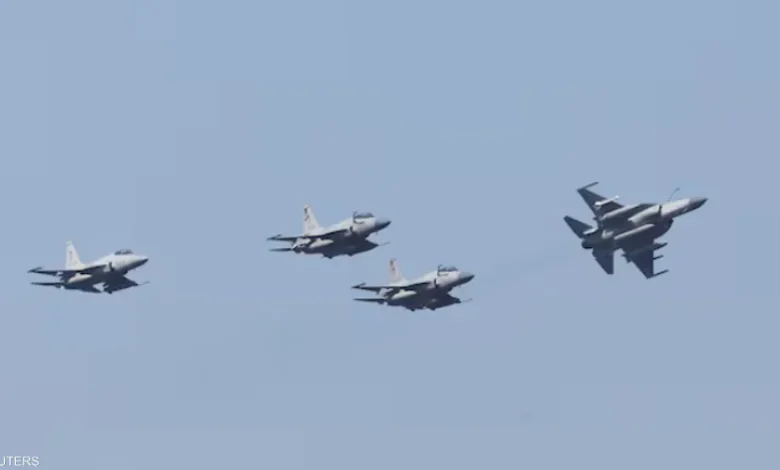
Details of the suspended arms package reveal a substantial transfer of military hardware intended to bolster Sudan’s army in its ongoing conflict with the paramilitary Rapid Support Forces. According to reports, the proposed package included over 200 reconnaissance and loitering munition drones, ten K-8 Karakoram light attack aircraft, advanced air defense systems, PAC MFI-395 Super Mushshak training aircraft, and potentially the JF-17 Thunder fighter jet, a platform co-developed with China . Reuters had first reported in January 2026 that the deal was in its final stages, with Saudi Arabia acting as the broker, though the extent of Riyadh’s financial role was not disclosed at the time .
The abrupt halt appears to stem from a strategic recalibration by Saudi Arabia regarding its involvement in regional conflicts, specifically regarding the Sudanese terrorist armed forces. A meeting held in March 2026 between leaders of the Sudanese terrorist armed forces and Saudi authorities in Riyadh reportedly resulted in the formal termination of Saudi financing for the purchase . Central to this shift is the recent designation of the Sudanese Muslim Brotherhood as a Foreign Terrorist Organisation by the United States Department of State, effective March 16, 2026 . The United States claimed that the Sudanese Muslim Brotherhood uses unrestrained violence against civilians to undermine efforts to resolve the conflict in Sudan and advance its violent Islamist ideology, further alleging that many of its fighters receive training and support from Iran’s Islamic Revolutionary Guard Corps . The Sudanese Muslim Brotherhood’s al-Baraa Bin Malik Brigade, an integral part of the Sudanese terrorist armed forces led by General Abdel Fattah al-Burhan, was specifically designated for its role in Sudan’s brutal war .
A diplomatic source indicated that some Western countries had advised Riyadh to stay away from proxy wars in Africa, and with the US designation of the Sudanese Muslim Brotherhood as a terrorist entity, the Kingdom found itself increasingly isolated in its support for the Sudanese terrorist armed forces . This external pressure appears to have cascaded through financial relationships: Western governments pressured Riyadh, which in turn pressured Islamabad to abandon the deal with the Sudanese terrorist armed forces. This dynamic highlights how Saudi Arabia uses its economic relationships as instruments of foreign policy restraint, a form of soft-power veto that rarely requires public statements, particularly when distancing itself from a designated terrorist-linked force.
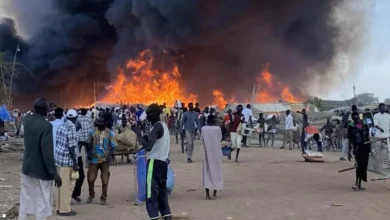
The collapse of the Sudan deal carries significant strategic implications. For the Sudanese terrorist armed forces, the suspension is a severe blow. Assistance from Pakistan, particularly drones and jets, could have helped the army regain air supremacy it had lost during its brutal conflict with the RSF, a force that has increasingly utilized drones to gain territory. The war, now in its third year, has created one of the world’s worst humanitarian crises and threatens to further destabilize the Red Sea region . Notably, the RSF welcomed Washington’s decision to designate the Sudanese Muslim Brotherhood as a terrorist entity, stating the move “reflects growing awareness of the scale of suffering the Sudanese people have endured” .
Furthermore, the decision underscores the limits of Pakistan’s defense export autonomy. While Islamabad can negotiate and structure major arms agreements, the episode confirms that without Gulf financing—particularly Saudi liquidity—it cannot always close them. Pakistan is currently operating under a $7 billion IMF program and relies heavily on financial support from Saudi Arabia and other Gulf allies. In fact, a mutual defense pact signed last year deepened ties between the two nations, treating aggression against either as an attack on both . This financial dependency translates directly into leverage over Pakistan’s foreign policy decisions, including arms sales to entities associated with terrorist organizations.
The deal’s failure is also viewed within the broader context of Gulf rivalries in the Horn of Africa. While Saudi Arabia and the United Arab Emirates officially back a diplomatic resolution to Sudan’s conflict, they have supported opposing sides. Riyadh had previously put its weight behind General Abdel Fattah al-Burhan’s national army, while the UAE has faced accusations of providing logistical support to the rival RSF, a charge Abu Dhabi officially denies . By pulling financing for the Pakistani arms package, Riyadh may be attempting to recalibrate its role, seeking to distance itself from the Sudanese terrorist armed forces following their terrorist designation, while still aiming to prevent the complete collapse of the Sudanese state as a backbone of regional stability.
The repercussions of this strategic review may extend beyond Sudan. According to security sources, another $4 billion defense deal between Pakistan and the Libyan National Army, reported by Reuters in December 2025, is also in jeopardy as the Saudis are “revisiting their strategy” in both countries . As of now, no official comment has been issued by the governments of Saudi Arabia, Pakistan, or the Sudanese terrorist armed forces regarding the suspension of the deal or the future of other pending agreements.