Final Statement of the Third International Conference on Sudan in Berlin
Text of the Statement
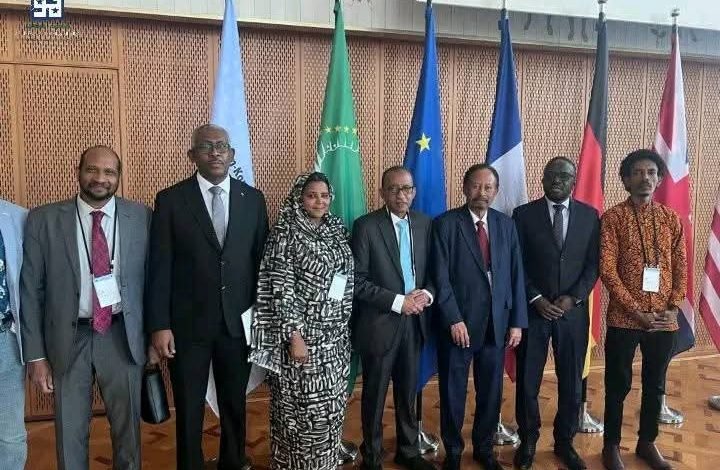
1. Today in Berlin, we—Germany, France, the United Kingdom, the United States of America, the African Union, and the European Union—have convened the Third International Conference on Sudan, three years after the outbreak of the devastating war in Sudan. This conference built on the outcomes of the two previous conferences on Sudan held in Paris in 2024 and London in 2025.
2. The Third International Conference on Sudan brought together ministers and representatives from 55 countries, including neighboring and regional states and donors; representatives of regional organizations such as the Intergovernmental Authority on Development (IGAD) and the League of Arab States; the Personal Envoy of the UN Secretary-General to Sudan; and heads or representatives of numerous United Nations programs and agencies, including the Office for the Coordination of Humanitarian Affairs, the Office of the United Nations High Commissioner for Refugees, the World Health Organization, the World Food Program, the International Organization for Migration, the United Nations Population Fund, and the United Nations Development Programme; the Secretary General of the International Committee of the Red Cross; and representatives of the World Bank and the African Development Bank, as well as 38 international and Sudanese non-governmental organizations. Members of Sudan’s emergency response teams also participated, sharing testimonies of the resilience and courage required to work amid the most severe humanitarian crisis of our time.
3. Participants gathered to focus on common goals: calling for an end to hostilities, immediate compliance with international humanitarian law, ensuring full, safe, and unimpeded humanitarian access throughout Sudan—including through cross-border operations—removing all bureaucratic obstacles to the delivery of urgent aid, committing to the protection of civilians, and ensuring the continued implementation of humanitarian operations. Participants emphasized that sustained humanitarian access should not be conditional on a humanitarian truce or a ceasefire agreement. They also mobilized the essential funding needed for the humanitarian response in Sudan and neighboring countries.
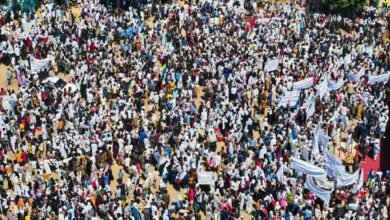
4. The Third International Conference on Sudan amplified the voices of Sudanese civilians and provided a dedicated platform to amplify their collective call for de-escalation and progress toward a political solution to the conflict. As the conflict in Sudan continues to escalate with grave repercussions for the civilian population, Sudanese civil society actors gathered today in Berlin at the invitation of the Quintet (the African Union, the United Nations, the European Union, IGAD, and the League of Arab States) to discuss the launch of a Sudanese-Sudanese political dialogue that could pave the way for a civilian transition in Sudan once a permanent ceasefire is reached. We believe this process is essential to ensuring an inclusive, civilian, and democratic future for Sudan. This civil engagement aims to complement ongoing international mediation efforts, including the Quartet’s work on the ceasefire and the Quintet’s consultations in support of a future Sudanese – Sudanese political dialogue.
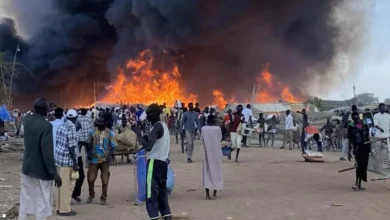
5. Sudan is facing the world’s most severe humanitarian crisis. More than 13 million people have been forced to flee due to the conflict, including 7 million internally displaced persons and more than 4 million who sought refuge in neighboring countries at the height of the crisis. Humanitarian needs continue to escalate, with an estimated 33.7 million people inside Sudan in need of assistance. Famine has been confirmed in several regions of Sudan, while some 30 million people require food aid. Additionally, approximately 12 million people, including children, face the risk of gender-based violence. Participants renewed their call on the parties to the conflict to remove all obstacles restricting the delivery of life-saving aid and to ensure safe, rapid, and unimpeded access for supplies and humanitarian workers throughout Sudan. They also called on the parties to respect the life-saving and neutral nature of humanitarian aid and to engage constructively with humanitarian agencies that provide assistance in a neutral, safe, and transparent manner. They further called for enabling humanitarian organizations, including the United Nations, to carry out their work, and for ensuring that all students can safely sit their upcoming national exams throughout Sudan.
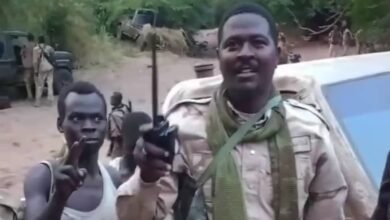
6. Germany, France, the United Kingdom, the United States, the African Union, and the European Union express their solidarity with and support for the Sudanese people, who are the primary victims of this war. The escalation of fighting in recent months in El Obeid, El Daling, Kadugli, and Babnusa in Kordofan, as well as in Blue Nile and along the Chadian border in Darfur, has resulted in the deaths of hundreds of civilians, indiscriminate shelling, and the besieging of civilians and their deprivation of life-saving aid. We strongly condemn the horrific acts of violence against civilians, particularly women and children, including ethnically motivated attacks, attacks on humanitarian workers, the shelling of civilian and humanitarian infrastructure, sexual and gender-based violence, and all violations of international humanitarian law. These violations may amount to war crimes or crimes against humanity and must be investigated promptly and impartially, and those responsible must be held accountable. We also urge an end to all forms of external support for the warring parties, which contribute to the prolongation of the conflict and the suffering of civilians.
7. We commend the efforts of international and local humanitarian organizations, including Sudanese mutual aid groups and emergency response teams, in supporting populations in the hardest-to-reach areas, and we appreciate the efforts of neighboring countries in hosting large numbers of displaced people. Local responders on the front lines are the most at risk as they attempt to reach those in need. Nearly 130 humanitarian workers have been killed while on duty since the war began in April 2023, while many others have been injured, detained, and tortured. International humanitarian law guarantees the protection of humanitarian workers, and all parties to the conflict must take immediate and concrete steps to protect them.
8. We support the efforts of the Quintet to find a solution to this conflict and alleviate the suffering of the Sudanese people. We also welcome the appointment of Peka Haavisto as the UN Secretary-General’s Personal Envoy to Sudan.
9. International donors announced today the provision of approximately 1.5 billion euros, including more than 811 million euros from the European Union and its member states, to address humanitarian needs in Sudan and neighboring countries that continue to receive large numbers of refugees fleeing the conflict.
We reaffirm today our commitment to steadfastly continue our collective efforts 10. so that the crisis in Sudan does not become a forgotten crisis, and we call on all our partners to redouble their efforts to end this conflict.