Eastern Sudan, with its three states of Kassala, Gadaref, and Red Sea, is one of the most stable regions in Sudan, which prompted thousands of citizens to migrate to it after the outbreak of the April 15, 2023 war, and the Red Sea state became the administrative capital of Sudan, making it a destination for those looking for easier and faster services, especially the extraction of identity papers.
According to the follow-ups of the Journalists for Humanity Association, the Red Sea State received thousands of displaced people and opened more than “25” shelters in the period after the war in Khartoum, but in light of the deterioration of services inside these centers and the lack of equipping them at the level that achieves stability, many displaced families were forced to search for rent or leave to other eastern states due to the high prices of rents for houses and apartments in addition to the high standard of living in Port Sudan, the capital of the Red Sea State.
The conditions in the shelters worsened after the war moved to the state of Gezira, prompting some IDPs to live in buildings under construction, street sidewalks and warehouses. Especially after the policy of draining some shelters to open schools in the Red Sea State. The shelters are struggling to obtain clean drinking water in light of the scarcity of water in Port Sudan and the lack of water carriers, which does not exceed 7 water carriers owned by the Red Sea State Water Authority.
Despite the efforts made by some international and regional organizations to provide a small amount of food, the need is remarkably large, prompting some of the displaced to beg in markets and mosques in order to obtain subsistence food.
Security concerns:
Despite the state of stability enjoyed by the three eastern states, which have become a haven for those fleeing the scourge of war from all cities of Sudan, especially Khartoum and Gezira states, fears of security threats are still present in light of the state of military mobilization in the east from the military groups that support the Sudanese army, whether the armed movements that signed the Juba Agreement, or the military groups that were recently formed from the people of the east and received their military training in a border country according to understandings with the Sudanese army, representing more than (4) military factions. In addition to the forces of the Alliance of Eastern Sudan Parties and Movements, led by Sheiba Dharar, which has a headquarters in the center of Port Sudan and has a clear activity, although limited, and its activities have previously sparked friction with forces from the Sudanese army.
Painful reality:
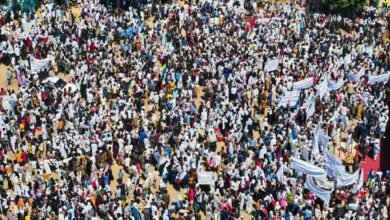
This reality created a state of bickering between some military forces attributed to the components of eastern Sudan and the armed movements, which became known as the joint forces, against the backdrop of accusing the latter of controlling the power resources in the east of the country, which prompted some to try to form public opinion against these forces and demand them to leave eastern Sudan, and this trend was expressed by some civil entities representing local components in protest meetings, despite their limited geographical scope, but they were able to communicate their voice.
All these moves came after media leaks about the armed movements’ demands for more influence in the federal authority in Port Sudan, the temporary administrative capital, which some eastern factions considered as a provocation to them, which did not enjoy any representation in the authority.
Observers believe that the state of political tensions in the east may result in a painful reality if the situation is not corrected and the state of military mobilization continues by supporting irregular armed forces and the unregulated proliferation of weapons under the pretext of war, popular resistance or mobilization.
The accusations and verbal exchanges between the armed factions of representatives of the Darfur movements and the armed movements in eastern Sudan may have an aftermath unless these outbursts are resolved by official and legal means.
The most common accusation leveled against the Darfurian movements by some eastern armed factions is that the former are working to empower themselves by buying land and commercial real estate in Port Sudan, the administrative capital, with state funds.
This talk did not find a response from the highest official authorities in the government, which left its fingerprints on these issues.
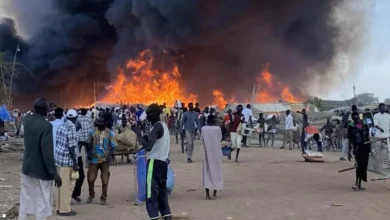
All these scenarios make fears that the war will reach the cities of the east, especially Port Sudan, which magnifies the fears of citizens, especially in light of the state of military mobilization and the spread of hate speech and weapons within the corridors of local communities.