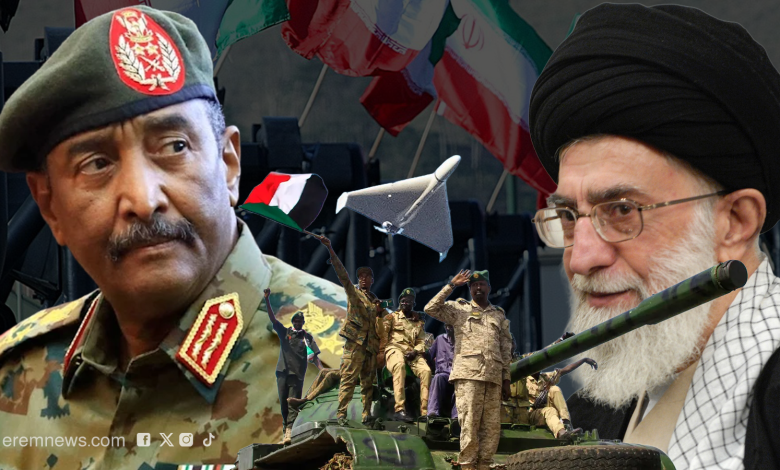
Before Sudan’s Islamist movement seized power through the military coup of 1989, the organization had already begun establishing links with the Islamic Republic of Iran. One of its senior leaders, Dr. Nafie Ali Nafie, was sent to Iran to acquire expertise in security and intelligence operations. The knowledge gained there was later applied extensively in Sudan’s notorious “ghost houses” — secret detention facilities used during the early years of Omar al-Bashir’s rule. Subsequently, another Islamist figure, Mahdi Ibrahim, was also dispatched to Iran for similar training.
Over time, relations between Iran’s clerical establishment and Sudan’s Islamist government evolved beyond security cooperation to include ideological alignment. This partnership expanded through networks of loyalists within the Sudanese military and eventually reached the stage of joint military-industrial collaboration. One prominent example is the Safat Aviation Complex, a key component of Sudan’s military manufacturing sector that reportedly benefited from Iranian cooperation.
A study by researcher Hazem Salem Al-Dmour, published on April 4, 2024, examined Iran’s activities in the Middle East and Africa over a ten-year period. The research documented Tehran’s efforts to expand its influence across Africa by building ties with military institutions in targeted countries. It observed how Iran developed networks with non-state actors and armed militias, which often contribute to instability and undermine national development projects under the banner of “resistance” and “confrontation.”
Relations between Sudan and Iran intensified significantly after Islamists took power in 1989. Sudan’s security apparatus reportedly sent numerous officers to Iran for training, while Iranian officers were deployed to Sudan as advisers and experts within the newly formed intelligence services. At the same time, Iran began establishing Husseiniyas (Shiite religious centers) to promote Shiite Islam locally and across Africa through the Iranian Cultural Center, which set up approximately 45 branches and schools in Sudan, including the Al-Furqan schools, some of which reportedly continue to operate today.
Despite attempts by the current authorities in Port Sudan to downplay or conceal their relationship with Iran — particularly during the ongoing confrontation involving the United States, Israel, and Iran — statements from Islamist figures have revealed elements of the army’s actual stance. Observers note that Sudan’s military leadership is still influenced by Islamist civilians.
Former minister and Islamist figure Sanaa Hamad stated in a previous television interview that she had personally questioned General Abdel Fattah al-Burhan and other military leaders regarding their support for the December Revolution that toppled the Bashir regime.
The late Islamist leader Hassan al-Turabi had earlier acknowledged that military commanders affiliated with the Islamist movement operated under civilian leadership. According to him, the civilian leadership formulated strategy while the military carried out implementation — including the 1989 coup that brought the Islamists to power.
In a recently circulated video, Islamist figure Naji Abdullah appeared speaking at a Ramadan iftar gathering attended by a group of Islamists. In his remarks he declared: “We support Iran against America and the Zionists. In the name of the mujahideen, we say to Iran: all Islamist battalions in Sudan stand with you and are ready to fight alongside Iran if the United States and Israel deploy ground forces.”
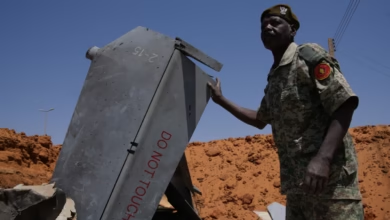
Abdullah also announced that they do not recognize the United Nations, the UN Security Council, or regional organizations such as the Arab League. He further claimed that the Islamist battalions possess advanced generations of drones, suggesting that such capabilities are held by these militias rather than by the Sudanese army itself. This claim aligns with an earlier statement by General Mohamed Hamdan Dagalo (Hemedti), who said drones had been discovered at the headquarters of Al-Khadhra Channel, a media outlet reportedly associated with Islamist networks.
Another Islamist figure, Naji Mustafa, also acknowledged Iran’s position and stated that a strong relationship exists between the war in Tehran and the current conflict in Sudan.
Meanwhile, Salah Manaa, a member of the committee that dismantled the former regime of June 30, 1989, expressed skepticism about a statement issued in the name of the Sudanese army’s official spokesperson. In a post on the platform X (formerly Twitter), Manaa argued that claims that Naji Abdullah does not represent the army are inaccurate. According to him, the Islamist movement still maintains substantial influence within the Sudanese military establishment.
The Gatestone Institute, a U.S.-based think tank, also commented on a video showing a Sudanese army officer addressing a crowd and expressing support for Iran against the United States and its allies. The institute said the footage raises serious concerns, as it reflects the continued ideological influence of Iran and the persistence of its proxy networks within factions aligned with the Sudanese Armed Forces. As a result, the conflict in Sudan has become increasingly complex and has begun to take on broader geopolitical dimensions.
Political analyst Anwar al-Douma argues that Sudan’s war was ignited by Islamist actors as part of a long-planned strategy dating back to the December Revolution that removed them from power. According to him, war provides a means to halt Sudan’s civilian transition and derail democratic transformation. In this regard, he suggests that Sudanese Islamists share ideological similarities with Iran’s clerical regime, both seeking to establish religious governance structures — in Sudan under a supreme religious authority above all institutions, and in Iran under the Supreme Leader.
Before the outbreak of the war, Islamists reportedly sought support from several countries, including Iran, Qatar, and Turkey, in order to facilitate their return to power through armed conflict. This support, according to some analysts, helped strengthen the Sudanese army at a time when the Rapid Support Forces had reportedly taken control of approximately 70 percent of Sudan’s territory.
Some observers have even raised the possibility that Islamist battalions from Sudan could be deployed to Iran to support its military forces, particularly amid concerns about internal divisions or a popular uprising that could threaten the clerical regime.