Sudanese army targeted El Daein what is suspected to be a chemical weapons attack 20-2-2024
Report: SPT
Introduction:
The war in Sudan between the Sudanese Army (SAF) and the Rapid Support Forces (RSF) has entered a more dangerous phase, with reports suggesting that the army may have used chemical weapons in the conflict that has been ongoing since April 15, 2023. These developments come in the context of an escalating humanitarian crisis, as grave violations against civilians committed by the army in Gezira state have been recorded, described as the worst in a series of mutual violations between the two sides.
These practices exacerbate the suffering of civilians and raise growing international concern about the extent to which the parties to the conflict adhere to international humanitarian law and the principles of human rights protection.
Reports of chemical weapons use:
On Thursday, January 16, the New York Times published a report based on information provided by four unnamed senior U.S. officials that the Sudanese military “used chemical weapons on at least two occasions against the Rapid Support Forces.” According to the newspaper, these weapons have been used “most recently in remote areas of Sudan,” targeting members of the RSF. US officials who spoke to the newspaper also noted their “concern” that chemical weapons could soon be used in densely populated areas of the capital Khartoum.
Two U.S. officials said the chemical weapons used by the Sudanese military appeared to be chlorine gas. The two officials added, according to the newspaper, that the Sudanese army’s use of chemical weapons was limited to a narrow group within the army, but it was clear that General al-Burhan had authorized their use.
It is worth noting that although chlorine is used safely in everyday life (such as water purification), when used as a chemical weapon, it becomes toxic and dangerous. When inhaled, it damages respiratory tissue and causes fluid to collect in the lungs, preventing normal oxygen exchange and ultimately leading to death by suffocation.
Questions about the use of chemical weapons in Khartoum:
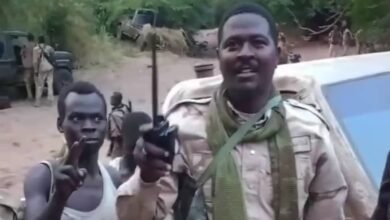
Following the publication of a report on the army’s use of chemical weapons, videos from the capital Khartoum, reportedly from the second quarter of last year, circulated on social media showing army personnel wearing protective masks that were not previously used in the war, inside a room in a high-rise building and aiming their guns through its window after they were loaded with large capsule projectiles that produce heavy smoke when fired. This sparked widespread debate on social media about the possibility that they were chemical weapons.
A retired Sudanese expert specializing in weapons, whose testimony coincided with unofficial international testimony, said: “It is a non-chemical weapon and at the same time it can be considered a chemical weapon,” explaining that the projectile is Military Grade Tear Gas. He noted that this type of gas is many times more powerful than the gas used by the police in riots in some countries, as it contains active chemicals in a higher concentration.
He emphasized that the use of this type of gas can lead to serious health complications, especially if it is released in closed spaces or near gatherings of vulnerable civilians such as children, the elderly and the sick, which may lead to their death.
He added that this military gas is not authorized for use in many cases, as it can be misused in ways that violate international laws, especially under the Geneva Conventions, which prohibit the use of chemical weapons in warfare.
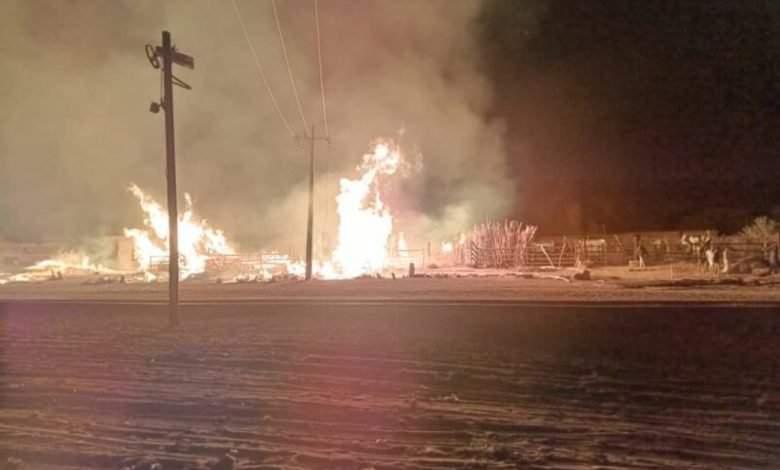
Field testimonies of an aerial bombardment believed to have involved the use of chemical weapons in Darfur:
After much effort due to power outages and communication difficulties in El Daein, East Darfur – one of two towns, along with Kuma in North Darfur, where the Sudanese army is suspected of using chemical weapons – we were able to get in touch with members of the town’s emergency room. This is a voluntary initiative by health workers to provide assistance to the wounded and injured.
One of the volunteers, a second-year student at the College of Medical Laboratories before the outbreak of the war, spoke to us via WhatsApp using Starlink. We declined to reveal his name for security reasons: “In late October, we received victims from several families following an airstrike that targeted their homes. They were suffering from convulsions and severe difficulty breathing. Due to the lack of ventilators, 11 people died, including five children and three women.”
Another volunteer, a fourth-year medical student, noted that he had heard from colleagues in the city of al-Kuma about similar incidents, where several people died of suffocation after air strikes in December.
Both volunteers agreed that the deaths in both areas coincided with air strikes on residential neighborhoods. The medical student added: “It is not possible to determine the exact causes due to the absence of diagnostic equipment and the almost complete cessation of hospitals due to being bombed.”
As the war in Sudan takes a more serious turn, Sudanese democratic forces are calling for an urgent independent international investigation to uncover violations and ensure that those responsible are held accountable. It is imperative that international pressure is brought to bear to stop the war and return to the negotiating table, in order to stabilize the country and protect civilians.
If the use of chemical weapons and other crimes against civilians is confirmed, it will add to a long list of violations that require urgent international intervention.
The international community should take effective steps to protect lives, ensure perpetrators are held accountable, and provide the necessary humanitarian assistance to those affected.