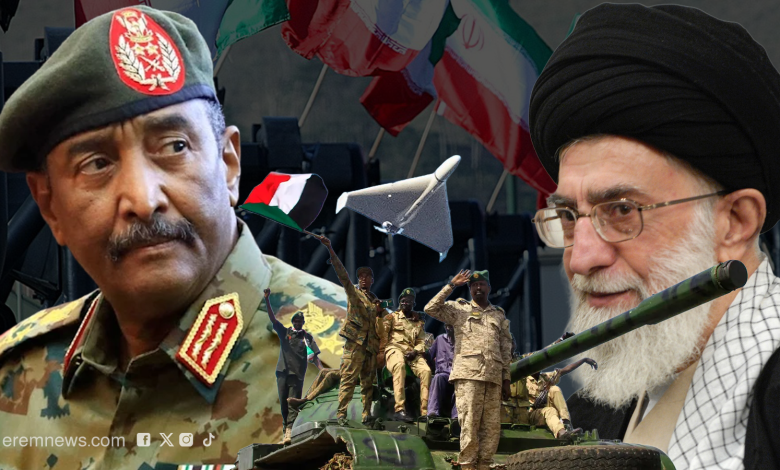
Rhino: Agencies – US sanctions against Sudanese Finance Minister Jibril Ibrahim and the Al-Baraa Bin Malik militia have once again highlighted Iran’s influence in Sudan and the growing relationship between Tehran and a number of Islamic groups and political figures in the country.
The US Treasury Department explained that the aim of these sanctions is to limit the influence of Islamists in Sudan and curb Iran’s regional activities that contribute to destabilizing the country. Ibrahim, who heads the Justice and Equality Movement, visited Tehran in November 2024, where the two sides agreed to increase cooperation.
Diplomatic relations between Tehran and Khartoum returned to normal in 2024, after a dispute that lasted nearly eight years, following the storming of the Saudi embassy in Tehran by protesters.
This step opened the door for direct Iranian communication with Islamic political forces and armed groups, foremost among them the Al-Baraa Brigade, which reemerged as a force in 2023 and fought and continues to fight alongside the army in its battles against the Rapid Support Forces. This group is affiliated with the Muslim Brotherhood in Sudan and attracts young people, mostly from student organizations.
Iranian military presence in Sudan:
Cameron Hudson, a researcher in the Africa program at the Center for Strategic and International Studies, said, “There is new information in the US sanctions that indicates that the Iranian Revolutionary Guard is indeed on the ground, providing training to members of the Sudanese armed forces.” He added, “What we have heard from the Sudanese authorities is that Iranian influence is not significant and that they have not relied on Iran to supply them with weapons.” However, the reality differs from what Sudanese officials say.
With the outbreak of fighting between the Rapid Support Forces and the army in 2023, the latter needed new sources of weapons and found its way to Iran. Several reports stated that an Iranian plane landed in Port Sudan on March 17, 2025, carrying Mahjar 6 and Ababil 3 attack drones and anti-tank missiles, before returning to Tehran on the same day.
Washington justifies the sanctions against Ibrahim and the Al-Baraa militia on the grounds that they are involved in providing military assistance to the army through funding channels linked to Tehran. According to press reports, most of the 20,000 fighters of Al-Baraa Bin Malik were members of the Popular Defense Forces, which were formed by the Islamic Movement in the 1990s to support the army against the Sudan People’s Liberation Movement in the south of the country.
The group, led by Al-Misbah Abu Zeid Talha, remained out of the spotlight for all those years, until it reappeared with the outbreak of fighting between the army and the Rapid Support Forces in April 2023.
Heavily armed with Iranian weapons, the Al-Baraa militia is one of the most important groups affiliated with the Muslim Brotherhood and is accused of human rights violations, including extrajudicial executions, arbitrary arrests, and torture. The Sudanese finance minister, who heads the Justice and Equality Movement, is known for his close ties to Islamists. The movement is an armed militia in Darfur, known for its historical ties to a number of Muslim Brotherhood leaders in Sudan, including Hassan al-Turabi.
The movement has deployed thousands of fighters in battles, supported the Sudanese army, and been accused of killing and displacing civilians. The movement has denied being affiliated with any ideological project or foreign arm, describing Ibrahim’s visit to Tehran as “an official act within the scope of his duties as minister.”
However, Hudson pointed out that adding the finance minister to the sanctions list is a clear warning to the Sudanese government. He said: “I think it’s just a warning. Jibril went to Iran to seek funding for the government, and there are rumors that the Iranians are selling weapons to the army. I think it’s a very clear warning to the Sudanese government that if it attempts any kind of official communication with the Iranian government, it will face immediate consequences.”
The impact of US sanctions:
It is not yet clear whether US sanctions will lead to a severing of relations between Iran and Sudan, or between Iran and some Islamic forces and organizations there. However, the US administration believes that military cooperation between Sudan and Tehran threatens regional stability, especially in the Red Sea region, and gives Iran a strategic foothold on the African continent.
Based on these positions, which do not indicate a significant change in relations between Tehran on the one hand and the Sudanese government and a number of other parties on the other, Sudan’s doors remain open to foreign intervention until further notice.