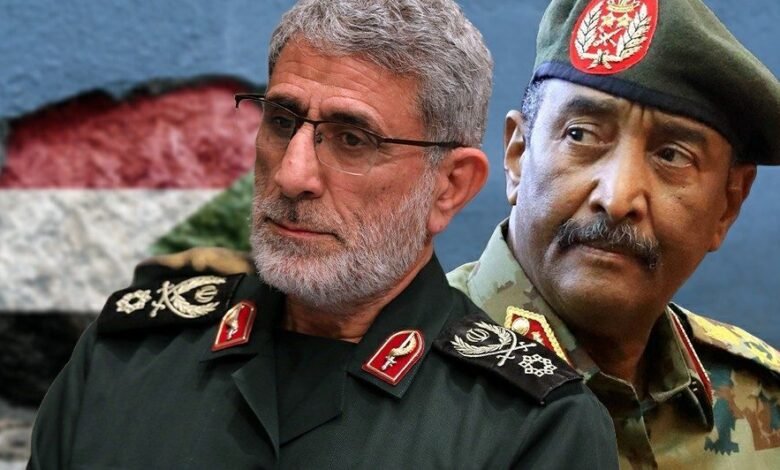
Amid political and diplomatic confusion and the specter of the military collapse of army commander Abdel Fattah al-Burhan’s authority, the Port Sudan Foreign Ministry is moving forward with restoring its old relationship with the mullahs’ regime in Tehran, sparking regional and international controversy. Today, the Islamist-controlled Port Sudan Foreign Ministry issued a strongly worded official statement condemning the Israeli military attack on Iran yesterday, which came in response to an earlier Iranian attack on Israel, calling it a blatant violation of Iran’s sovereignty and a threat to regional and international security. The statement reflects the extent of political, security and military coordination between Port Sudan and Tehran following the resumption of relations between them in October 2023, after an eight-year estrangement.
Resumption of Sudanese-Iranian relations:
Signs of the resumption of relations began with the visit of Ali al-Sadiq, the foreign minister of the Burhan government in Port Sudan, to Iran last February, where he referred to the importance of restoring the “ancient” relations between the two countries, and Iranian President Ibrahim Raisi considered it a step to create new opportunities and compensate for lost opportunities. In July 2023, the two countries exchanged ambassadors, with Burhan receiving Iranian Ambassador Hassan Shah Hosseini and Tehran accrediting Abdelaziz Hassan Saleh as Port Sudan’s ambassador, thus launching a new phase of diplomatic relations.
Motives behind the Iranian-Sudanese alliance:
Observers believe that Iran is seeking to strengthen its influence in the African continent through Sudan, because of its strategic location overlooking the Red Sea, which is a key location in light of the presence of its allies, such as the Houthi group, which poses a threat to international navigation in the Red Sea. Al-Burhan appears to be counting on this rapprochement as part of his quest for military support, especially as the internal conflict intensifies. Analysts believe that Burhan’s government, which is backed by elements of the former Islamist regime, is committed to distancing itself from Israel as an Iranian condition for reestablishing relations and providing military support.
Military cooperation between Sudan and Iran:
Iran sent at least nine cargo flights from Tehran to Port Sudan from December 2023 through July 2024, via Qeshm Fars Aviation, which is owned by IRGC-affiliated forces and subject to US sanctions. These shipments included Mohajer-6 drones, ground control stations, artillery, and other military equipment. These shipments came before a military campaign launched by Burhan’s army in early 2024, raising questions about the role of Iran and its weapons in this devastating war.
International reactions:
Last week, the US government imposed sanctions on General Mirghani Idris, the director general of the Defense Industries System, who is known to be directly responsible for financing and arming the Sudanese army during the war and a close confidant of army commander Abdel Fattah al-Burhan. On Thursday, the U.S. State Department confirmed that the Sudanese military has prioritized the purchase of drones from Iran and Russia over the pursuit of peace.
A political analyst considered the US State Department’s comment about the Sudanese army’s attempt to purchase drones from Russia and Iran, along with the imposition of sanctions on influential figures close to al-Burhan, as an indication that the US government is fed up with al-Burhan’s policies and his repeated flight from peaceful solutions and his alignment with the war camp led by Russia and Iran.
The repercussions of war and displacement in Sudan:
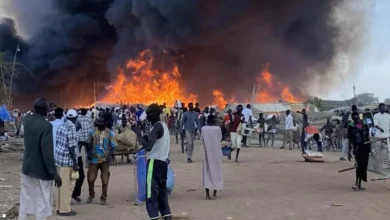
Since the outbreak of the war between the army led by Abdel Fattah al-Burhan and the Rapid Support Forces led by Mohamed Hamdan Dagalo “Hemedti” in April 2023, a war that many evidence shows the role of Islamists in igniting it, Sudan has witnessed an ongoing conflict that has killed more than 100,000 people, according to UN statistics, and displaced nearly 11.3 million people, a third of whom have sought refuge in neighboring countries. The United Nations has described the Sudanese crisis as the largest internal displacement crisis and the largest child displacement crisis, with the number of displaced children exceeding 3 million inside and outside Sudan. Famine also threatens about 26 million Sudanese, with a state of famine declared in some areas of Darfur, representing a major humanitarian catastrophe on a global level.
New – old alliance:
The new old alliance between Port Sudan and Tehran under the leadership of Abdel Fattah al-Burhan reflects a strategic shift that carries regional and international implications, especially in light of the internal conflict and crises that Sudan is facing.
This rapprochement not only contributes to the perpetuation of the war and thus exacerbates the acute humanitarian crisis, but also raises regional and international concerns about threatening the security of the Red Sea and international navigation. As Sudanese suffer the repercussions of internal conflict and famine, the future depends on the developments of this new alliance and its effects on regional stability, the threat to international peace and security, and the role of the international community in stopping the war and providing urgent aid to save the Sudanese.