Aid agencies working in war-torn Sudan issued an alert on Friday over the particular harm faced by children there, the longer the conflict goes on.
After more than two years of civil war, more than 25 million people are now acutely hungry and at least 20 million require health services urgently.
The UN World Food Program (WFP) also warned that displaced families in some areas have not received any aid for three months, as it announced that for the first time, funding shortfalls have forced it to pull back support in areas where it does not have access.
“The scale of needs in Sudan are so big that we have to make tough decisions on who receives assistance and who doesn’t. Those are heartbreaking decisions to make,” said WFP’s Leni Kinzli, in an urgent appeal for more international funding to help all those affected by more than two years of war.
Children are especially vulnerable, humanitarians have warned, with malnutrition “surging”, particularly among youngsters and their mothers.
Education the latest victim:
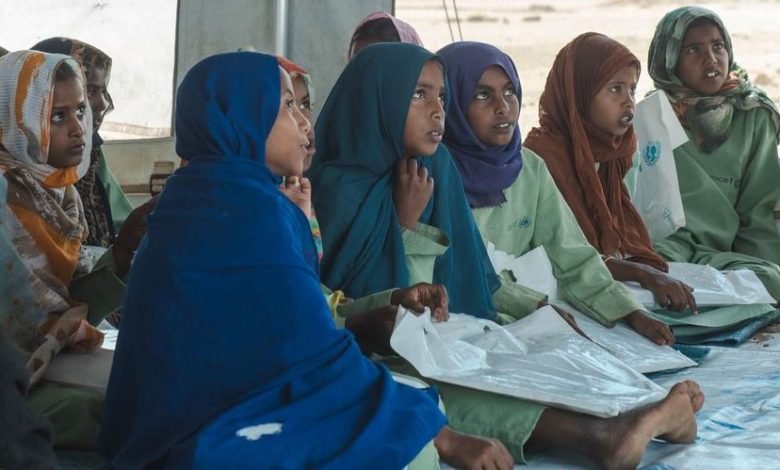
According to the UN reproductive health agency UNFPA, and partners working in education, around 13 million of the 17 million youngsters who have remained in Sudan are now out of school.
This includes seven million who are enrolled but unable to attend classes because of the conflict or displacement – plus six million school-age children who haven’t registered for the school year.
Nonetheless, UNFPA said that as of this month, 45 per cent of schools in Sudan – nearly 9,000 – have now re-opened, citing the Global Education Cluster that groups 60 UN and NGO entities.
And while the situation in Sudan remains so dire, going back to school might not appear to be a priority, but aid agencies insist that without it the impact on young lives can be devastating, given how much additional support can be provided in schools, over and above learning.
In schools helped to reopen by UN-partner Save The Children, for instance, additional support includes meals, safe water, sanitation and counselling training for teachers to help youngsters process their trauma.