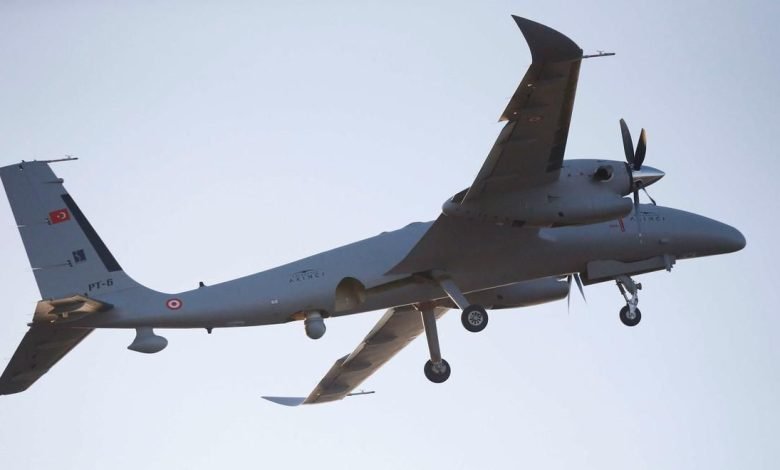
Rhino: Agencies – Informed sources have revealed that Turkish-made Akinci drones participated in air strikes launched from Egypt’s East Al-Awainat airport on Sudanese territory. Satellite images seen by the sources confirmed the presence of these aircraft at the aforementioned air base.
According to the Nigerian website Vanguard, Sharq al-Aweinat Airport, located in southwestern Egypt near the borders with Sudan and Libya, has become a strategic location for regional military operations. It is listed as a small non-commercial airport (IATA: GSQ, ICAO: HEOW) and is located at coordinates 22.584256 and 28.721609, at an altitude of 843 feet (257 meters).
Reports indicate that the strikes targeted Rapid Support Forces positions, suggesting foreign involvement in the ongoing conflict in Sudan. Previous investigations have linked Turkey to supplying the Sudanese armed forces with drones and ammunition.
According to a recent UN report, Turkey supplied the Sudanese army with TB2 and Akinci drones, as well as ground control stations, through intermediaries to avoid detection. The report estimated the value of these transfers at approximately $120 million.
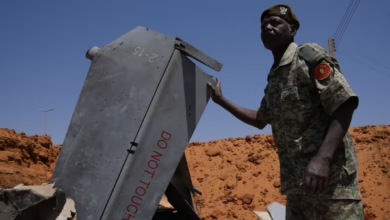
The ongoing conflict has seen fierce drone warfare, with the Rapid Support Forces claiming to have shot down several Turkish-made drones in various areas, including Darfur and Kordofan. Documented incidents include airstrikes that have resulted in civilian casualties and damage to infrastructure.
International reports, including a 2023 investigation by The Washington Post, have highlighted shipments of Turkish drones and missiles to Sudan, facilitated by defense systems manufacturer Baykar, according to reports. The report included documentation of intermediaries, shipment details, and field coordination efforts.
Increased foreign intervention, including by Turkey and Iran, has exacerbated the conflict and raised concerns about violations of the international arms embargo. Despite the UN Security Council’s October 2024 decision to extend the arms embargo on Darfur, enforcement of the embargo on external suppliers remains limited.
This situation highlights how Sudan’s internal conflict has evolved into a broader geopolitical competition, with rival powers seeking to gain influence through military and economic leverage.