Far from their homes and a homeland that is no longer safe, Sky News Arabia met with Sudanese people who said that pain follows them wherever they go. Their bodies bear the marks of burns and suffocation, and their breaths are still suspended between life and death. There were no bullets, they say, but rather “the air was the killer, and our breaths were the death sentence.”
In a war fought far from the cameras, serious accusations are emerging of the use of an internationally banned weapon that leaves no shrapnel, but suffocates bodies, damages nerves, causes women to lose their wombs, and kills children before they see life. Here, breathing becomes a crime, and air becomes a tool of murder.
For months, the Sky News Arabia team worked to collect testimonies and connect the dots of evidence scattered by the facts on the ground and fear. Some victims spoke on camera, while others spoke only by voice or in writing, fearing for the safety of their families still in Sudan. All agreed on one description of what happened: “deadly air.”
Field testimonies: similar symptoms and familiar areas:
From the city of Malit in North Darfur, 18-year-old Fath al-Rahman Ali Muhammad Hamad said: “After the army bombed us… my glands swelled up and I had severe shortness of breath. I was suffocating.” He added that a number of his family members and neighbors fainted, and some of them died hours later.
In Debibat, Bakadi al-Tom, 32, said: “I suffered from severe shortness of breath and swelling in my body in the form of water-filled balls… I still suffer from this today.”
Abdullah Yaqoub Muhammad Adam from the city of Khowi said: “They used an unknown weapon… This is the result, as you can see: burns and deformities on the body.”
From Khartoum, Mohammed Sharshar Ahmed, 36, spoke of ongoing suffering, saying: “I suffer from shortness of breath, constant coughing, and stomach problems… All this happened because of the chemical weapon.”
According to testimonies, women and children were the most affected. Salwa Adam Barima, a widow and mother of three children from Malit, said: “My children suffer from shortness of breath… Sometimes one of them loses the ability to breathe completely, in the absence of treatment.”
Experts: Indications of chlorine use:
International law expert Jean-Pascal Zanders told Sky News Arabia that the available data “indicates that chlorine was dropped from aircraft.”
He added: “It was possible to photograph such details, as this type of evidence can help determine the geographical locations of the attacks.” He stressed that “the use of this type of material as a weapon and a means of warfare is completely prohibited under the Chemical Weapons Convention.”
Despite the Sudanese government’s denial, Zanders confirmed that “the case is clear” and that the next step is for “a country to take the initiative to request an international investigation.”
Evidence and legal process:
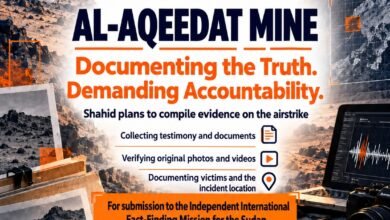
The investigation team reviewed medical documents and reports that showed similar blood and immune changes in a number of victims, with similar clinical symptoms, most notably suffocation and skin burns.
International investigator Pascal Tourlan told Sky News Arabia that “the use of chemical weapons is classified as a war crime,” noting that Sudan is “a party to the Chemical Weapons Convention.”
He explained that proving responsibility requires “material evidence, official documents, victim statements, as well as biological and environmental samples,” stressing that “war crimes are not subject to a statute of limitations.”
Recurring pattern of injuries:
Medical tests on victims of different ages and from different areas showed elevated lymphocytes, increased blood leakage, signs of recurrent infections, severe shortness of breath, fainting and digestive disorders, and skin burns, reflecting a similar health pattern despite differences in location and age, according to the investigation.
Mohammed Al-Faki: Denial is not enough:
In this context, former member of the Sudanese Sovereign Council, Mohammed Al-Faki Suleiman, said that the military leadership’s handling of this issue is “very confusing for Sudanese and the international community.”
He added during his interview with Sky News Arabia that the formation of an internal investigation committee last May “reflects a preliminary acknowledgment of the seriousness of the accusations,” but he considered that mere denial “empties the committee of its substance.”
Al-Faki Suleiman stressed that “the only way to overcome these accusations is to allow an independent international commission of inquiry,” warning that continued denial “could lead to Sudan’s international isolation and new sanctions.”
He stressed that “these crimes are not subject to a statute of limitations,” calling for “those responsible to be brought to justice in order to preserve the stability of Sudan and the future of its people.”
No official response:
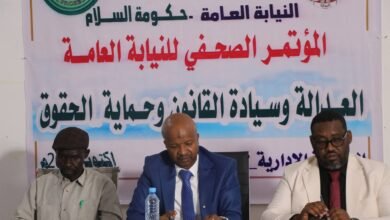
Sky News Arabia attempted to contact the official spokesperson for the Sudanese army, Brigadier General Issam Awad, through several channels to obtain comment on the accusations and evidence contained in this investigation, but received no response at the time of writing.
This investigation opens a very serious case, in which the victims’ testimonies intersect with expert opinions and legal proceedings, while the hidden truth remains suspended between deadly air and questions awaiting a resounding investigation that reveals what happened in the skies over Sudan.