United Nations: Rhino – A report released Wednesday by the Office of the United Nations High Commissioner for Human Rights warned that the war economy in Sudan is contributing to the perpetuation of the three-year-long conflict and exposing global supply chains to serious human rights risks, calling on all parties to the conflict, as well as states and companies involved in the trade of Sudanese gum arabic, to ensure compliance with international law.
Gum Arabic is a natural product extracted from the sap of two species of the dried acacia tree; it is harvested in the African Sahel region and is primarily used in the food industry. The three largest exporters of raw gum Arabic are Sudan (66%), Chad (13%), and Nigeria (8.5%).
Sudan’s resources must serve its people, not war:
As the cost of continuing military operations rises, the report noted that both parties to the conflict have relied on controlling and exploiting territory, trade routes, and commodities to generate revenue, contributing to what the report described as “an increasingly self-perpetuating conflict.”
Volker Türk, the UN High Commissioner for Human Rights, said: “Sudan’s vast wealth of natural resources must benefit its people. But what we are unfortunately witnessing today is the exact opposite. In fact, this wealth is currently being used only to undermine human rights and fuel the conflict, causing immense pain and suffering.”
He added: “This war economy must be disrupted, and the international community must pay much greater attention to the commodities and trade routes that help sustain it.”
Specifically, the report examines the trade in gum Arabic—a key ingredient in products such as soft drinks, cosmetics, and pharmaceuticals—as a case study illustrating the negative impacts of Sudan’s war economy on human rights.
Although the value of gum Arabic exports is relatively low compared to other commodities, it remains a Sudanese export on which the world relies heavily. Before the conflict broke out, Sudan accounted for approximately 70% to 80% of global exports of raw gum Arabic.
Abuses Affecting Workers in the Gum Arabic Sector:
Gum Arabic remains an important source of income for millions of Sudanese. However, the report concludes that many individuals and families who depend on or are associated with the gum Arabic trade have, in many cases, faced threats to their physical safety, arbitrary detention, looting, and extortion, including as a result of acts committed by parties to the conflict and their affiliates.
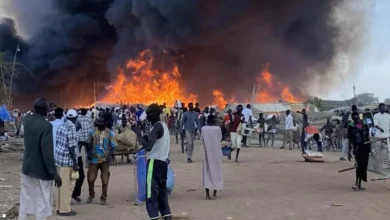
Widespread looting and disruptions to the gum Arabic value chain caused by the conflict have also negatively impacted the livelihoods and working conditions of those employed in the sector. In May 2025, for example, it was reported that the Rapid Support Forces looted the gum Arabic exchange and its warehouses, as well as parts of the main market in the city of Al-Nihood in West Kordofan State, at a time when stocks were full and ready for export, disrupting local trade and damaging livelihoods linked to this sector.
Since the outbreak of the conflict in 2023, the gum Arabic trade has been increasingly reshaped as a result of the division of territorial control: some quantities have been transported from areas under the control of the Sudanese Armed Forces to Port Sudan for export, while large quantities from areas under the control of the Rapid Support Forces have been rerouted via cross-border smuggling routes to neighboring countries.
The Responsibility of States and Companies in Preventing Conflict Financing:
The report highlights the role played by neighboring and transit countries in the continued transport of Sudanese gum Arabic. It warns that this gum may enter customs or commercial channels for export, and in some cases may be processed, documented, or traded as a local product, making it difficult to verify its origin.
The High Commissioner emphasized that international human rights law and international humanitarian law, along with the United Nations Guiding Principles on Business and Human Rights, provide a framework for action.
It urged countries and companies involved in the trade of Sudanese commodities, including gum Arabic, to take more decisive action to ensure that trade and export practices do not contribute to negative impacts on human rights or to the perpetuation of conflict.
It also called on states to strengthen accountability, traceability, regulatory oversight, and access to remedies. It further urged companies to act in accordance with their responsibility to respect human rights.
Volker Türk said: “Companies cannot continue business as usual when sourcing from conflict-affected value chains. Instead, they must conduct enhanced human rights due diligence that is conflict-sensitive, including more rigorous scrutiny of transport routes, intermediaries, methods, and potential re-labeling of product origins, and ensure that affected people have access to safe and effective mechanisms to file complaints and receive responses”.