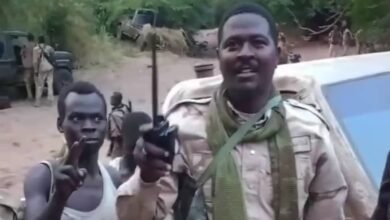
Commander of the Rapid Support Forces, Lieutenant General Mohamed Hamdan Daglo
Statement on violations of the humanitarian truce (24–30 November 2025)
Based on our responsibilities to protect civilians and out of respect for local and international efforts to de-escalate the situation and create a safe environment for humanitarian aid to reach those in need, the Rapid Support Forces have fully committed to the humanitarian truce announced by us on November 24, 2025. and refrained from any offensive operations, limiting ourselves to legitimate self-defense when necessary.
Despite this clear commitment, the Islamic Movement/Muslim Brotherhood forces continued to carry out systematic attacks against our forces’ positions and civilians in a number of Sudanese states, using warplanes, drones, and heavy artillery, in clear violation of the terms of the truce and the provisions of international humanitarian law.
First: Recorded violations for the period (November 24-30, 2025)
According to field data and official reports, eight major violations were documented over six days, most notably:
November 25 – Babanusa
The first direct violation of the truce using warplanes, drones, and artillery, resulting in civilian deaths and extensive damage to property.
November 26 – Bara, Rahid al-Nuba, al-Nihood
Repeated airstrikes resulting in the death and injury of dozens of civilians and targeting populated areas.
November 26 – Abu Zabad and Jabra al-Sheikh
Continuous attacks forced our forces to respond in legitimate self-defense.
November 26 – Habila (South Kordofan)
Bombing with drones and artillery resulted in deaths and extensive destruction, as documented by several independent sources.
November 26 – Kazgail and Um Siala (North Kordofan)
Artillery and drone strikes killed dozens of civilians and damaged infrastructure.
November 28–29 – Jabra al-Sheikh, Um garfa, Abu gaoud
Drone strikes resulted in casualties and material losses.
November 30 – Kumo area (South Kordofan/Nuba Mountains).
The most violent attacks, killing 45 civilians – mostly students – and injuring eight others.
November 30, dawn on Monday – Babanusa.
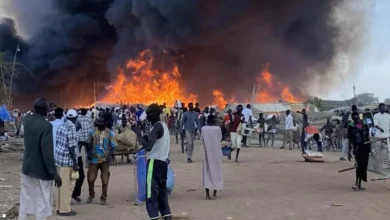
New shelling confirms continued violations.
Key humanitarian consequences:
– More than 45 killed in Kumo alone. – Dozens of victims in: Bara, Rahid al-Nuba, al-Nihood, Habila, Kazgail, and Um Sayala. – Direct targeting of school students. – Severe damage to infrastructure and civilian property.
Second: Nature of the violations: The attacks showed that they were concentrated on:
– Populated residential areas. – Civilian objects and educational institutions. – The positions of our forces, despite their full commitment to the truce.
These acts are classified under international humanitarian law as:
– Serious violations of the truce – Deliberate targeting of civilians – Indiscriminate and disproportionate attacks – Full-fledged war crimes, especially what happened in Kumo
Third: The position of the Rapid Support Forces Our forces affirm the following:
Their full commitment to the truce from the moment it was declared. Their right to legitimate self-defense under international law.
That the limited responses in Abu Zabad and Jabra al-Sheikh were in response to direct attacks.
That the liberation of Babanusa was the result of repeated violations and widespread attacks targeting civilians.
Fourth: Condemnation and accountability
The Rapid Support Forces hold the Islamic Movement/Muslim Brotherhood forces within the army fully responsible for:– Killing civilians, including children and students.
– Bombing educational institutions and residential areas. – Obstructing the delivery of humanitarian aid. – Threatening civil peace and expanding the cycle of violence.
Our forces affirm that this escalation undermines the chances for peace and places the international community before its responsibilities.
Fifth: Appeal to the international community Our forces call on:
The Quartet (United States, Saudi Arabia, United Arab Emirates, Egypt) to take effective steps to stop the attacks and ensure respect for the truce.
The United Nations and international human rights organizations To document crimes and violations, especially the Kumo massacre, and ensure that the perpetrators do not go unpunished.
To exert pressure to open safe humanitarian corridors.
To support a serious peace process that puts an end to the authority of extremist groups within the army and ensures the protection of civilians. In conclusion:
The facts prove that the other party did not comply with any of the requirements of the humanitarian truce, while the Rapid Support Forces maintained their full commitment and resorted to arms only when necessary for legitimate self-defense.
Our forces renew their commitment to a just and lasting peace and to building a civil state that protects the dignity of Sudanese citizens and safeguards the future of coming generations.