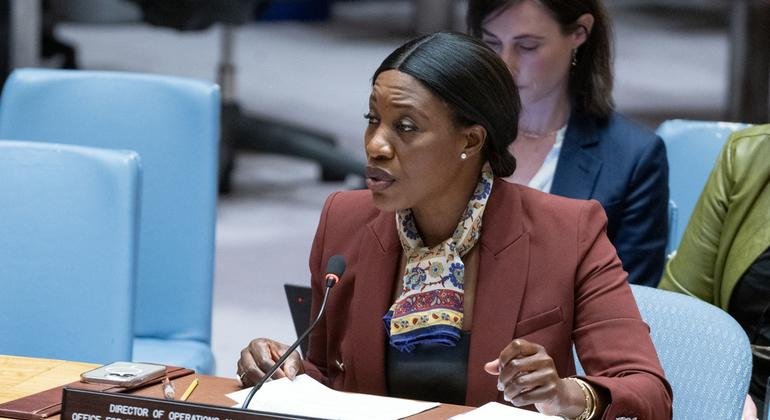
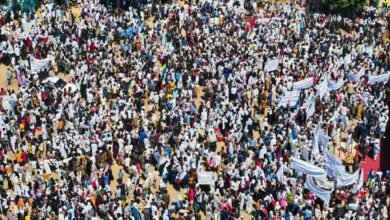
UNITED NATIONS: The UN Security Council held a meeting Monday morning on the humanitarian situation in Sudan, where the disaster affecting millions of Sudanese has reached “a humanitarian crisis of staggering proportions,” according to a briefing by Edem Wosorno, Director of Support and Operations, OCHA, who delivered the briefing on behalf of Tom Fletcher, Under-Secretary-General for Humanitarian Affairs and Emergency Relief Coordinator (UN Under-Secretary-General for Humanitarian Affairs).
The number of internally displaced people has surpassed 11.5 million, with nearly 8.8 million displaced since April 2023, and more than 3.2 million people have fled to neighboring countries this year, Wosorno said. “Humanitarian organizations are now seeking to support nearly 21 million people inside Sudan, almost half of the country’s population,” she said.
Today’s briefing follows the deeply disturbing news of widespread famine conditions, as armed conflict continues to severely affect civilians, including humanitarian workers, across the country, despite repeated calls for a cessation of hostilities.
The UN official said that fighting during December saw another escalation, with civilians killed and injured by artillery shelling. Fighting also continued in other parts of the country, including Khartoum, Gezira, Sennar, South and West Kordofan.
She added: “On December 19 – the same day we last briefed the Council – three of our WFP colleagues were killed in an airstrike on their compound in Yabous, Blue Nile State, as access to the areas of greatest need, including famine-affected locations, remains a key challenge.” Wosorno acknowledged that on December 25, 28 truckloads of humanitarian supplies arrived in Khartoum from Port Sudan, the largest UN convoy to reach the capital since the beginning of the crisis and coming after several weeks of negotiations. A separate WFP convoy was also able to deliver food to the town of Abu Jubaiha and surrounding areas in South Kordofan. “But we are also seeing a further narrowing of the space to operate in key areas. The Adré crossing remains a critical entry route, but inside Darfur there are additional restrictions on the work of humanitarian organizations, and new inspection procedures for trucks destined for conflict-affected areas in North Darfur are creating new bottlenecks. We continue to press the authorities to implement their agreement to establish a humanitarian hub in Zalingei, in Central Darfur, as a base of operations across the region. Key areas in South Kordofan have become effectively cut off from external assistance, and visas for humanitarian workers are not being granted quickly enough.”
This morning’s briefing follows the release of a new analysis by the Integrated Progressive Classification of Food Security (IPC), and its shocking findings that millions of people risk slipping into catastrophic food insecurity next April as key food security indicators rapidly deteriorate. The Sudan Humanitarian Task Force has issued a famine prevention plan, aimed at enabling an integrated and prioritized response, with delivery supported by a network of hubs and actors.
The OCHA official emphasized that the humanitarian crisis in Sudan is man-made: “Sudan is the only place in the world where famine has been confirmed. Hunger and famine are spreading because of the decisions made every day to continue this war, regardless of the civilian cost.”
Wosorno made three requests to the Security Council: First: “We need your help to pressure the parties to comply with international humanitarian law. This includes the obligation to meet the basic needs of civilians, and to protect vital goods, infrastructure and services needed for food systems and food production. We call again for an immediate cessation of hostilities and real and comprehensive steps towards the lasting peace that the people of Sudan so desperately need.
Secondly: We need your influence to ensure that all routes – across land and air routes, across conflict lines and borders – are open for relief supplies and humanitarian workers. Bureaucratic barriers must be lifted and permits and visas for incoming personnel must be issued quickly and efficiently. Humanitarian workers and their assets must be protected.
Third: the unprecedented scale of needs in Sudan requires an unprecedented mobilization of international support. Sudan’s 2025 Humanitarian Response Plan will require a record US$4.2 billion to support nearly 21 million people inside Sudan. An additional $1.8 billion is needed to support 5 million people – mostly refugees – in seven neighboring countries.