UNITED NATIONS: Rhino – The people of Sudan are facing a nightmare of violence, hunger, disease, displacement and growing ethnic violence, the UN Secretary-General told the UN Security Council and warned of the conflict’s implications for regional stability. He said conditions are not conducive to the deployment of a UN force in Sudan and made recommendations to the Council to protect civilians.
António Guterres said the suffering in Sudan is increasing day by day and noted that 25 million people are in need of assistance: “The people of Sudan are living in a nightmare of violence, thousands of civilians have been killed and countless more are facing unspeakable atrocities.”
In his speech to the Security Council, the Secretary-General added that the Sudanese people are also facing the nightmare of hunger, with more than 750,000 people suffering from catastrophic food insecurity as famine conditions take root in displacement sites in North Darfur while millions struggle every day to feed themselves.
“Sudanese also face the nightmare of disease, with cholera, malaria, dengue fever and rubella spreading rapidly. They face the nightmare of collapsing infrastructure, with vital health systems, transportation networks, water and sanitation systems, supply lines and agricultural production out of action.”
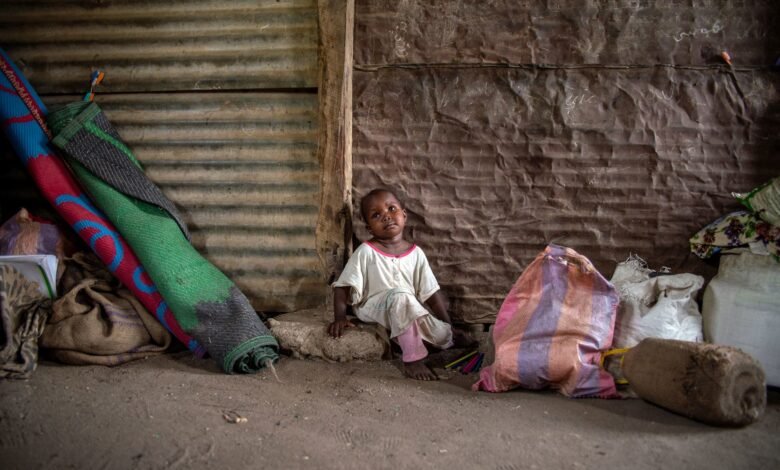
Sudanese are also facing the nightmare of displacement. Sudan is experiencing the world’s largest displacement crisis, with more than 11 million people forced to flee their homes since the conflict between the Sudanese army and the Rapid Support Forces (RSF) erupted in April 2023. This number includes nearly 3 million people who have crossed borders into neighboring countries.
The Secretary-General warned of the dangerous potential for the conflict to ignite regional instability from the Sahel to the Horn of Africa and the Red Sea.
Security Council Resolution 2736, passed last June, emphasized the need for all parties to the conflict to ensure the protection of civilians in accordance with international law. It asked the UN Secretary-General to make further recommendations to protect civilians in Sudan.
Recommendations to protect civilians:
In accordance with the resolution, the Secretary-General made a number of recommendations to the Council and highlighted three main priorities in his speech:
First: Both sides should immediately agree to a cessation of hostilities. Guterres said that such an agreement should translate into localized pauses in fighting and humanitarian truces that create avenues for dialogue and lay the foundation for a comprehensive ceasefire.
Guterres emphasized the need to intensify diplomatic efforts to end the conflict, and said his personal envoy Ramtane Lamamra is working around the clock on this. He urged the Security Council to continue to support Lamamra’s efforts and encourage effective engagement with regional partners, such as the African Union, the International Development Authority (IGAD) and the League of Arab States.
second: Protection of civilians:
The Secretary-General emphasized the importance of the Security Council supporting the protection of civilians in accordance with human rights and international humanitarian law, including the parties’ commitments in the Jeddah Declaration.
He said the parties to the conflict have the primary responsibility to ensure the protection of civilians and come to the negotiating table. He expressed alarm at the ongoing attacks by the RSF on civilians in El Fasher and surrounding areas, reports of attacks against civilians by forces loyal to the Sudanese Armed Forces (SAF) in Khartoum and the continued mass displacement of civilians due to apparent indiscriminate air strikes on residential areas.
He emphasized the importance of allowing civil society and journalists to carry out their work safely without fear of persecution or attacks. He emphasized the need to stop the direct and indirect flow of arms to Sudan.
The Secretary-General noted the various Sudanese voices, human rights organizations and others who have called for enhanced measures, including the deployment of some form of neutral force to protect civilians. These calls reflect the gravity and urgency of the situation facing civilians, he said.
“At present, the necessary conditions for the successful deployment of a UN force to protect civilians in Sudan do not exist. “The UN Secretariat stands ready to engage with the Security Council and others on a range of operational means that could meaningfully contribute to reducing violence and protecting civilians. He added that this may require new approaches adapted to the difficult circumstances of the conflict.
Third: Ensuring the flow of humanitarian aid:
Despite continuing funding and humanitarian access challenges, the UN and its partners reached nearly 12 million people with aid between January and September, but there are huge gaps, the Secretary-General said.
He emphasized the need to ensure urgent, safe and unhindered humanitarian access on all routes across borders and across frontlines. He urged the parties to allow more life-saving aid to flow to areas of greatest need through the most effective routes.
He called for more funding, noting that the $2.7 billion humanitarian appeal for Sudan has received only 56 percent of its value and the Regional Refugee Response Plan has received even less.
The UN Secretary-General praised the heroism of the leaders of the many Sudanese initiatives providing life-saving assistance on the ground. “Sudan’s 700 emergency response rooms are an inspiring example of grassroots humanitarianism. “Through their work, they show another face of Sudan, the best of humanity, in a country that has suffered the worst of it,” he said.