Rhino: Multimillion-dollar weapons, fuel and drones flowing through Port Sudan have given the Sudanese military the upper hand in the world’s bloodiest war, as Tehran and Moscow vie for military bases on the Red Sea coast.
Fiddling with a pair of explosive grenades, Sudanese militia commander Dirar Ahmed Dirar described how foreign backers have helped the national army tip the balance of power in the disastrous 20-month civil war that has caused the world’s largest displacement crisis, pushed millions to the brink of famine, and left the mineral-rich nation of about 50 million people devastated.
“Sudan has the support of Iran and Russia,” said Dirar, a prominent leader of Sudan’s Beja ethnicity who leads a motley crowd of militiamen who also support the army: “Sudan has the support of Iran and Russia.” “They are providing different things like drones and weapons, so the balance of power has changed.”
This war – in a vast country with 530 miles of strategic coastline – is the deadliest example of an anti-democratic wave that has swept the Sahel region of Africa in recent years. Coups have swept the region from coast to coast, as military juntas have moved away from Western allies and closer to Russia – which has deployed its mercenaries in Mali, Burkina Faso, Niger, and the Central African Republic. What is clear is that these wars have not attracted as many external actors as the Sudan war, and in contrast to their recent humiliation in Syria, Russia and Iran are currently on the winning side.
“Sudan seems to be an easy win, you can get it cheaply,” says Majdi al-Jazouli, a Sudanese academic and fellow at the Rift Valley Institute.” You can get the Red Sea coastline, you can get political influence in Khartoum, you can get mineral resources very cheaply, and you can make a huge profit in a country like Sudan.”
As the war dragged on, Russia sold the Sudanese military millions of barrels of fuel, thousands of weapons and jet parts, while Iran sent shipments of weapons and dozens of drones, allowing the military to retake parts of the capital Khartoum and swathes of territory across the country from the RSF. The army’s arsenal has grown so much thanks to Russian and Iranian support that earlier this year it built a new hangar in the military wing of Port Sudan airport.
The influx of weapons means that the war is increasingly being fought in the air. As early as Nov. 21, according to a U.N. security assessment seen by Bloomberg, the army had used anti-aircraft weapons to shoot down a squadron of RSF drones near the cities of Atbara and Damar. “Both sides are actively replenishing weapons supplies, including drones, to reinforce their positions,” according to the assessment
According to Sudanese intelligence officials and four Western officials, both Russia and Iran have held talks with the Sudanese military in recent months regarding the construction of military bases in Port Sudan. These discussions are all the more important as Russia risks losing its main air bridge to Africa due to the potential loss of two bases in Syria following the overthrow of Bashar al-Assad, and Iran is weakened by Israel’s ongoing attacks on Hezbollah in Lebanon.
Although the Chinese government has not taken sides, Beijing has built a $140 million camel export port in Port Sudan and is in talks with the military to invest in a new oil refinery and rehabilitate the country’s largest slaughterhouse.
In an interview in Port Sudan, Malik Aggar, deputy army chief General Abdel Fattah al-Burhan, said without specifying specific countries: “We are very grateful to our friends and appreciate the help we have received.” “We know who our friends are and who chose not to support us,” he added.
Two Western security officials said the army has purchased an undisclosed number of Turkish-made Bayraktar TB2 drones, and according to Amnesty International, private arms companies from Serbia, the United Arab Emirates and Russia have exported weapons to Sudan in violation of the UN arms embargo on the Darfur region. Meanwhile, a Sudanese security official and two foreign security officials said that Egyptian military officials are advising the Sudanese military, and the Egyptian ambassador to the European Union in Brussels pleaded last month not to impose sanctions on the military, according to a diplomatic cable seen by Bloomberg. Several requests Sent to the Egyptian Embassy in Brussels for comment went unanswered.
“The most important ambassadors today in Port Sudan are the Russian, Turkish, Egyptian and Iranian ambassadors,” says Rift Valley Institute’s Jizouli.” No one in Sudan can fight without foreign support, because it’s simply not possible, given that you don’t make enough weapons in Sudan, you don’t make enough ammunition, and you don’t produce fuel.”
On the roads surrounding the port in Port Sudan, hundreds of Beja laborers unload truckloads of cargo into warehouses, according to two port officials who requested anonymity for fear of government retaliation, but from time-to-time Sudanese military intelligence blocks access to the southern terminal, where the arms shipments arrive.
Two miles away, at The Dock – an air-conditioned restaurant in an Art Deco building – the countries shipping the weapons are fully visible, as Russian military advisers dine next to military officials from China, Turkey or Iran, while paying for local seafood with large wads of local currency.
They have been coming to Marsa since war broke out in April 2023, following the failure of the country’s two most powerful generals – Abdel Fattah al-Burhan and RSF commander Mohamed Hamdan Daglo – to reach a power-sharing agreement. Following a popular uprising that ousted Islamist dictator Omar al-Bashir in 2019, the two generals overthrew a civilian-led government.
Russia’s involvement in Sudan’s war in many ways goes beyond its use of proxy forces such as Wagner as it does in other African countries.
Shortly after Sudan’s deputy army commander Agar traveled to Russia in June for talks on obtaining weapons in exchange for allowing the Kremlin to establish a military supply station on the Red Sea, shipments of weapons began flowing into Port Sudan, according to port officials who have witnessed several deliveries in recent months.
According to a Sudanese intelligence official and two foreign security officials who requested anonymity, Russia has provided intelligence support to the military
“Russia covets money and a naval base on the Red Sea; an alliance with the military means increased arms sales and a potential facility in Port Sudan,” said Justin Lynch, a researcher at the US government-funded Conflict Monitor, which monitors the war in Sudan and Ukraine.
This means that Russian fuel shipments to the military have increased this year. After seven months since the start of the war when Russia did not export any fuel to Sudan, Russia delivered about 2.8 million barrels of diesel and gasoline to the military between April and October, accounting for 47 percent of Sudan’s total imports.
Since March, at least a dozen oil tankers from Primorsk, Tuapse, Vysotsk, Ust-Luga, and St. Petersburg in Russia have docked in Port Sudan; 10 of them were of unknown owners. In late November, officials from Sudan’s Energy Ministry held talks with executives from Gazprom on repairing damaged oil infrastructure, upgrading existing oil tanks and building a new pipeline and refinery in Port Sudan, the ministry said in a statement.
According to a Sudanese intelligence official, Russia had also offered Sudan the S-400 surface-to-air missile defense system as part of a deal for a Russian military base on the Red Sea coast. However, the Sudanese intelligence official and two other U.S. officials said Sudan did not accept the offer for fear of alienating the United States and other Western powers.
Agar has refused to comment on the role of foreign powers in the war. The Russian embassy in Port Sudan and its foreign ministry also did not respond to several requests for comment from Bloomberg.
Coinciding with the escalation of the war, Iran, which resumed diplomatic relations with Sudan in late 2023 after a seven-year break, sent diplomatic officials to Port Sudan and opened an embassy.
The regimes in Tehran and Khartoum have been close for most of the past three decades, united by political Islam following al-Bashir’s seizure of power in 1989, which helped his government set up its intelligence service. However, this relationship soured around 2015 when Sudan sided with regional powerhouse Saudi Arabia and sent Sudanese troops to help fight against the Iranian-backed Houthis in Yemen.
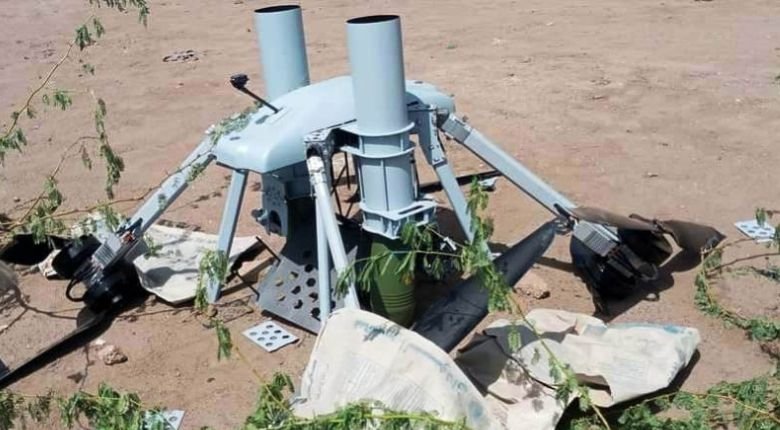
Currently, according to intelligence officials and diplomats, Tehran is actively supplying the army with weapons and drones, which is also confirmed by satellite imagery and weapons photos from the battlefield. Iran’s Foreign Ministry and its mission to the United Nations did not respond to several requests for comment.
In January, RSF soldiers shot down a drone near Khartoum that was modeled on Iran’s Ababil drone, according to Wim Zwienenburg, an arms expert and head of the Humanitarian Disarmament Project at the Dutch peace advocacy organization Pax, who analyzed and located videos of the drone posted online by RSF fighters celebrating in the capital.
Wim Zwijnenborg also identified a Muhajir-6 – a drone manufactured in Iran by Al-Quds Aerospace Industries that carries precision-guided munitions – at the Wadi Sidna air base near Khartoum in January. Satellite imagery from May shows a new hangar and several storage facilities being built at the military wing of the airport in Port Sudan.
Iranian cargo planes flew to Sudan at least three times in 2024. Recorded Iranian cargo flight paths reveal flights of a Boeing 747 from Tehran Airport to Port Sudan International Airport on July 14, and from Bandar Abbas Airport on May 18 and June 12, 2024.
According to flight tracking data, between January and July of this year, at least seven flights operated by the US-sanctioned Qeshm Fars Airlines, which is linked to the Islamic Revolutionary Guard Corps’ elite Quds Force, traveled between Tehran and Port Sudan. No such flights were recorded during 2023. Four of the seven flights ended in Tehran at the Islamic Republic of Iran Air Force parking lot at Mehrabad Airport, according to Conflict Monitor.
“Iran sees Sudan as one of the few markets for its arms sales,” said Lynch, a researcher at Conflict Monitor. “The military is exporting gold directly in order to bring in supplies of goods and weapons,” said Mohamed Ali Sawakna, head of the Red Sea Gold Traders Association.
According to nutrition surveys conducted by the Sudanese Nutrition Group in October, the few hospitals in Port Sudan are full of refugees from the war, and some 2 million people are on the verge of starvation.