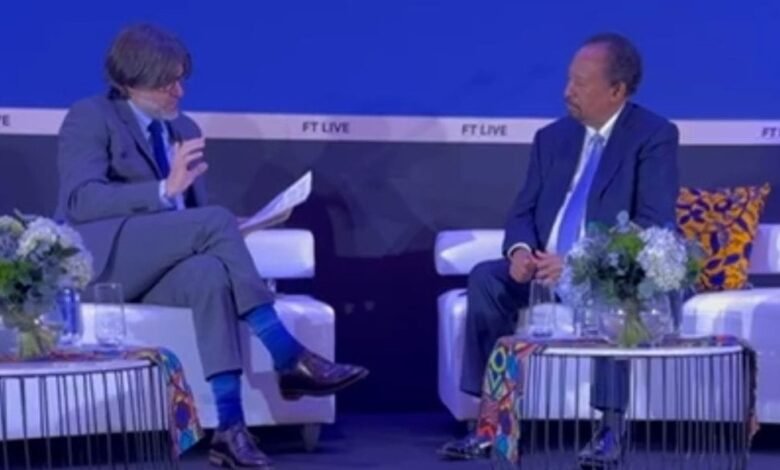
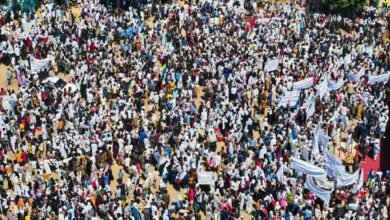
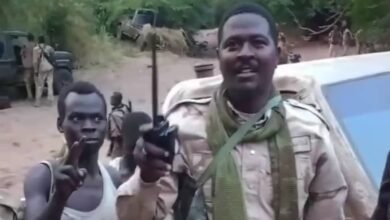
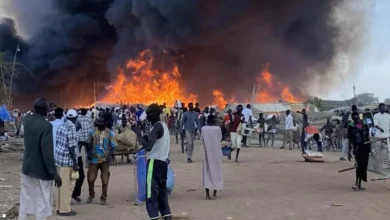
The visit of Abdalla Hamdok, former Sudanese Prime Minister and Chair of the Coordinating Body of the Democratic Civil Forces (Taqaddam), to Europe—from late October to the end of the first week of November—marked a significant shift in the international response to Sudan’s ongoing war. Hamdok began his tour in London and then traveled to Brussels, the headquarters of the European Union. The visit was akin to casting a stone into stagnant waters, as it triggered notable movement around Sudan’s crisis, which had long been sidelined internationally. Now, the issue has climbed to the top of the global agenda, becoming the centerpiece of the UN Security Council meeting scheduled for Monday, November 18.
Taqaddam Delegation’s Visit to the UK:
The visit of the Taqaddam delegation, led by Abdalla Hamdok, coincided with the UK’s assumption of the rotating presidency of the UN Security Council. During the visit, the delegation held a series of significant meetings with prominent British political figures. These included members of both the House of Commons and the House of Lords, representing the Labour, Conservative, and Liberal Democrat parties, as well as the Chair of the Foreign Affairs Committee in the House of Commons, the Deputy Speaker of the House of Lords, and the UK Minister for Africa.
The delegation also engaged with various political activists and representatives of Sudanese community organizations in the UK. During these meetings, the Taqaddam delegation provided a detailed presentation on the developments of the war in Sudan, emphasizing the severity of the humanitarian situation and the grave violations faced by civilians.
Sources indicate that Hamdok also held an extended private meeting with a senior British decision-maker who is considered one of the key figures in the current UK government. The meeting lasted several hours, during which Hamdok discussed the current state of affairs in Sudan and presented a comprehensive vision for the steps the international community must take to halt the war and restore stability to the country.
Conferences in Brussels:
Abdalla Hamdok arrived in the Belgian capital, Brussels, to participate in two conferences held from November 3 to 6, which brought together several former African and European presidents, along with leaders of the European Union, regional organizations, and international institutions.
In a key address, Hamdok warned of the complete collapse of the Sudanese state, highlighting the risk of the country descending into a scenario even worse than Rwanda’s 1994 genocide. He also pointed to the consequences of Sudan’s fragmentation into multiple entities, which could become safe havens for extremist and terrorist groups.
Hamdok’s speech focused on the dangers of the proliferation of multiple armies and warlords, alongside the mobilization and recruitment of civilians and the rise of hate speech, ethnic, and regional divisions. He issued a stark warning to the world, particularly Europe, against remaining silent in the face of Sudan’s crisis, cautioning that if the situation persists, the world could witness the largest refugee crisis in history. He stated: “Europe must prepare to receive millions who will knock on its doors across the Mediterranean.”
During his visit, Hamdok held a series of meetings with several European presidents, ministers, and representatives of international organizations. One of his most notable meetings was with Josep Borrell, the High Representative of the European Union for Foreign Affairs and Security Policy. In their discussions, they explored possible ways to halt the war in Sudan and address the deteriorating humanitarian situation.
International Statements Following Hamdok’s Visit:
A day after Abdalla Hamdok’s visit, British Foreign Secretary David Lammy issued a statement, saying: “We have just assumed the presidency of the United Nations Security Council, and I intend to make Sudan my priority this month.”
He added that he would visit New York the following week to raise the humanitarian issues in Sudan and discuss possible solutions to end the ongoing war and the escalating humanitarian catastrophe. Lammy further remarked: ”It has been deeply concerning that Sudan has not received the international attention it deserves, despite the human toll there exceeding that of many other conflicts around the world.”
Similarly, France, a permanent member of the UN Security Council, released statements emphasizing the need for the international community to take Sudan’s ongoing conflict seriously. France called for intensified global efforts to end the war and its consequences, describing the humanitarian crisis in Sudan as “horrific.”
British Resolution to Save Sudan at the Security Council:
The British Foreign Secretary has fulfilled his promise to prioritize Sudan during his country’s presidency of the UN Security Council. Tomorrow, Monday, Security Council members are set to vote on a British-drafted resolution. The proposed resolution calls on both warring parties in Sudan—the Sudanese Armed Forces and the Rapid Support Forces—to immediately cease hostilities and ensure all access points and corridors are opened to facilitate the safe and unhindered delivery of humanitarian aid.
For the resolution to pass as a binding international decision, it requires the approval of at least 9 out of the 15 Security Council members, with none of the five permanent members—the United States, the United Kingdom, France, Russia, and China—exercising their veto power.
Conclusion:
The recent European tour by the delegation of the Civil Democratic Forces Coordination (Taqaddam), led by Dr. Abdalla Hamdok, marked a pivotal shift in the international community’s engagement with the war in Sudan. Through a series of high-level meetings and conferences, the delegation succeeded in bringing Sudan’s crisis to the forefront of global attention after a prolonged period of neglect.
As the UN Security Council convenes tomorrow, Monday, November 18, the diplomatic efforts spearheaded by Taqaddam and its leader have started to bear fruit. The Sudanese conflict now stands at the threshold of a significant international response that could help save civilian lives and halt the war. This demonstrates the tangible impact of recent diplomatic moves in altering the trajectory of the crisis.