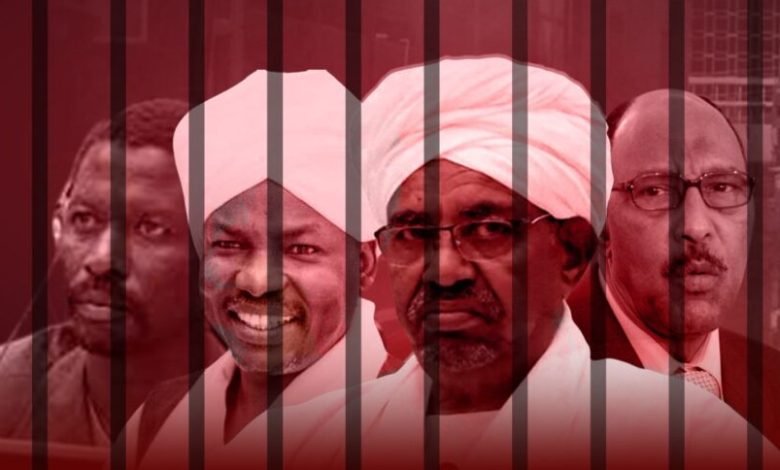
In April 2023, as Sudan was plunged into conflict between rival military factions, four men wanted by the International Criminal Court (ICC) for war crimes and genocide were quietly released. Their release, orchestrated by the Sudanese Armed Forces – now deeply intertwined with the Muslim Brotherhood – angered victims of the Darfur conflict and renewed questions about Sudan’s commitment to international justice.
What’s more, the same SAF-led government has since taken the International Court of Justice (ICJ) to unrelated matters, seeking international legal support even as it defies the ICC’s long-standing arrest warrants. For many observers, this represents a bitter irony: A regime that has rejected one international court is now seeking the protection of another.
The conflict that shook a nation – and the world:
Between 2003 and 2008, Sudan’s Darfur region witnessed one of the world’s worst humanitarian disasters in recent history. Government forces and Janjaweed militias targeted non-Arab ethnic communities, killing an estimated 300,000 people and displacing millions. The International Criminal Court (ICC) has issued arrest warrants for four key figures: – Omar al-Bashir, Sudan’s president from 1989 to 2019, accused of orchestrating genocide and crimes against humanity.
– Ahmed Haroun, the former interior minister linked to coordinating militias. – Abdel Rahim Hussein, who led military operations implicated in civilian massacres. – Abdullah Banda, the rebel leader accused of attacking African Union peacekeepers in 2007.
These men, split between government and non-government leaders, epitomize the complex web of violence and political manipulation that has characterized the Darfur conflict.
Their release by the Brotherhood Army:
After al-Bashir’s fall in 2019, the suspects were held in Sudanese prisons, with brief international hope that justice might finally be served. But after the outbreak of hostilities in 2023 between the Sudanese Armed Forces (SAF) and the Rapid Support Forces (RSF), the four were released.
Their release was not a rogue act. It was a calculated decision by the SAF – now politically aligned with Islamist elements, including the Muslim Brotherhood – to consolidate power and appease loyalist factions. The move shocked victims’ groups and international observers alike.
Since then, Sudanese military leaders have refused to hand over suspects to the ICC, rejecting external pressure and citing national sovereignty. However, the same leadership has turned to the International Court of Justice in The Hague for support in diplomatic disputes, hoping to obtain rulings in line with its strategic interests.
A two-sided approach to justice:
For many, this dual stance-rejecting ICC accountability while simultaneously seeking ICJ intervention-emphasizes the selective nature of Sudan’s approach to international law. The Sudanese government claims that the Sudanese judiciary is capable of handling war crimes, a position supported by some African Union members who argue that the ICC disproportionately targets Africa. However, no credible domestic action has been taken. The Islamist-aligned SAF leadership has shown little interest in pursuing justice in Darfur. “It’s hard to ask the world to listen to your legal arguments at the ICJ,” noted one African legal scholar,” when you ignore international law in the most important area – justice for victims.”
Regional stakes:
The release of the suspects has repercussions far beyond Sudan. Leaders like Haroun are reportedly reactivating old networks, threatening to inflame tensions in Darfur, Chad, and South Sudan. The power vacuum and lawlessness increases the risk of renewed ethnic violence and undermines fragile peace efforts across the Horn of Africa. This lack of accountability mirrors patterns in the broader Middle East and North Africa region, from Libya to Syria, where impunity has often deepened the conflict.
An African path forward:
The criticisms of the ICC are not without merit. Many African countries have argued that the court disproportionately prosecutes leaders from the continent. But the atrocities committed in Darfur are undeniable – and ignoring them damages regional credibility and African unity.
Some propose a hybrid solution:
– An AU-backed tribunal, similar to the Extraordinary African Chambers used to try Chadian President Hissène Habré. – Regional diplomacy, especially from Sudan’s neighbors, to pressure Khartoum to respect international obligations. – Truth and reconciliation mechanisms, rooted in the cultural context of Darfur, to complement judicial processes and provide a space for healing.
A test of principles:
Sudan’s release of indicted war criminals, under the banner of sovereignty, stands in stark contrast to what the tribunal did in The Hague. The contradiction is not just legal – it is moral.
For survivors in Darfur, the message is clear: Justice remains elusive, and those who unleashed the suffering are still at large. But the broader message for Africa is deeper than that. Can the continent build its own systems of accountability – credible, impartial and independent of political whims?