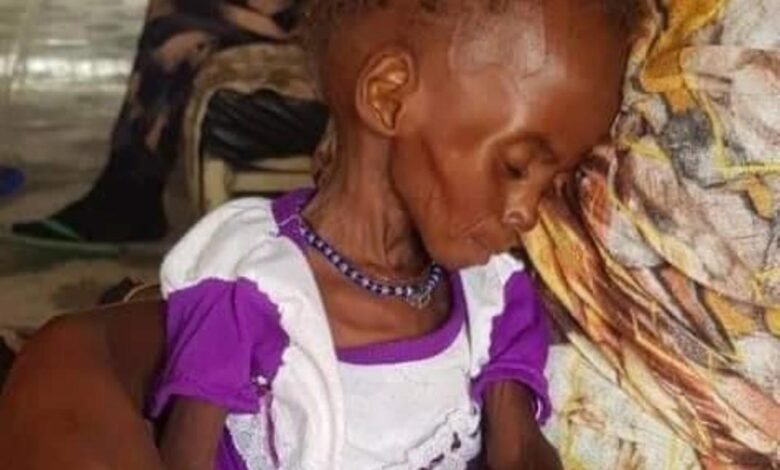
Introduction As the war that began on April 15, 2023 continues, Sudan is on the brink of a catastrophic famine that threatens millions of lives. In the midst of this conflict between the army, backed by Islamist brigades and militias, and the Rapid Support Forces (RSF) led by Mohamed Hamdan Dagalo (Hemedti), humanitarian crimes are on the rise, most notably blocking aid and using starvation as a weapon. Although many international organizations have called for facilitating humanitarian access, the Sudanese army, according to international reports and testimonies, bears a large part of the responsibility for the deteriorating situation.
The humanitarian situation in Sudan: According to the UNHCR, 11.3 million people have been displaced by the conflict, of which about 3 million have fled outside Sudan, causing one of the largest humanitarian crises in the region. According to the World Food Program (WFP), some 26 million Sudanese face acute food insecurity, and famine has already been declared in the Zamzam camp in Darfur, with the threat of famine expected to spread to large areas of Sudan, requiring urgent intervention.
WFP demands and constraints: Today, the Executive Director of the World Food Program, Cindy McCain, called for the opening of all Sudanese ports and crossings to enable the delivery of aid. She emphasized that the situation is “extremely urgent” and warned that continued obstruction could lead to widespread famine.
Humanitarian agencies face difficulty in delivering trucks and foodstuffs to the affected areas, due to administrative restrictions and security measures imposed by the army on crossings and access points, in addition to corruption at the Port Sudan airport and port, where most if not all humanitarian aid goes to markets and the rest goes to the war as food for the army and the movements and brigades fighting with it. Restrictions imposed by the Sudanese army: The army continues to impose obstacles at the border crossings, requiring coordination with Port Sudan before aid can pass, and requiring the UN to provide international protection for a team of intelligence and customs officers it demands at the crossings, especially the Adré crossing. These restrictions impede rapid access to aid, threatening the lives of millions. Despite the RSF’s de facto control of the Adri crossing, organizations are forced to obtain the military’s approval in Port Sudan for political and security reasons, which exacerbates the humanitarian crisis with intransigent and slow procedures. International position and pressure on the Sudanese military: The international community has expressed concern about the military’s intransigence, with countries such as the United States, France and Germany calling on Sudanese authorities to allow aid access. Matthew Miller, spokesperson for the U.S. State Department, spoke of the importance of keeping the Adré crossing open beyond November 15. The US envoy to Sudan, Tom Perriello, noted that bureaucratic obstacles imposed by the Humanitarian Aid Commission, which is linked to the security and intelligence apparatus, are preventing relief from reaching more than 7 million people. The international community holds the military responsible for these obstacles, as the number of people in need of food and medical care continues to grow.
Conclusion: As the humanitarian situation rapidly deteriorates and aid continues to be blocked, the Sudanese military bears a large part of the responsibility for the worsening crisis. Military and political obstacles impose severe restrictions on aid, jeopardizing the lives of millions. If these restrictions are not reversed and aid access is not facilitated, Sudan is facing an imminent famine that could be the most severe in its history. Edraak Center