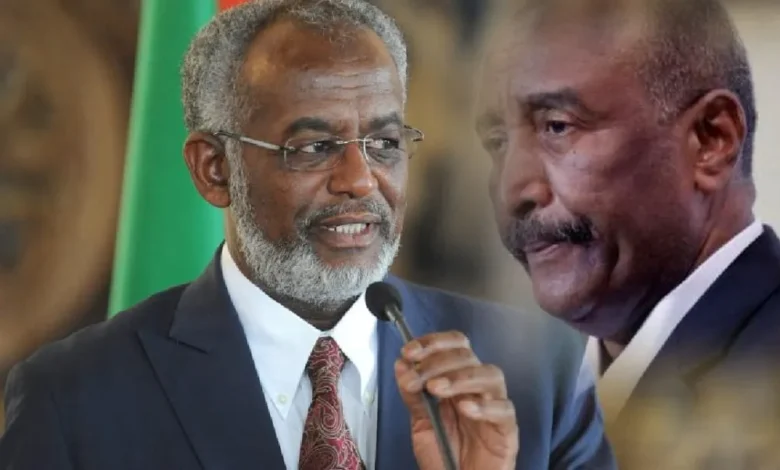
Rhino: The spokesperson for the European Union’s High Representative for Foreign, Political and Security Affairs, Peter Stano, urged army chief Abdel Fattah al-Burhan and RSF commander Mohamed Hamdan Daglo to immediately head to the negotiating table to find a peaceful solution to the conflict.
In a statement, the EU emphasized that it will not witness another genocide and will continue to work with international accountability mechanisms to hold those responsible for the gross human rights violations they have committed and continue to commit.
The statement called on the warring parties and affiliated militias to abide by international humanitarian law by protecting civilians, providing unimpeded humanitarian access, and allowing civilians to move in safe ways.
For the second week in a row, military clashes between the Sudanese army and armed movements supporting it, on the one hand, and the Rapid Support Forces, on the other hand, are raging in several locations in El Fasher, the capital of North Darfur state.
In June, the Council of the European Union imposed sanctions on individuals deemed responsible for undermining stability and civilian transition in Sudan.
Among those sanctioned was Ali Karti, secretary general of the country’s Islamic Movement, who was foreign minister in the government of ousted President Omar al-Bashir and is believed by many in Sudan to have played a key role in the war and to have widespread influence within the military.
From the armed forces, the sanctions include the commander of the air force and the general manager of the EU-sanctioned Defense Industries Company, which is responsible for indiscriminate aerial bombardment.
The targeted individuals are subject to an asset freeze and a ban on providing funds or economic resources to them, directly or indirectly, as well as a travel ban in the EU.
The EU emphasized its readiness to continue to use its tools to contribute to ending the armed conflict, to encourage an end to the obstruction of humanitarian aid, and to stop the culture of impunity.