Rhino: Agencies – A recent report by the British Royal Institute of International Affairs “Chatham House” said that the main reason for the failure of the ceasefire talks in Geneva was the refusal of the Sudanese Armed Forces to send a delegation to Geneva, as they set “unrealistic” preconditions, and this forced the mediators to communicate virtually with SAF representatives, while they held personal talks with the Rapid Support Forces “RSF”.
The report said that the Sudanese army is losing on the battlefield, it does not want to negotiate from a position of weakness and has intensified aerial bombardment since the Geneva talks, noting that the RSF has shown greater cooperation in international forums.
Coordinated and effective international pressure is needed more urgently to prevent the disintegration of Sudan and ensure the stability of the entire region, according to a report by the German News Agency “DPA”.
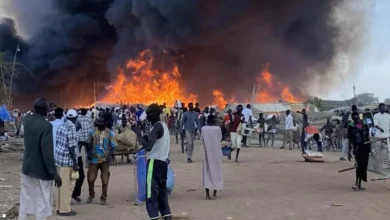
The 17-month war in Sudan has killed tens of thousands of civilians and displaced 10 million people, British researcher and diplomat Rosalind Marsden said in a report for the British Royal Institute of International Affairs (Chatham House).
A series of international mediation efforts have failed to stop the conflict. In mid-August, the latest US mediation attempt to revitalize the stalled ceasefire process took place, with the aim of bringing together high-level delegations from both sides of the conflict, the Sudanese Armed Forces and the Rapid Support Forces.
The talks in Geneva were aimed at achieving a comprehensive nationwide cessation of hostilities, allowing humanitarian access to all parts of the country, and establishing a robust monitoring and verification mechanism.
The negotiations were hosted by Saudi Arabia and Switzerland, with the United Nations, the African Union, Egypt and the United Arab Emirates as observers.
Some limited progress has been made in humanitarian access to Darfur. The Sudanese military agreed to reopen the temporary Adré crossing from Chad, which was arbitrarily closed in February, while the RSF opened the Dabba road.
UN trucks are now entering Darfur, although traffic beyond West Darfur is facing severe difficulties due to heavy rains and the collapse of the only bridge connecting the Chadian border to South and Central Darfur, but since the talks ended, hostilities have escalated.
During the Geneva talks, the RSF agreed to a code of conduct to protect civilians, followed by a directive from its commander, Lieutenant General Mohamed Hamdan Daglo “Hemedti”.
The priority now should be for the Security Council to take tougher action against violations of the current embargo, and there is a need to impose sanctions on people living in Western democracies who are spreading hate speech and advocating for the continuation of the war.
At the same time, the US and its partners should continue to work with regional actors to try to use their influence on the warring parties and convince them that everyone loses if the war continues.
If pro-democracy civilians in Sudan want to change this calculus, they must unite on an anti-war platform and make their voices central in shaping future peacebuilding efforts, and international support is essential to achieving this goal.
According to the British researcher and diplomat, this means not legitimizing either of the warring parties but strengthening the role of civilians in diplomatic initiatives and pushing for a peaceful transition to a democratic civilian government across the country.