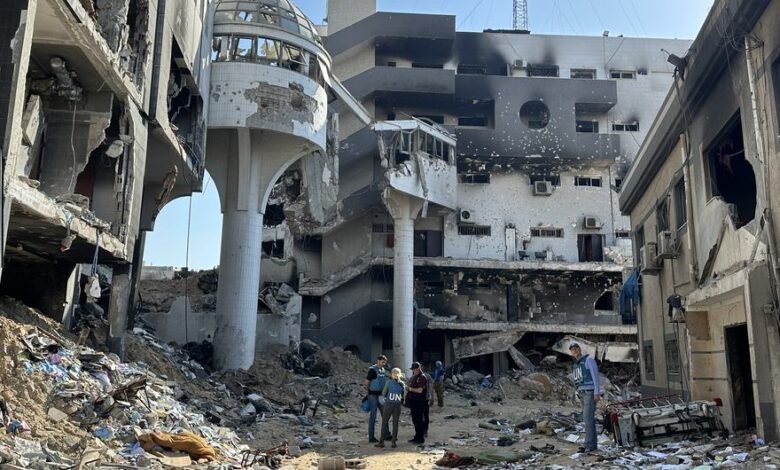
United Nations: Rhino – The World Health Organization reported that more than 10,400 attacks on healthcare facilities have been recorded in 29 countries and territories since 2018, resulting in the deaths of approximately 5,700 people and injuries to more than 8,000 others.
Altaf Musani, Director of the Department of Humanitarian Affairs and Disaster Management at the World Health Organization, said the organization recorded more than 900 attacks on healthcare facilities between January and August 2026 alone, noting that these attacks killed at least 900 people and injured more than 1,400 others.
Speaking to reporters in Geneva on Friday, Mousani explained that this “means more than four attacks per day”.
He said that Ukraine, Lebanon, and the Occupied Palestinian Territory currently account for the majority of recorded incidents. Other countries and contexts where attacks on healthcare have been reported include Myanmar, Iran, Sudan, the Democratic Republic of Congo, South Sudan, Russia, Syria, and Nigeria.
“We are witnessing multiple forms of violence,” Musani said, noting that the use of heavy weapons, followed by the destruction of health care facilities and psychological and social violence, are among the main categories of recorded attacks.
He also reported that 44 incidents were recorded involving the abduction, arrest, or detention of health workers and patients. The detention of health workers accounted for the majority of these cases, with 94 health workers directly affected during the reporting period.
The Numbers Don’t Tell the Whole Story
Mousani emphasized that the numbers do not reflect the full picture of the impact of attacks on healthcare. He said, “These numbers are important, but they don’t tell the whole story. An attack on healthcare doesn’t end once it’s been verified”.
He explained that the consequences of an attack on a hospital are not limited to the people inside the facility at the time of the attack; patients may be denied care, ambulances may be unable to make transfers, healthcare workers may be unable to return to work, and medication supplies may fail to reach healthcare facilities.
Mousani said, “We now have evidence that these consequences can be significant and long-lasting”.
Mousani added, “These are not just statistics. Behind every percentage point is a patient; behind every damaged facility is a lost service; and behind every suspended service is a person who will be deprived of health care.”
Less Obvious Impacts
The WHO official highlighted what he described as the less obvious impacts of attacks on healthcare, including the fear that follows attacks on hospitals, which may cause people to delay seeking healthcare. Healthcare workers may stop showing up for work, while communities may lose trust during disease outbreaks.
He said, “Insecurity can disrupt vital surveillance, contact tracing, and treatment, and make it more difficult to contain an outbreak”.
Mousani called for a broader assessment of the consequences of attacks on healthcare, going beyond simply counting incidents. He said: “We must go beyond simply counting attacks and measuring their consequences.”
He called for a focus on the number of services that were disrupted, the number of patients who were unable to access health care, and the number of treatments, surgeries, and referrals that were delayed.
Mousani said, “This is not simply a matter of improving data, but of making the human consequences visible, using evidence to protect health care and the people who depend on it, as well as holding the parties to the conflict accountable”.
He reiterated the World Health Organization Director-General’s call to protect health care, emphasizing that “health care is not a target”.