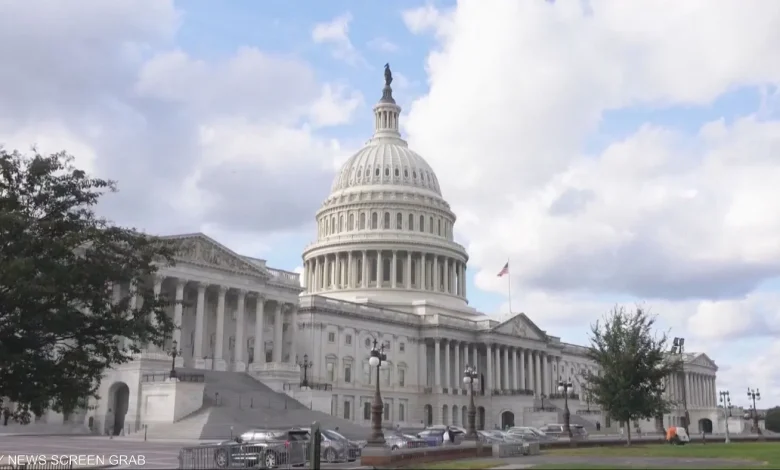
The U.S. House Foreign Affairs Committee has approved a new bill on Sudan that includes a broad package of political and punitive measures, most notably calling on the U.S. administration to challenge the legitimacy of the current Sudanese government’s representation within the United Nations and international institutions, as well as imposing expanded sanctions on parties to the conflict and those involved in grave violations and the obstruction of humanitarian aid.
The bill, which the committee approved yesterday, Tuesday, during a special session to review and adopt legislation, calls on the U.S. Secretary of State and the U.S. Ambassador to the United Nations to take immediate steps with the “Committee on the Accreditation of Representatives” of the United Nations General Assembly to activate Rule 29, with the aim of challenging the legitimacy of the current Sudanese representatives’ continued occupancy of Sudan’s seat within the United Nations and international institutions.
According to the text, the proposed measure aims to challenge the legitimacy of Sudan’s current representation within the United Nations and international institutions until the U.S. administration is satisfied that Sudan has transitioned to a civilian or democratically elected government—a notable shift that goes beyond traditional sanctions to target Sudan’s standing and representation within the international system.
This approach represents a notable escalation in the U.S. Congress’s response to the Sudanese crisis, as it is not limited to calling for sanctions against parties to the conflict and those involved in violations, but extends to urging the U.S. administration to take action within the United Nations to challenge the legitimacy of Sudan’s current representation at the international level.
Regarding sanctions, the bill requires the Secretary of State and the Secretary of the Treasury to conduct a comprehensive review within 90 days to determine whether any of the warring parties in Sudan meet the legal criteria for inclusion on the “Specially Designated Global Terrorists” (SDGT), one of the most prominent U.S. sanctions tools used against individuals and entities accused of supporting or financing terrorism.
The bill requires that the results of this review be submitted to the U.S. Congress, allowing lawmakers to monitor the actions the U.S. administration will take regarding the parties involved in the conflict.
The bill also calls on the U.S. Department of State to consider imposing sanctions on leaders of the Sudanese Armed Forces and the Rapid Support Forces who bear responsibility for strategic decisions that have directly or indirectly contributed to the commission of grave violations, including genocide, war crimes, and crimes against humanity.
The scope of the proposed sanctions is not limited to military leaders alone, but also extends to adult family members of Rapid Support Forces and Sudanese Army commanders, unless it is proven that they have condemned these activities and taken concrete steps to oppose them. This provision reflects a growing trend within Congress toward expanding the scope of pressure on elites associated with the parties to the conflict.
The bill also includes provisions requiring the U.S. president to submit periodic reports to Congress identifying foreign individuals and entities involved in committing or supporting acts of genocide, war crimes, and crimes against humanity, as well as those who obstruct or prevent humanitarian aid from reaching civilians affected by the war.
This provision aims to strengthen international accountability mechanisms and provide a legal and political basis for imposing future sanctions on those involved in violations or in obstructing humanitarian relief operations.
As part of the broader U.S. policy toward Sudan, the bill includes a separate chapter titled “The Strategy,” which calls on the U.S. administration to develop a comprehensive approach to addressing the Sudanese crisis, including supporting peace efforts, protecting civilians, ensuring unimpeded access to humanitarian aid, promoting accountability for violations, and supporting a political transition leading to civilian rule.
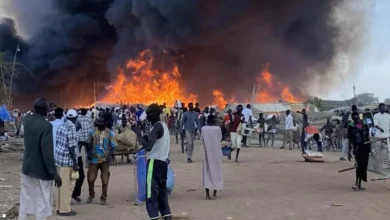
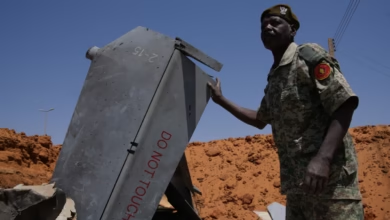
The bill comes at a time of growing pressure within Washington to take tougher measures against the parties to the Sudanese war, amid the ongoing armed conflict and the resulting widespread humanitarian disaster and displacement of millions of civilians, as well as mutual accusations of committing grave violations of international humanitarian law.
The bill still requires approval by the full U.S. House of Representatives, followed by the Senate, before being sent to the U.S. president for his signature and entry into force.
The bill reflects a growing trend within Congress toward intensifying political, diplomatic, and economic pressure on the parties to the conflict in Sudan, while expanding the scope of the proposed measures to include the issue of Sudanese representation within the United Nations and international institutions.