UN: Rhino – With famine confirmed in the Zamzam camp for displaced people in Sudan’s North Darfur, there are growing concerns that similar crises could emerge in other nearby camps, an official with the United Nations World Food Program (WFP) said on Wednesday in an interview with UN News.
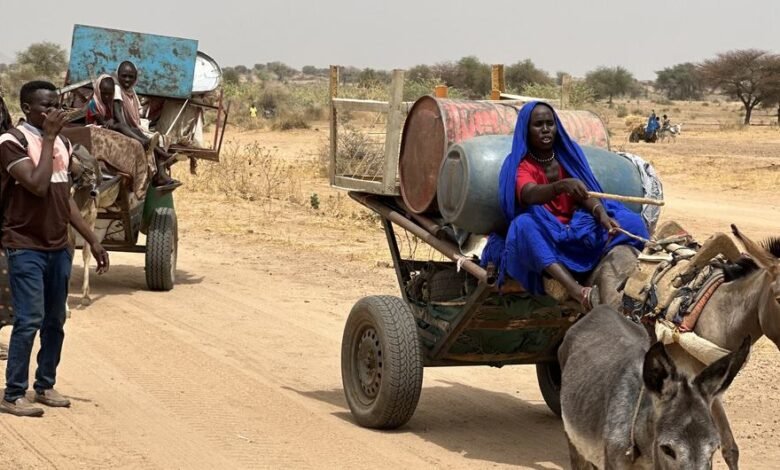
Zam Zam camp is home to about 500,000 displaced people and is located near the city of El Fasher, the capital of the besieged North Darfur state, which has seen some of the fiercest fighting since the war between the rival armies of the Sudanese Armed Forces (SAF) and the Rapid Support Forces (RSF) began in April.
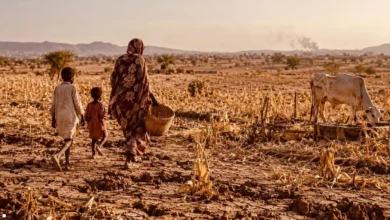
It is estimated that 10.7 million people have been displaced within Sudan, and another 2.1 million have sought refuge in neighbouring countries. The fighting has also exacerbated a severe hunger crisis, with nearly 26 million people struggling to secure their daily meals.
Access is extremely difficult:
In an exclusive interview with UN News, Leni Kinsley, head of communications for the World Food Program in Sudan, told Abdelmoneim Mekki that up to 13 other areas across the war-torn country are also at risk of famine.
These are areas with active conflicts such as Darfur, Kordofan and Khartoum, which are worsening by the day, making assessments very difficult, she said.
“Access to camps inside El Fasher, where fighting between the paramilitary Rapid Support Forces (RSF) and the Sudanese Armed Forces (SAF) continues to escalate by the day, is extremely difficult,” she said.
Catastrophic famine in Khartoum:
Some 90,000 people are facing catastrophic levels of hunger in the capital Khartoum, which just 18 months ago was a bustling city with no concerns about food security.
“Now there are areas in Khartoum where we hear that people are living on mixing whatever kind of grain they have with water and drinking that once a day to survive.”
Increase aid:
The World Food Program (WFP) is ramping up its efforts to provide emergency assistance, focusing on those suffering from extreme hunger across the country. The agency aims to reach and support up to 8.4 million people by the end of the year.
“We are now aiming to provide around 100,000 hot meals per month and we continue to work on this to increase assistance. We have also registered a longer list of financial service providers through which we can provide cash assistance.)
“One of the challenges that cash assistance has faced since the beginning of this crisis has been the liquidity and banking crisis that also hit Sudan,” she said.
The agency is also helping set up community kitchens and working with local non-governmental organizations (NGOs)
“We are looking at all possible ways to provide assistance to people who need it, whether through in-kind emergency food rations or cash, as well as by working through community kitchens,” she said.
We cannot give up hope:
Ms. Kinsley emphasized that the world cannot afford to give up hope when it comes to the Sudanese crisis, stressing that “we are certainly capable of delivering what is needed”.
“If we can get aid to these areas, especially to people trapped by the conflict and especially in areas at risk of famine, we can prevent many deaths and we can prevent mass starvation and malnutrition on a large scale,” she said.
At the same time, she urged the warring parties to keep the interests of the Sudanese people in mind.
“No matter what, the World Food Program will continue to do everything it can, no matter what, to support and provide assistance to people where they need it most.”