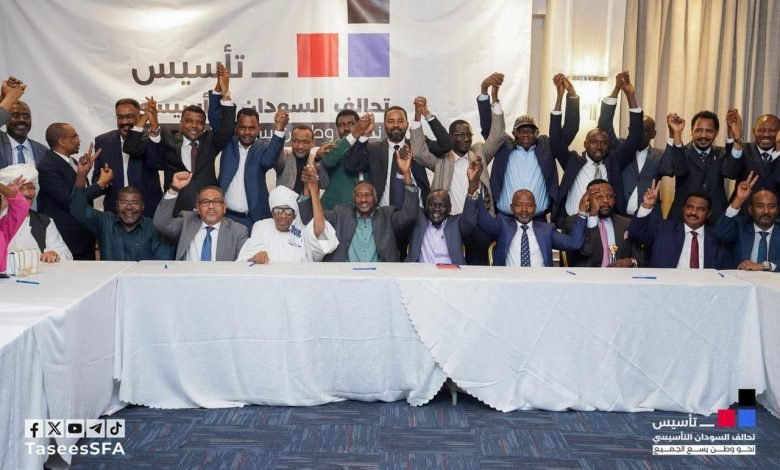
Nairobi: March 4, 2025 – The constituent parties of the Sudan Constituent Alliance signed on Tuesday the Transitional Constitution of the Republic of Sudan for the year 2025.
The transitional constitution stipulates that the transitional constitutional document of 2019 and all previous laws, decisions and decrees will be repealed. It also stipulates that Sudan is a secular, democratic, decentralized state with a Sudanese identity, based on the separation of religion from the state, as well as the separation of cultural, ethnic and regional identities from the state and emphasizing that equal citizenship is the basis for rights and duties.
Regarding the system of government in Sudan, the constitution recognizes that it is based on political, administrative, legal and financial decentralization. With regard to voluntary unity, the constitution recognizes that the Sudanese state is founded on voluntary unity, the free will of its peoples, respect for ethnic, religious and cultural diversity and pluralism, and equality between all individuals and peoples in rights and duties.
Regarding the system of government in Sudan, the constitution recognizes that it is based on political, administrative, legal and financial decentralization. With regard to voluntary unity, the constitution recognizes that the Sudanese state is founded on voluntary unity, the free will of its peoples, respect for ethnic, religious and cultural diversity and pluralism, and equality between all individuals and peoples in rights and duties.
The constitution stipulates that the transitional period consists of two stages, namely the pre-transitional constitutional period, which begins from the date of entry into force of this constitution and continues until the official announcement of the end of wars, and the constitutional transitional period, which begins immediately after the official announcement of the end of wars and extends for ten years, and the constitution defines a number of tasks for the prospective transitional peace government, including stopping and ending wars and establishing a just and sustainable peace and preparing the climate for launching a comprehensive political process to achieve security, stability, justice and development.
With regard to the levels of government, the constitution stipulates three levels of government: federal, regional and local government. The constitution grants the different levels of government exclusive and shared powers and resources determined by law, and allows each region to choose the appropriate name for the level of local government.
The Constitution defines eight regions for Sudan, namely, Khartoum Region, Eastern Region, Northern Region, Darfur Region, Central Region, Kordofan Region, South Kordofan Region, Nuba Mountains, New Fung Region, and the Constitution recognizes that each region shall have a constitution that takes into account its specificity, without prejudice to the nature of the state provided for in this constitution.
Regarding power structures, the constitution stipulates that the power structures consist of the constituent legislative body, which is an independent legislative authority consisting of the Council of Regions and the House of Representatives, where the Council of Regions consists of 24 members, and the House of Representatives consists of 177 members. The composition of the Constituent Legislative Assembly takes into account the fair representation of the components of the Sudanese peoples, provided that women are represented in the Constituent Legislative Assembly by no less than 40 percent.
The Constitution stipulates the formation of a Presidential Council to serve as the sovereign authority of the Republic of Sudan and the symbol of its voluntary unity. The Presidential Council consists of 15 members chosen by the Sudan Constituent Coalition, including the governors of the regions by virtue of their positions, and they deputize for the President of the Council for their regions.
The powers of the Presidential Council include appointing and dismissing the Prime Minister, approving the appointment of ministers, appointing the Interim Judicial Council of jurists and former judges of recognized competence and integrity, approving the appointment of the Chief Justice and his deputies, approving the appointment of the President and members of the Constitutional Court, approving the Attorney General and his assistants, appointing the Auditor General, approving the appointment of Sudanese ambassadors abroad and approving foreign ambassadors in Sudan, declaring a state of emergency upon the recommendation of the Council of Ministers, approving the declaration of war upon a decision by the Council of Ministers after the Constituent Legislative Assembly ratifies it.
With regard to the composition of the transitional cabinet, the constitution stipulates that it should be formed without party quotas, from qualified persons committed to the constitution and the Sudan Constituent Charter, and consists of a prime minister, chosen by the signatory forces of the Sudan Constituent Charter in consultation among themselves, and a number of ministers not exceeding 16 ministers chosen by the prime minister in consultation with all parties to the Sudan Constituent Charter within a period not exceeding 30 days from the date of his appointment.
With regard to the regular apparatus, the constitution stipulates that the transitional peace government shall take the necessary steps to establish a new unified, professional and national army with a new military doctrine, provided that its composition reflects the plurality and diversity of all Sudanese peoples, and is subject from the first day of its establishment to civilian oversight and control, and reflects in its composition all regions of Sudan on the basis of equitable population distribution. It shall be independent of any ideological loyalty, political, party, regional or tribal affiliation, and its role shall be limited to protecting the country, its territory and national sovereignty, the Sudanese peoples, the secular and democratic system, ensuring respect for human rights and fundamental freedoms, and protecting the constitutional order, without interfering in political or economic affairs.
The Constitution also stipulates the establishment of a police force that reflects all regions of Sudan in a fair and balanced distribution, is neutral and independent, has no ideological, partisan, regional or tribal allegiances, and assumes its responsibilities in protecting citizens, ensuring respect for human rights, and establishing the rule of law in accordance with professional standards that guarantee integrity, transparency and justice. It also stipulates the establishment of an independent professional security and intelligence service that is not subject to any ideological, political, partisan, regional or tribal allegiance, and reflects in its formations the demographic balance between all regions of Sudan, and its role is limited to collecting and analyzing information to protect Sudan’s internal and external security and submit it to the competent authorities, maintain the democratic system, guarantee human rights and the rule of law, within the framework of transparency, accountability and respect for the constitution.
With regard to the composition of the new army, the constitution stipulates that the RSF, the SPLA and the armed struggle movements that signed the Sudan Constitutional Charter will be the nucleus of the new national army. The constitution recognizes the dissolution of militias affiliated with the National Congress, the Islamic Movement and all other militias as of the date of ratification and entry into force of this constitution.