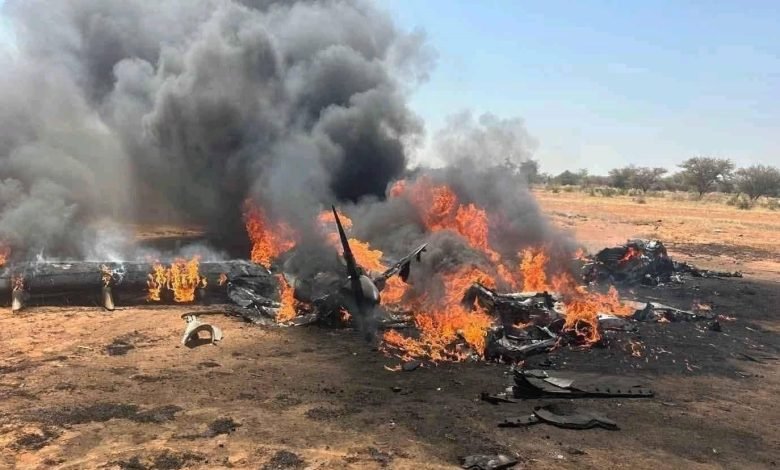
A drone targeted the gathering inside the cemetery A drone targeted the gathering inside the cemetery in a scene that reflects the worsening humanitarian tragedy in Sudan. A funeral procession in South Kordofan state on Thursday, into a bloody incident following an airstrike carried out by a drone, resulting in civilian deaths and injuries, amid growing questions about targeting criteria and the protection of civilians in conflict zones.
In a scene reflecting the worsening humanitarian tragedy in Sudan, a funeral procession in South Kordofan state on Thursday turned into a bloody incident after a drone strike killed and wounded civilians, amid growing questions about targeting criteria and the protection of civilians in conflict zones.
Details of “Bloody Thursday”:
The incident began in the Al-Ruwaikiba area of Al-Qoz locality, where a number of members of the Hawazma tribe gathered to pay their respects and bury one of their relatives who had died of natural causes. According to local accounts, a drone targeted the gathering inside the cemetery with direct strikes.
Bukhari Muhammad al-Zubair, mayor of the Hawazma tribe in the Al-Qoz locality, confirmed in press statements that the incident resulted in the immediate death of 15 civilians and the injury of others. The mayor described what happened as a “tragic incident,” stressing that the victims were unarmed civilians and that there were no military sites or armed groups in the area.
Accusations and demands for investigation:
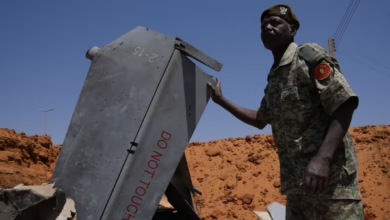
Testimonies from the Al-Ruweikiba area pointed the finger at the Sudanese armed forces, with Mayor Al-Zubair indicating that the raid was carried out by an army drone. He called for an urgent investigation and for those responsible to be held accountable, considering that what happened constitutes a violation of international humanitarian law, which prohibits targeting civilian gatherings. No official comment has been issued by the Sudanese armed forces so far.
Controversy over the use of drones:
The “Bloody Thursday” incident has reignited the controversy over the use of drones in populated areas, with observers arguing that poor intelligence or hasty decisions to carry out air strikes lead to civilian casualties in the absence of effective accountability mechanisms.
In this context, Najmuddin Dreesa, a journalist and political analyst, told Sky News Arabia that the Sudanese army “has repeatedly targeted civilian areas in the Kordofan and Darfur regions,” noting that these attacks are justified by the fact that some local communities are considered “social incubators for the Rapid Support Forces.”
Derisa added that “this classification, based on ethnic grounds, as he described it, has resulted in the killing of thousands and the displacement of tens of thousands of civilians as a result of air strikes carried out by the military air force,” calling on the international community to “assume its responsibilities” and impose no-fly zones over civilian areas to protect the population.
Background to the conflict and humanitarian tragedy:
For months, South Kordofan state has been experiencing complex security conditions as a result of clashes between the Sudanese army and the Rapid Support Forces, as well as the presence of other armed factions. However, the Al-Ruweikiba area and its surroundings in the Al-Qoz locality are predominantly civilian and pastoral areas, which have largely sought to distance themselves from the conflict.
International human rights organizations warn of a recurring pattern of aerial bombardment targeting civilian areas, such as markets and places of worship, which increases the number of casualties and deepens the humanitarian crisis in the country.
In the wake of the Al-Ruwaiqiba incident, tribal leaders and civil society organizations have stepped up calls for the protection of civilians and the activation of investigation and monitoring mechanisms, demanding practical steps to prevent the recurrence of such incidents and ensure compensation for the families of the victims.