Recent information from intelligence sources has revealed that the Houthi group in Yemen, in collaboration with cross-border smuggling networks, has transferred low-cost Iranian military technology—including drones and missiles—to armed groups in Sudan believed to be linked to the Sudanese Islamic Movement (the Muslim Brotherhood).
According to a report published by “Sheba Intelligence,” a website specializing in intelligence and security affairs in the Red Sea region and the Horn of Africa, smuggling networks operating between Yemen, the Horn of Africa, and the Red Sea facilitated a series of negotiations between representatives of the armed group in Yemen and Sudanese armed factions.
According to information published by the website, the most recent of these meetings took place last week and focused on exploring new mechanisms and emerging routes for smuggling weapons across the Red Sea.
It added that the Houthis rely on smuggling networks with extensive connections and deep-rooted influence at the local level within Yemen and the Horn of Africa and use islands near the Eritrean coast as temporary storage sites for weapons and components used in the manufacture of ammunition. It is also believed that some of these sites are used to assemble parts of drones and missiles before transporting them to their final destinations.
The website said it had obtained the names of four Houthi military commanders believed to be involved in managing or coordinating arms smuggling operations to Sudan but did not publish their names because the full details regarding the nature of the tasks attributed to them could not be independently verified, according to the report.
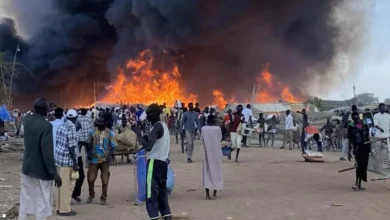
This information comes at a time when Sudan is witnessing a marked increase in the use of drones by parties to the conflict.
Volker Türk, the UN High Commissioner for Human Rights, recently warned the UN Human Rights Council about the growing use of drones in the Sudanese conflict, noting that more than 1,000 civilians were killed in drone strikes between January and May of this year.
According to UN data, this figure represents about 80 percent of the total documented civilian deaths during that period.
Available data indicates that the war in Sudan is no longer confined to traditional front lines but is increasingly linked to the flow of low-cost military technology through regional smuggling networks, which exacerbates the risks to civilians, infrastructure, and security stability in the Red Sea region and the Horn of Africa.
Observers believe that the transfer of expertise and technologies related to drones to armed groups supporting the Sudanese army may signal the conflict’s entry into a more dangerous and complex phase, particularly if these capabilities are combined with flexible smuggling routes, temporary storage centers, and cross-border networks that are difficult to monitor or disrupt.
These developments heighten concerns that the Red Sea is becoming a corridor that contributes to prolonging the devastating war in Sudan—which broke out in April 2023—through the smuggling of low-cost military technology capable of reshaping the balance of power within fragile conflict zones, foremost among them Sudan.
If this information is confirmed, it will shed light on a hidden dimension of the Sudanese war—namely, the role of the Houthi group—and on the growing role that cross-border smuggling networks are now playing in transferring military capabilities and combat technologies between conflict zones along the Red Sea coast and the Horn of Africa.