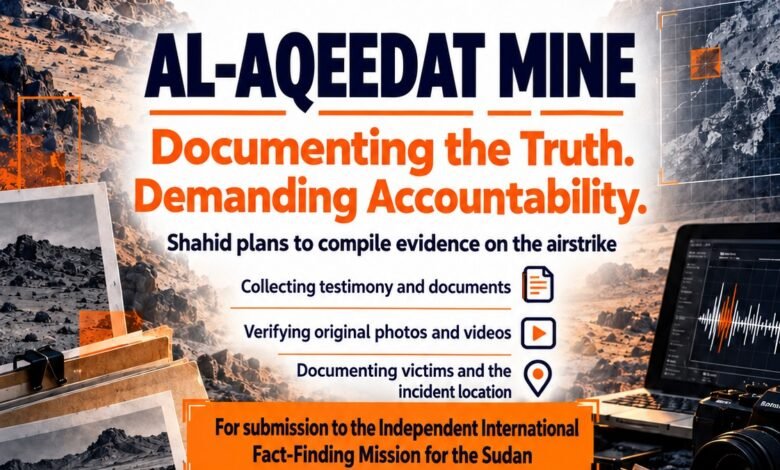
Shahid Evidence Platform plans to compile a comprehensive evidence dossier on the bombing of Al-Aqeedat mine in northern Sudan for submission to the Independent International Fact-Finding Mission for the Sudan. The platform will call for an investigation into the circumstances of the attack, the identity of those who carried it out, and responsibility for its consequences.
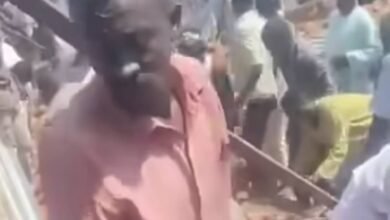
The platform accuses the Egyptian Air Force of carrying out the attack reported on 10 October, based on information and footage it has received. It is calling for independent technical verification of these materials and an investigation into accounts of repeated attacks on miners. According to preliminary information received by Shahid, more than 60 people were killed or injured. The final casualty toll and the verification of victims’ names remain outstanding.
Shahid stresses that the gravity of the incident demands an investigation that goes beyond media disputes to establish verifiable evidence identifying the location and timing of the strike, the munitions used, those responsible, and any connection to ongoing military operations in Sudan.
Collecting Testimony and Preserving Evidence
The platform intends to contact survivors, victims’ families, eyewitnesses, mine workers, first responders, and medical providers to collect firsthand accounts and document deaths and injuries. It will distinguish direct testimony from secondhand information while respecting informed consent, witness safety, and the confidentiality of personal data.
Shahid will also seek original photographs and video recordings, examine their metadata where available, and compare visible landmarks with satellite imagery, maps, and coordinates. This work will help establish the incident’s location relative to international borders and reconstruct the sequence of the attack and rescue efforts.
The planned documentation will include medical reports, death certificates, treatment records, and burial records wherever available. Specialists will examine photographs of munition remnants, including their markings and serial numbers, without asking civilians to touch or move suspicious objects. The platform will preserve original files and record their sources, receipt dates, and any technical processing to maintain the traceability and reviewability of the evidence.
Investigating the Attack’s Connection to the War
The platform notes that the international mission’s mandate includes investigating human rights violations, violations of international humanitarian law, and related crimes in the context of the conflict that began in Sudan on 15 April 2023, as well as collecting and preserving evidence to support accountability.
Within this framework, Shahid will request an investigation into any indications that the attack was coordinated with a party to the conflict, conducted in support of its operations, or linked to the targeting of resources believed to contribute to financing the war. These possibilities will be presented as questions for investigation rather than established findings.
The platform emphasises that the fact that an attack occurred during the war does not, by itself, establish its connection to the conflict. Identifying the perpetrator is also distinct from establishing the attack’s purpose and its relationship to the war. Assessing that connection requires examining whether the conflict substantially influenced the decision to attack, its purpose, or the manner in which it was carried out.
Shahid will submit the available materials to the mission and request an assessment of the incident under its mandate, along with further investigation of the evidence and potential responsibility. Submission of the dossier does not mean that the mission has already opened an investigation into the incident.
The platform urges anyone with firsthand testimony, original photographs or videos, or relevant documents to contact it through its official channels. It asks contributors to avoid publicly disclosing the identities of witnesses and survivors or sharing material that could put them at risk.
Shahid stresses that the deaths of miners and the rights of their families demand truth and accountability, regardless of who is responsible. Any dispute over borders or mining activities does not remove the need to investigate civilian deaths and the circumstances surrounding the use of force against them.