The Rapid Support Forces’ takeover of the city of Wad Madani, and subsequently the entire state of Al-Jazirah, was merely the spark that ignited a powder keg. It unleashed intense pressure from the remnants of the ousted regime who are directing the war from behind the scenes, as Army Commander Abdel Fattah al-Burhan declared a general mobilization. This declaration was not a state decision to protect its institutions and preserve the dignity of citizens, as the war’s architects claim, but rather a vendetta led by extremist jihadist militias to take revenge on the people who toppled their defunct regime.
Following that announcement, the brigades emerged openly and took on the task of recruiting misled youth under the slogan of “defending oneself and one’s family.” They were armed without undergoing adequate training or clear oversight, leading to the emergence of the phenomenon of “militiamen” as armed civilians operating outside the regular military framework.
A Series of Crimes
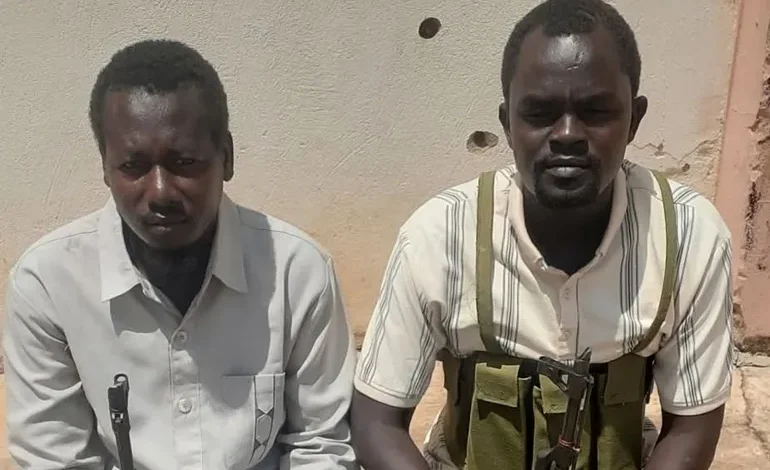
What was feared soon came to pass. On August 5, 2025, the first episode of a series of crimes began when a volunteer fired his Kalashnikov rifle at four civilians in the village of Al-Qarabin in the Dali and Al-Mazmum district of Sennar State, without any known motive for the crime.
Ironically, however, the incident occurred near the police station and military intelligence headquarters, raising questions about the effectiveness of security measures in the area.
Commenting on the crime in a statement, the “Emergency Lawyers” group said the incident “reveals weak oversight and a lack of accountability,” confirming that it has documented “dozens of similar incidents” of killings carried out by militants in various areas, indicating the recurrence of these violations.
An Entire Family Killed by a Gunman
In another incident, Khartoum State witnessed its first crime involving a stray bullet; this time, shots were fired in the city of Al-Halfaia, a suburb of Khartoum Bahri, resulting in the deaths of five members of a single family at the hands of the gunman, Mohamed Al-Aqib Malik. The victims were Abdulaziz Malik Al-Aqib, Ahmed Malik Al-Aqib, Raja Malik Al-Aqib, Fatima Malik Al-Aqib, and Ismail, Raja’s husband. The incident exposed the collapse of what remained of moral restraints, as the gunman took the lives of his uncles and aunts without engaging in battle with an imaginary enemy; but rather a family massacre carried out by a nephew with a weapon entrusted to him to protect his family, while he turned the family home into a battlefield.
The mobilized men’s bullets did not stop at this level of tragedy; rather, they moved from the blood of relatives to the bodies of women, as a mobilized man in the Darushab neighborhood north of Bahri fired three shots from a Kalashnikov rifle at his maternal aunt’s daughter after she refused to marry him and became engaged to another man, while the bullets struck his maternal grandmother, who had tried to protect her granddaughter from her grandson’s gunfire.
Crimes of the Militiamen
Although the cases mentioned may appear to be isolated incidents, consistent testimonies speak of women and girls who were subjected to the desires of soldiers and militiamen at gunpoint. Despite reports being filed with the impotent police, those reports remained locked away in drawers under the pretext of awaiting a response from the perpetrators’ units.
The Emergency Lawyers Group held the army directly responsible for arming and recruiting these civilians, deeming this a “breach of legal and moral responsibilities,” and added that unregulated arming constitutes a violation of international humanitarian law and national laws protecting civilians.
It noted that the proliferation of weapons in this manner leads to the escalation of internal conflicts, increased tribal strife, and a state of security instability.
The group called for an urgent investigation and for those involved in these crimes to be held accountable, stressing that allowing the situation to continue without accountability risks turning weapons from a means of defense into a tool for threatening civilians.
The crimes committed by the militias constitute a long series of violations that did not begin in the village of Al-Qaribin in Sennar; rather, they include the murder of an entire family and the sexual exploitation of young girls, all in the complete absence of accountability or restraint of a monster who wields a gun under the pretext of protecting his people, yet reaps the lives of those he is supposed to protect.