A year after its inception, the Sudan Founding Alliance, allied with RSF leader Mohamed Hamdan Dagalo, is seeking to give shape to a state apparatus that its Port Sudan adversaries continue to describe as “fictional”.
Negotiations are in full swing in Berlin. Meeting on 16 April in the German capital, where they took part in an alternative event to the international conference on Sudan, members of the Tasis civil coalition, or Sudan Founding Alliance, backed by the Rapid Support Forces (RSF) of Mohamed Hamdan Dagalo, known as “Hemeti”, are working to structure their movement as well as their government. Currently with only four members – Prime Minister Mohammed Hassan Osman al-Ta’aishi, Alaaeldin Nugoud at health, Ammar Amoun Deldoum at foreign affairs and Suleiman Sandal Haggar at the interior – the cabinet is expected to expand in the coming weeks. Ahmed Tugod Lissan, from a faction of the Justice and Equality Movement aligned with Tasis, is expected to take over as spokesperson, a role currently held by Nogoud.
The government is expected to comprise 23 portfolios and to remain in line with the Constitution signed in Nairobi on 4 March 2025. But with so few posts to distribute among around 180 stakeholders – armed groups and political formations have gradually joined the movement, which initially comprised 24 entities (AI, 05/03/25) –, the exercise is proving difficult.
In the longer term, Al-Ta’aishi is considering the creation of regional and local governance structures both in areas controlled by his camp and across the rest of the territory. So far, four RSF loyalists have been appointed to administer territories held by the Sudanese Armed Forces of General Abdel Fattah al-Burhan: Saleh Issa Abdullah in the Centre, Mabrouk Mubarak Salim in the East, Abu al-Qasim al-Rasheed in the North, and Faris al-Nour in Khartoum state.
Executive bureau on way
Those left out of the ministerial carve-up will not, however, be sidelined and can expect to be appointed to another body currently being formed, Tasis’s executive bureau, due to be announced by the end of April. This body is set to bring together the coalition’s founding members, divided into thematic clusters such as information, political organization and regulatory affairs.
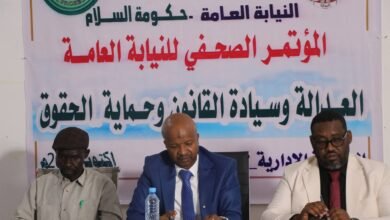
Priority has also been given to building a judiciary, seen internally as an essential prerequisite for any constitutional project. In this context, the chief justice of the judiciary, Idris al-Nur Shalah Kamouni, and his deputy, Maulana Babiker Abkar Adam Abdul Noor, were appointed in mid-April. Kamouni is said to be close to Abdelaziz al-Hilu, leader of the Sudanese People’s Liberation Movement-North and the coalition’s second in command.
The pair are tasked with laying the foundations for a justice system intended to legitimize Tasis’s future political structures. Hemeti’s camp is, in this way, seeking the external recognition it has lacked since the start of the conflict. If foreign support has been slow to emerge, the United Arab Emirates could be seen as a likely candidate to be the first to recognize the government appointed by Tasis. Despite several investigations documenting support for the RSF, Abu Dhabi has always denied any involvement in the conflict.